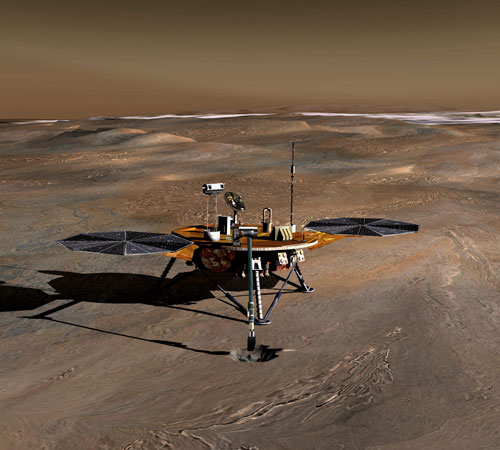
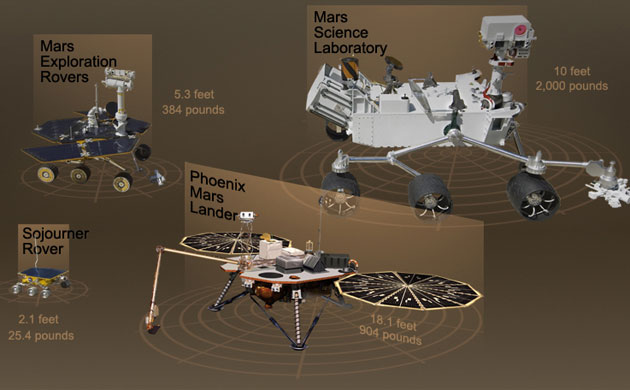
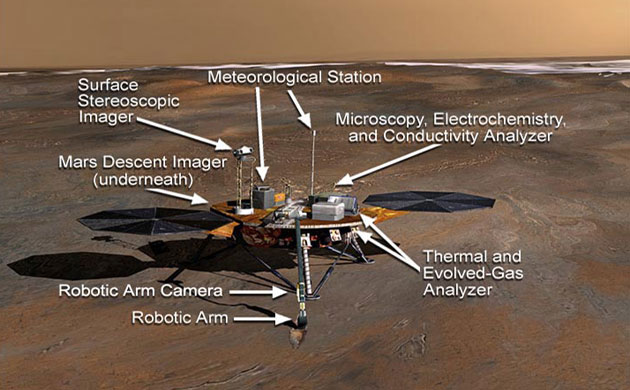
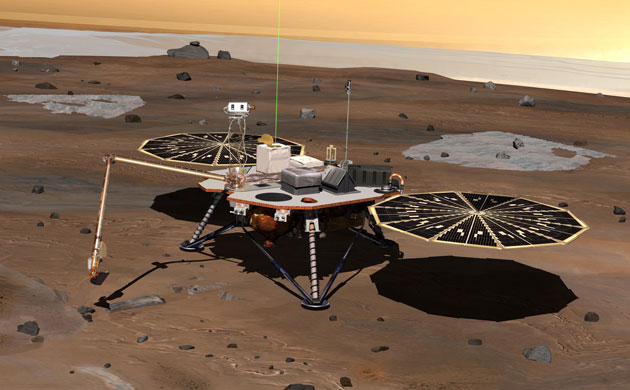
Touchdown marks the end of a 10-month, 122m mile journeyPhotograph: PRFamily photo: A comparison of the sizes of future and past Mars rovers. Sojourner touched down on the Red Planet in 1997, and the twin Mars Exploration Rovers landed in 2004. Mars Science Lab is scheduled to launch in 2009. Photograph: PRPhoenix bristles with scientific instruments. The dark "wings" are solar panels. Photograph: PR
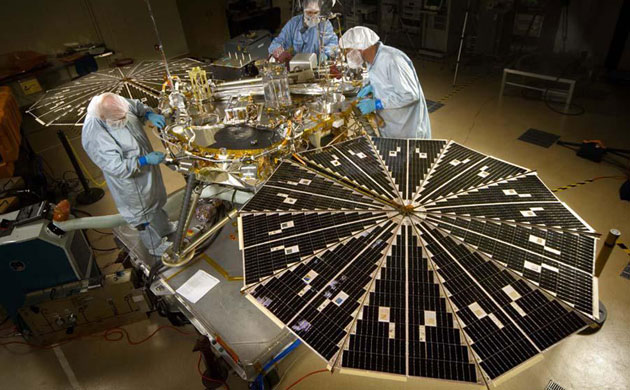
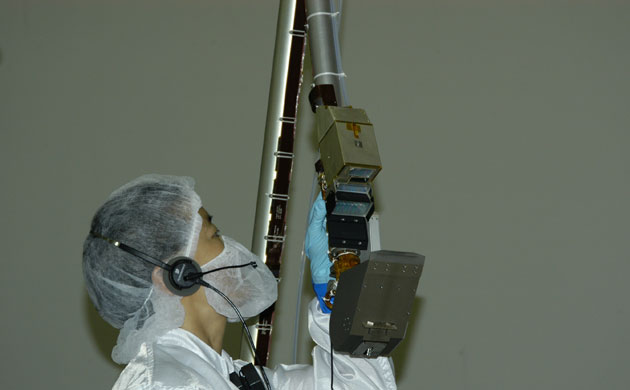
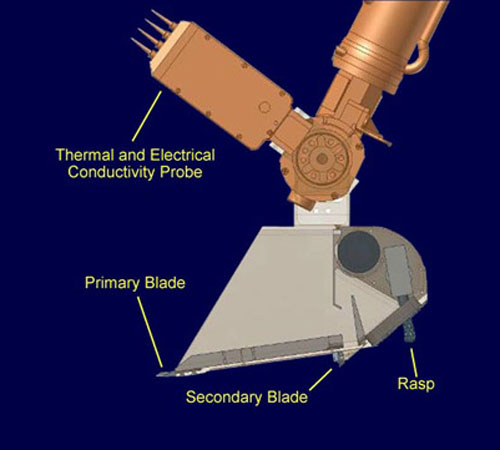
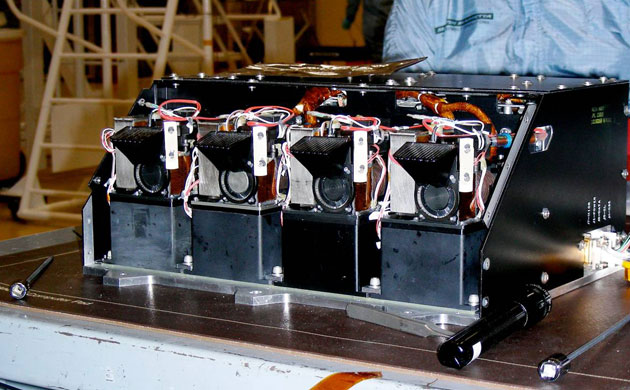
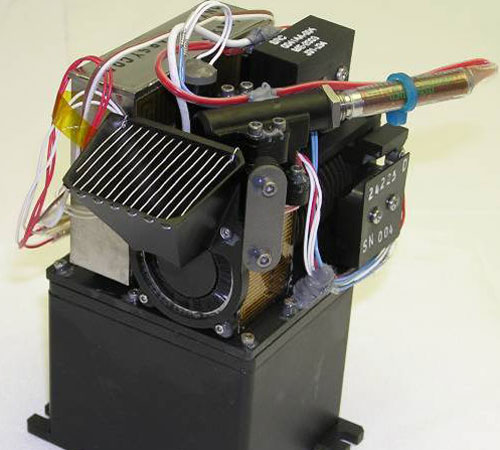
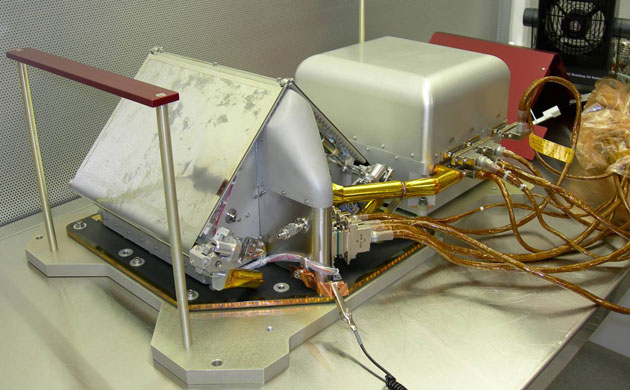
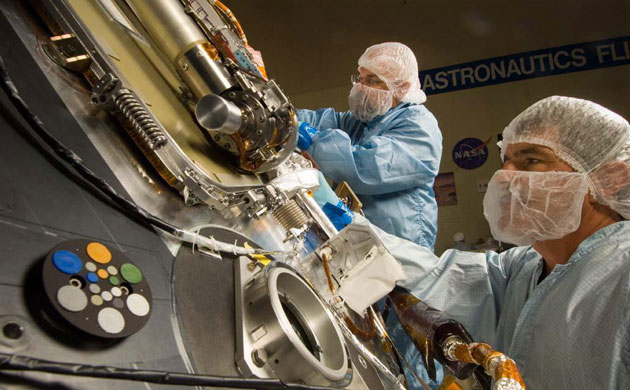
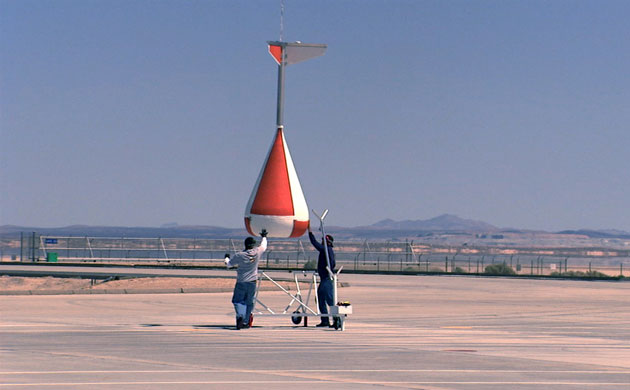
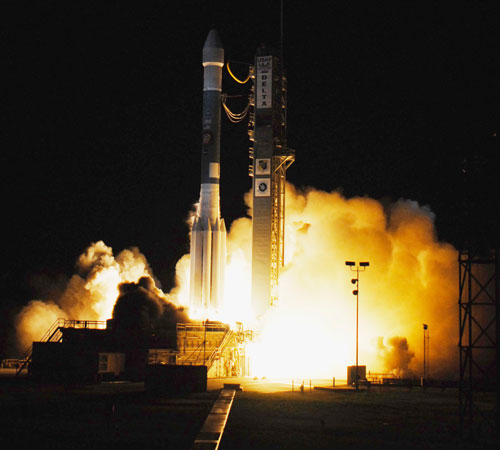
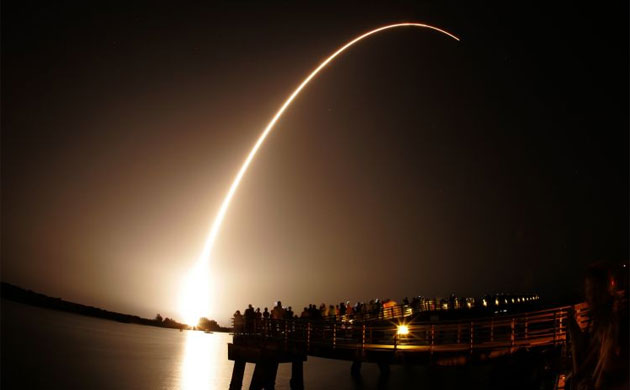
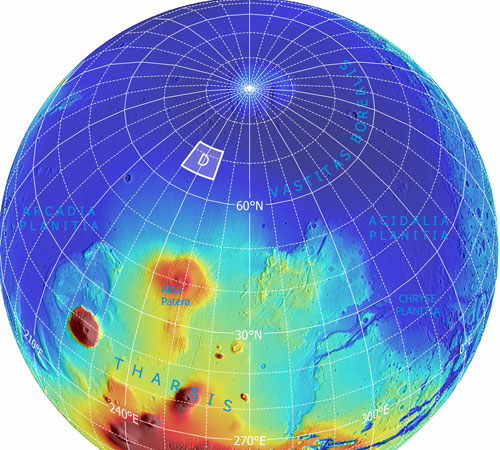
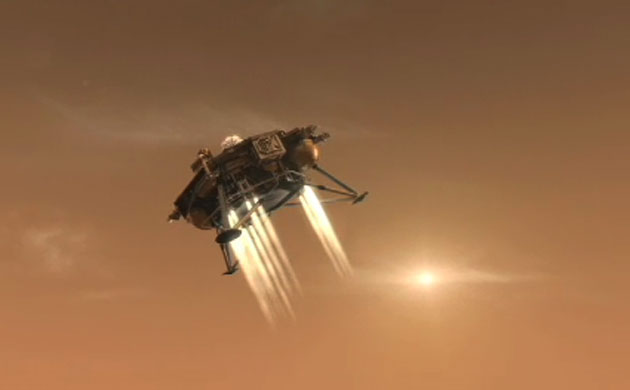
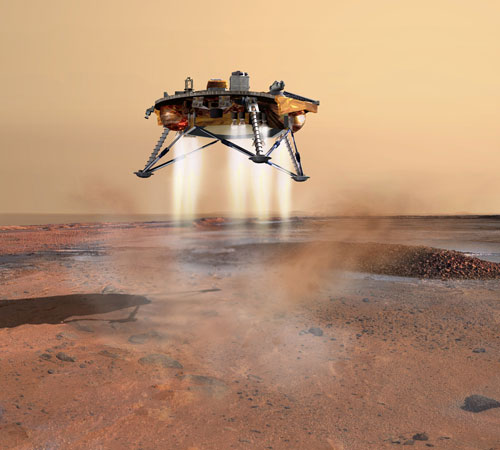
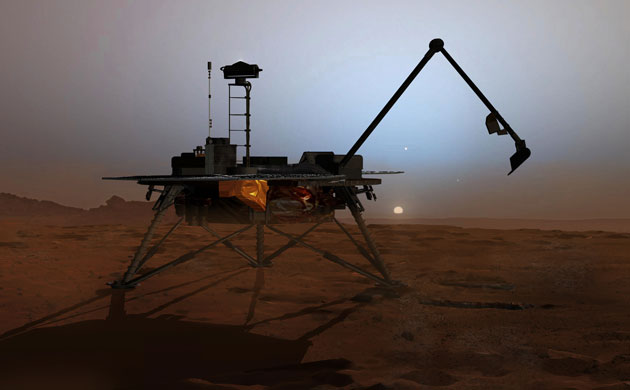
The rover was assembled at Lockheed Martin Space Systems in Denver, Colorado. Here, the craft's fan-like solar arrays have been spread open for testing. Photograph: PRPhoenix collects samples of Martian soil using a scoop mounted on the end of its robotic arm. Photograph: PRA motorised rasp is lowered through a small opening in the bottom of the scoop to gather shavings of frozen material. Photograph: PRThe craft's wet chemistry laboratory analyses the soil samples, for example looking for dissolved salts and measuring pH. The chemistry lab is just one tool in the Microscopy, Electrochemistry and Conductivity Analyzer, which incorporates microscopes to examine mineral grains and a probe to test the soil's thermal and electrical properties.Photograph: PROne of the four teacup-sized "beakers" in the wet chemistry lab. Each will be used only once, mixing water with a soil sample and then keeping it warm enough to remain liquid during the analysis. On the inner surface of the beaker are 26 sensors. Some give information about the acidity or alkalinity of the soil sample. Others gauge concentrations of ions. Photograph: PRThe Thermal and Evolved-Gas Analyzer analyses volatile substances in the soil samples. A "differential scanning calorimeter" (left) measures the melting and boiling points of ingredients in the sample. The gases then pass into a mass spectrometer (right), which identifies the chemicals.Photograph: PRThe craft was built in a clean room under Nasa's strict "planetary protection" policy to avoid carrying organic materials to Mars. Engineers here work on the probe's "science deck". The robotic arm is visible in its stowed position at the top of the picture. The coloured and grey dots are used to calibrate the spacecraft's Surface Stereoscopic Imager camera. Photograph: PRTo test whether the probe's radar system would survive the landing intact, it was dropped inside a "drop weight" suspended from a helicopter at the Dryden Flight Research Center in Edwards, California.Photograph: PRPhoenix finally began its journey to Mars on August 4 2007 aboard a Delta II rocket launched from Cape Canaveral.Photograph: PRSend-off: The 10-month, 122m mile journey begins.Photograph: PRThe landing site (D) is at a latitude equivalent to northern Alaska on Earth. Total vertical relief is shown on this colour-coded global projection, from about 28 kilometres (17 miles) at the top of the highest volcano (red) to the northern lowlands (blue). Photograph: PRPhoenix entered the Martian atmosphere at 13,000mph before deploying a parachute and firing a series of rocket thrusters to bring its velocity down to 5mph just seconds before touchdown. "We will fire 26 pyrotechnic events in the last 14 minutes of the journey," said Barry Goldstein, project manager at Nasa's Jet Propulsion Laboratory in Pasadena. "Each of those has to work perfectly for the mission to come off as we planned."Photograph: PRThe final moments before landing – described by Nasa as 'seven minutes of terror' – were the most dramatic and nervously anticipated part of the mission. As Nasa scientist Ed Weiler put it: 'This is no trip to grandma's for the weekend.'Photograph: PRPhoenix will use its robotic arm to dig down to the icy layer. It will analyse samples for evidence that the site once was – or may still be – a favorable habitat for microbial life. The lander's weather station will conduct the first study of Martian arctic weather from ground level. The vertical green line represents the laser beam that Phoenix will use to probe dust and clouds in the atmosphere.Photograph: PRJust 150 days after landing, Phoenix will begin to shut down operations as winter sets in. There is no sunlight in the far-northern latitudes on Mars during winter, so the solar panels will no longer charge the lander's batteries. Over the following months, it will be slowly buried beneath drifts of carbon dioxide frost. Photograph: PR
Sign up to read this article
Read news from 100’s of titles, curated specifically for you.