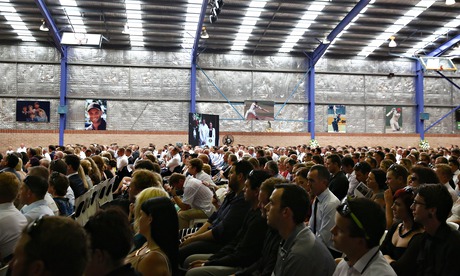
There can’t have been a funeral like it, at least not in the English-speaking world, since Princess Diana’s. It was not just the crowds who turned out to commemorate the life of Phillip Hughes. Nor was it the cricket bats laid in tribute on front lawns and propped up against the fence of his old school in Macksville, New South Wales.
Australia was mourning a son felled by a freak bouncer in the midst of a match – 63 not out – whose death had elevated him from a first-class cricketer with an on-off place in the Test side into a symbol of all that Australians believe is great about their country.
The abrupt and all-too-public end to a story that began on a small farm, propelling an ordinary kid with an unorthodox brilliance with the bat, is irresistible to a country that idolises everything he was – lad, sportsman and cricketer – equally.
Hughes’s funeral didn’t exactly stop being an intimate and tearful farewell to a young man. His brother and sister both spoke movingly, and his parents’ grief was agonising to witness. So was that of Michael Clarke, the Australia captain and friend of the up-and- coming star of the country’s national game.
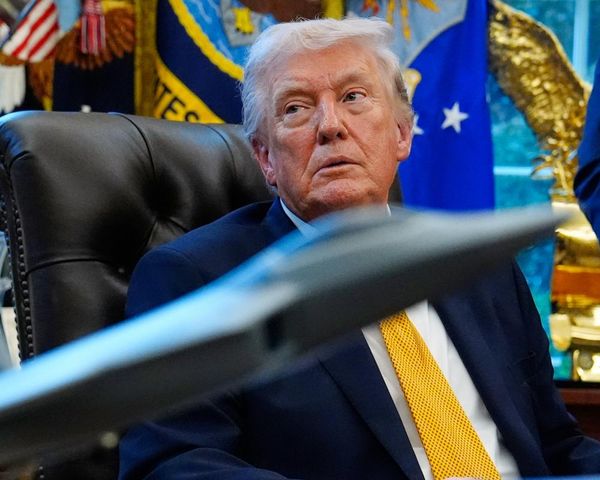
But it also became an opportunity for Phil Hughes’s fellow citizens to clothe themselves in his identity and use it to define themselves. There was a kind of awe that the gods of global cricket mingled with the townspeople of the small rural community where Hughes’s family still lives. The Australian prime minister, Tony Abbott – languishing in the polls – walked behind the coffin alongside people Hughes grew up with.
In Britain this might be viewed as a rather distasteful stunt, but Australians so far seem to have accepted it as another aspect of one of those rare moments when a life and a death becomes an expression of the national dream. A 25-year-old cricketer can bring not just the legends of his own sport but the prime minister to a small town in New South Wales: what a man! And what a country!
This is the kind of thing the ancient Athenians such as Pericles used as an example to encourage their youth to go out and die. Perhaps fortunately, Tony Abbott didn’t need to say anything: Australians didn’t need telling that their tributes to Hughes were somehow also tributes to the country that raised him.
Death and – as Hughes once called it – the after-party have a unique capacity to capture a moment that might have previously gone unrecognised. Princess Diana’s in 1997 provoked another one of those freeze- frame weeks that allows a country to show what it thinks it is. There was the fleeting moment when the monarchy seemed seriously threatened by thousands of bunches of cellophane-wrapped flowers, an expression of popular anger at their chill in the face of national grief.
Reluctantly, the royal standard was unfurled. The sight of it fluttering at half mast over Buckingham Palace robbed the flowers of their potency. The lilies and the chrysanthemums went back to being just flowers, and a few days later the funeral confirmed a return to the orthodoxy.
All the same, in a way that Pericles might have recognised even if constitutional lawyers would not, there had been an expression of a national identity that set popular opinion as a new limit to royal authority.
Phil Hughes’s funeral tells another tale. But it will always have a place in the Australian story.