Phillip Hughes is everywhere in Macksville.
He is in the gold-and-green streamers tied to every lamppost, in the shopfront signs and the weathered bats leaning against front doors.
The balcony of the Hughes family home is awash with flowers.
Against the wall, next to the front door, stands a row of bats, Phillip’s reddened old blades, now still forever.
The Hughes family home on East Street backs onto Macksville’s main cricket ovals, neatly mown in the last couple of days.
On the main field, Hughes’s Australian Test number – 408 – is painted onto the turf.
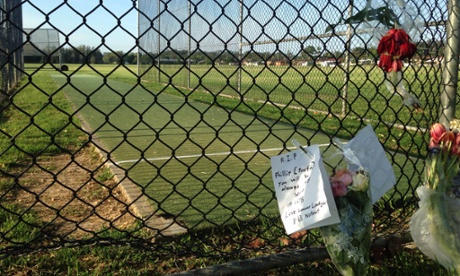
In the nets at its corner sit a handful of floral tributes, notes of condolence to his family and, poignantly, a set of broken stumps.
Beyond the green ovals are cattle yards in which stand a handful of black Angus, Hughes’s other great passion.
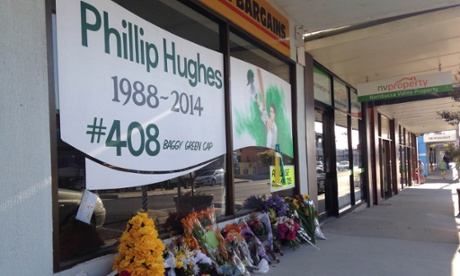
In town, the shops carry tributes to the town’s favourite son in their front windows.
The remembrance book in the main street newsagent is filled to overflowing with reminiscences. A second one opened at the RSL is similarly overwhelmed.
Everyone knows the Hughes family here, and everyone knew the impish kid with the outsized talent who left to conquer the city, and the world, but who always came back.
Despite the intense national and international interest, Wednesday’s funeral was to be a local affair. The Hughes family invited the entire town, and 80% of the seats inside Macksville high school have been set aside for the town’s residents, and for Hughes’s teammates and friends.
In the past few days, Phillip Hughes has belonged to all of Australia. A nation has been united in its grief for a life cut short in circumstances previously thought unimaginable.
But before he belonged to Australia, Phillip Hughes belonged to his family in East Street, and to Macksville. Wednesday’s service is this town’s chance to say goodbye.