CHAPEL HILL, N.C. -- At least one University of North Carolina fraternity chapter was suspended Friday by its national headquarters after local and federal law enforcement officials announced that some members had been charged in connection with a major drug network.
Meanwhile, UNC officials announced Friday evening that the university also has suspended ties with three fraternities connected to the multi-year drug investigation announced Thursday.
Local law enforcement and the U.S. Attorney’s Office for the Middle District of North Carolina named current and former students at UNC-Chapel Hill, Duke University and Appalachian State University among 21 people charged in the last year.
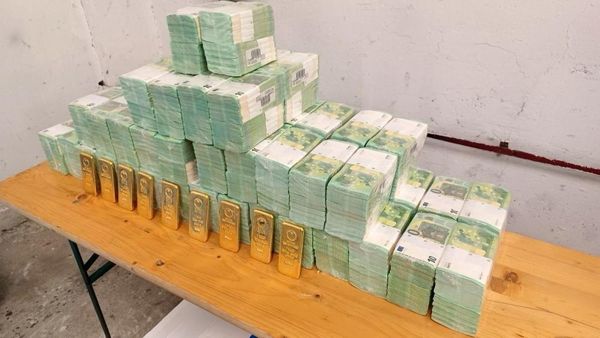
Members of UNC’s Kappa Sigma, Phi Gamma Delta and Beta Theta Pi fraternities have been accused of buying and selling cocaine, marijuana and a litany of other illegal drugs, U.S. attorney Matthew G.T. Martin said. He estimated the network earned more than $1.5 million but cautioned that the investigation and the tally of drug sale proceeds are not complete.
More charges are possible, Martin said. He called on university administrators and national chapters of the fraternities whose members are charged to “do something” and work with law enforcement to solve the problem.
They “can’t turn a blind eye any longer,” he said.
Rob Caudill, executive director of the national Phi Gamma Delta headquarters, said Friday that “it is shocking to learn of the allegations involving our chapter and others at the University of North Carolina.”
“These allegations are very serious, suggest conduct which violate our policies and values, and we have zero tolerance for the alleged actions,” Caudill said in an email to The News & Observer. “The International Fraternity has temporarily suspended the chapter, precluding any chapter activity pending the findings of an investigation. We are committed to working with law enforcement and the University to fully understand the involvement of our members.”
UNC-Chapel Hill also has suspended university recognition of its Phi Gamma Delta, Kappa Sigma and Beta Theta Pi chapters following the drug investigation announced Thursday, UNC Chancellor Kevin M. Guskiewicz said in an email.
“We are taking swift action today because the serious nature of the alleged criminal behaviors is contradictory to our code of conduct and endangers the health of our student body and community,” Guskiewicz said. “We remain vigilant and are continuing to work with law enforcement to understand the extent of this activity on our campus and will take all appropriate measures to address it.”
Mitchell Wilson, executive director of the national headquarters for Kappa Sigma, also expressed concern about the allegations, but did not respond to questions about possible disciplinary actions.
“Kappa Sigma is a values based fraternity, and we expect our members to be law-abiding citizens,” Wilson said in an email statement. “Our leadership is greatly concerned about the allegations in North Carolina. Any allegations that violate our Code of Conduct will be investigated through internal membership conduct procedures, and those who violated our standards will be held accountable.”
Beta Theta Pi officials were surprised by Thursday’s announcement and only know the details that have been made public, Justin Warren, media relations director for the national headquarters, said in an email statement to The N&O on Friday.
He noted that the Beta Theta Pi fraternity member charged in connection with the drug bust, Jason Nitsos, graduated in 2019.
“The Fraternity does not tolerate the possession, sale, distribution or use of illegal substances and holds its chapters to high standards in maintaining a safe environment for all students,” Warren said. “We are working in tandem with our undergraduates, volunteers and UNC administrators to determine next steps and will take appropriate action as new information becomes available.”
The Beta Theta Pi Foundation notes on its website that UNC’s Eta chapter was put on probationary status in February. The listing does not explain why that decision was made.
Orange County Sheriff’s Office and federal Drug Enforcement Administration investigators started looking into drug sales on and around UNC’s campus a few years ago, officials have said. Several members of the Kappa Sigma fraternity have been charged in federal court with selling drugs to fellow members and to students at other universities between 2017 and earlier this year.
Some of the students have reached plea bargains and are awaiting their sentencing hearings in federal court in February and March. Others have not had a hearing yet. At least one suspect remains in the Durham County Jail under a $500,000 bond.
In November, a trafficker out of California, Francisco Ochoa Jr., was sentenced, officials said. Investigators have said Ochoa was shipping cocaine through the U.S. Postal Service and delivering marijuana by vehicle. His dealers in North Carolina laundered the drug sale proceeds through financial institutions and using Western Union checks, money orders and mobile payment apps, they said.
Other proceeds were shipped in bulk through the Postal Service, they said.
Ochoa was sentenced to over six years in federal prison and five years of supervised release, and also ordered to pay a $250,000 fine.
Administrators at all three universities responded to questions Thursday with statements expressing disappointment at the news and a willingness to work with law enforcement.
“Although none of the individuals named today are currently enrolled students, we will remain vigilant and continue to work with our law enforcement partners to identify and address any illegal drug use on our campus,” Guskiewicz said. “Our community can be certain that the University will enforce the student conduct code to the fullest extent possible,” he said.
Duke University also takes the allegations “very seriously,” Chief Communications Officer Michael Schoenfeld said, and the university “will respond accordingly through our disciplinary process.”
A member of a fourth fraternity at Appalachian State University, Kyle Beckner, also was arrested as part of the investigation, although he appears in court documents to have been outside of the main drug network. Beckner is a member of ASU’s Delta Chi chapter.
The university’s biannual report released Wednesday shows Delta Chi was put on probation on Oct. 23 and is under social restrictions at least until Aug. 31, 2021, due to an unregistered party and a violation of North Carolina Gov. Roy Cooper’s executive orders for gatherings during COVID-19. The university issued a statement regarding the drug investigation late Thursday.
“Appalachian State University is fully cooperating with this investigation. We have no on-campus fraternity houses, and we report bi-annually on the status of recognized fraternities and sororities,” the statement said. “We are committed to providing a safe campus, and will continue our work with education and prevention, as well as utilizing student conduct and law enforcement processes, to do so.”
A spokesman for the North American Interfraternity Conference, a national trade association for fraternities, also responded to news reports about the drug investigation.
The NIC represents 58 national and international fraternities with about 6,000 chapters on more than 500 university and college campuses, spokesman Todd Shelton said.
“We are disturbed and disheartened to learn of this investigation and the alleged criminal involvement by some fraternity members,” Shelton said. “The reported activities are not representative of fraternity expectations and standards. We support the ongoing investigation and believe anyone found to be involved should be held accountable by law enforcement, the university and their individual fraternity.”