When the Pew Research Center released its 36-country survey on June 23, a single result broke from the global pattern: in Mexico, favorability toward the United States rose while it slid almost everywhere else. The share of Mexicans with a positive view of their northern neighbor climbed to 40%, up from 29% a year earlier — the only measured increase in the entire study.
A caveat belongs at the top. Mexicans did not warm to Donald Trump. Pew recorded no country in which confidence in the U.S. president rose, and Mexico stayed one of his harshest audiences, with just 11% approving of his handling of tariffs. What ticked up was the broader image of the United States as a country, against a global backdrop where the median favorable rating was 37% and ratings fell in 15 of the 24 countries Pew could compare year over year.
The most important thing to understand about the increase is that Pew does not explain it. The survey measures the what, not the why — so every proposed reason is interpretation laid on top of the number, and should be read that way.
A Rebound, Not a Romance
Begin with the least glamorous explanation, which is also the most defensible: Mexico had the furthest to climb. In Pew's 2025 round, Mexican favorability collapsed 32 points, from 61% under Joe Biden to 29% — the steepest single-year drop of any of the 24 countries surveyed that year, driven by the shock of Trump's return and his opening volley of tariff and military threats. When a number craters to an extreme low on an acute shock, a partial bounce as the shock settles is closer to reversion than to affection. Measured from that floor, 40% reads less as fondness than as a return toward baseline.
A second, popular reading credits President Claudia Sheinbaum. From early on she adopted what she calls a "cabeza fría," or cool-headed, posture — declining to trade insults, working quiet government-to-government channels, and conceding on items such as border troops while guarding Mexican interests. Analysts and outlets including the Christian Science Monitor have tied this approach to a relationship that proved less catastrophic than feared: USMCA-qualifying exports were largely spared when the Supreme Court struck down Trump's emergency-powers tariffs in February and his replacement 10% global levy exempted them, and Mexico hedged by signing a modernized trade pact with the European Union on May 22. This is the leading journalistic narrative — but it is a narrative, not a finding, and it belongs in the conditional.

Trump's Tough Policy on Mexican Cartels
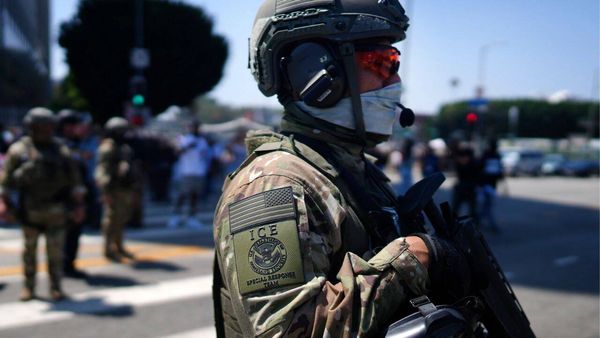
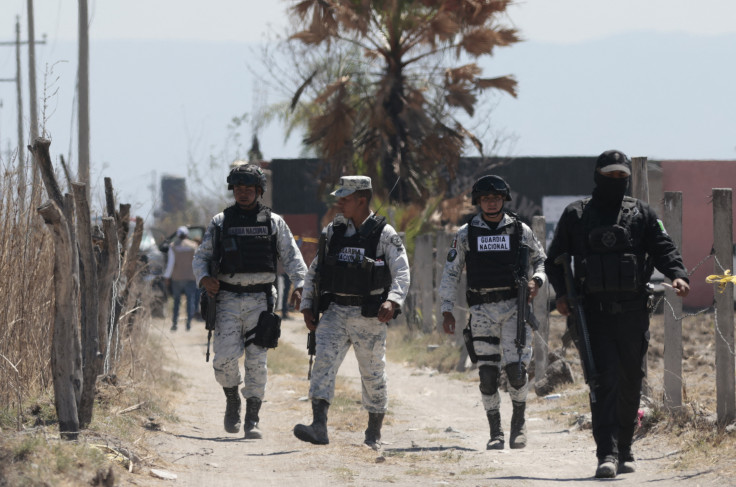
Two explanations that sound intuitive do not survive contact with the polling. The first is the border. Crossings did fall to 50-year lows, but that decline began under Biden and merely continued through Trump's second year, and the credit for it belongs mostly to U.S. enforcement — not to anything that would endear Washington to Mexicans, who give Trump's immigration approach their most negative marks anywhere. Fewer crossings achieved through a crackdown Mexicans dislike is more irritant than balm. The second is the cartel crackdown: one might expect Washington's hard line, and its indictments of officials accused of cartel ties, to win goodwill in a country exhausted by violence and distrustful of its own institutions. Yet a poll fielded in the same window found roughly 78% of Mexicans rejecting U.S. military force against the cartels, with sovereignty an enduring redline. Mexicans want results, but delivered by Mexico — not by U.S. action on their soil.

Ratings from Latin America
The rest of Latin America shows how singular Mexico's case is. Colombians stayed the region's warmest toward the U.S., with 46% approving of Trump's approach to neighboring Venezuela — well above the 22% global median — and 56% backing his handling of humanitarian aid. Peruvians were more divided overall, yet 55% credited U.S. aid. In Brazil and Argentina opinion ran split to sour; Argentines were among the world's least likely to say the U.S. adds to global peace, at 20%, and in Pew's 2025 polling both publics had named the United States their single greatest threat. Chileans, like Mexicans, tilted unfavorable.
The throughline is that Mexico did not rise because its region rose. Most Latin American publics held flat or cooled, echoing the global slide. Mexico moved because it started at the bottom — and the cleanest reading of the bounce is reversion from an unusually deep trough, with the political explanations sitting in the realm of plausible conjecture.
How durable the gain proves is unsettled. The USMCA joint review looms on July 1, with a clean, on-time extension looking doubtful; Washington has kept pressing on cartel ties, including the April indictments of Morena-linked officials; and duties on steel, aluminum and autos still sting. For now Mexico stands as the survey's lone bright spot for America's image abroad — not a country that embraced Trump, but one that fell hardest the year before and has only climbed partway back.