A Friday Call With One Big Ask
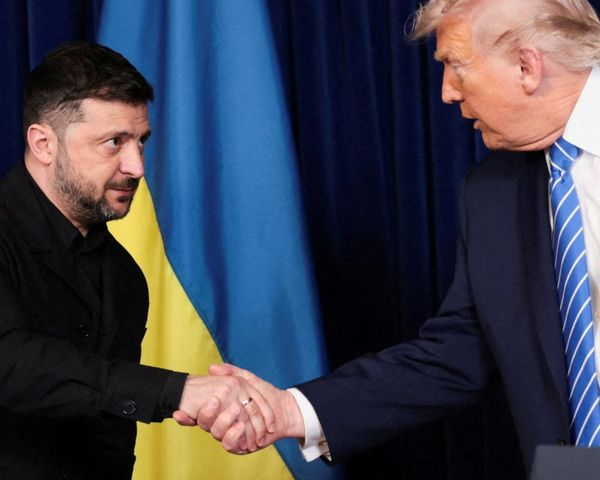
On July 3, Gustavo Petro picked up the phone to Donald Trump for a conversation that Colombia's presidency later summarized in a public statement. According to that readout, Petro spent much of the call pushing to get himself and members of his family removed from the U.S. Treasury's sanctions list — restrictions that have frozen their financial standing in the U.S. since the fall of 2025. Trump's answer, relayed through Petro's own account of the exchange, was friendly but noncommittal: he'd do what he could to get the matter looked at again.

That's a long way from a resolution. Delisting isn't something a president can order — it runs through the Treasury Department's Office of Foreign Assets Control, which independently weighs whether the original justification still holds. Petro's attorneys had already filed for that review before the call happened, so a public show of support from Trump might build momentum without changing the legal calculus at all.
What the Sanctions Actually Cover
The Treasury designation dates to October 24, 2025, and named four people: Petro himself, his son Nicolás, Interior Minister Armando Benedetti, and his wife, Verónica Alcocer — not, as some accounts have loosely put it, a "former partner." Petro has said publicly that he and Alcocer have been personally estranged for years, but by his own account the marriage was never legally dissolved, and a Bogotá city council member has pointed to a 2024 financial disclosure in which Petro listed her as his spouse. The distinction matters because it shapes how her sanctioned status is understood — she's tied to the list as the president's wife, a status confirmed and never contradicted in Treasury's own paperwork.
The designation itself accuses the group of enabling drug trafficking, and it does more than bar U.S. transactions — banks worldwide tend to follow suit once someone lands on that list, cutting off financial access far outside American borders. Yet more than eight months in, no drug-trafficking charge against Petro has surfaced, a gap that Petro's camp has repeatedly pointed to in arguing the designation should be lifted.

In a lighter moment from the call, Petro said he'd been surprised Trump didn't realize he'd never thrown his support behind Abelardo de la Espriella — the attorney who narrowly won last month's presidential runoff despite Trump's own endorsement of him. It's a small detail, but it underscores how personal the dynamic between the two leaders has become as Petro's term winds down.
The Coca Numbers on the Table
Sanctions weren't the only item discussed. Colombia's government told Trump it had reached a joint goal of eradicating close to 30,000 hectares of coca — the crop used to make cocaine — through a voluntary program, and that officials expect the total to reach 41,000 hectares by the close of 2026, according to Reuters' account of the presidency's summary. Petro also asked Washington to keep funding a crop-substitution program that pays farmers to abandon coca cultivation — support that's currently only guaranteed through the end of this year. Whether the incoming government keeps that funding alive is an open question; the president-elect's team hasn't made any public promise either way.
The Closest Election Colombia Has Ever Had
Petro's timing traces directly to the calendar. He's out of office on August 7, when de la Espriella takes over as Colombia's 38th president. De la Espriella — a criminal defense lawyer who spent years representing clients tied to Colombia's AUC paramilitary network — won the June 21 runoff by fewer than 250,000 votes, a margin under a single percentage point that election trackers and officials alike have called the narrowest presidential race in the country's history. Turnout ran above 63%, the highest recorded since Colombia adopted its current two-round runoff system in 1994, and left-wing candidate Iván Cepeda held off conceding for three full days after the vote.
De la Espriella has laid out plans to walk away from negotiations with armed groups, construct new "mega-prisons," and pursue a far more aggressive military posture against trafficking networks — a sharp break from Petro's "Total Peace" strategy of negotiating with guerrilla and criminal factions, based on assessments of his transition priorities.

What It Means for Colombians Trying to Reach the U.S.
The power shift points toward tougher terms for Colombians navigating U.S. immigration. After meeting Republican Senator Bernie Moreno in the days following his election win, de la Espriella agreed that Colombian nationals whose asylum claims don't hold up under U.S. law should be sent back — while pledging that his government would guarantee their safety on return. That's a marked shift from Petro, whose administration spent much of 2025 in open conflict with Washington over deportee treatment and at one point turned back a military deportation flight altogether. It's worth noting that Colombia has never held a Temporary Protected Status designation from the Department of Homeland Security, meaning undocumented Colombians in the U.S. have no separate humanitarian safeguard tied to conditions back home — deportation outcomes will depend largely on whatever cooperation the incoming administration extends to Washington directly.
A Transition Still Under Dispute
The weeks ahead look far from settled. Cepeda initially challenged the vote count before ultimately conceding, and Petro kept raising claims of irregularities even as he moved forward with the formal transfer of power, according to background on the disputed count. Whether Petro leaves office with the sanctions lifted — and whether his successor keeps the coca-substitution funding alive or leans harder into extradition cooperation with the U.S. — will likely shape the tone of the relationship between the two countries for the next four years, and with it, how Colombians on both sides of the border are treated.