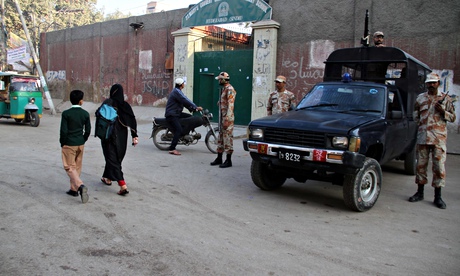
The horrific attack on the school in Peshawar is a blunt reminder that the Middle East does not have a monopoly on Islamic militant violence. For many years, it was Afghanistan and Pakistan – the latter dubbed “the world’s most dangerous place” by a US magazine in 2007 – that were the primary concern of security and law-enforcement agencies around the world.
To those on the ground it has long been clear that any problems in “Af-Pak” did not decline as young European Muslims decided to head to Raqqa to experience jihad first hand rather than North Waziristan, either when Osama bin Laden was killed in a US special forces raid on a safehouse in northern Pakistan in 2011 or when policymakers decided to drastically scale back the west’s involvement in Afghanistan. Instead, civilians and security personnel in both south Asian states continued to be killed in large numbers.
In Pakistan, though casualties peaked at nearly 12,000 in 2009, they have remained between 5,000 and 6,000 every year since. A similar number of Afghans were killed and wounded in the first half of 2014 alone, up 24% compared with the same period in 2013, according to the UN.
Of global attacks last month, 28% took place in Afghanistan or Pakistan, a recent study found. Iraq and Syria accounted for half.
The last few months have seen a surge in militant activity across south Asia. An apparently reactivated network in Bangladesh was exposed by an explosion in a bomb-making factory just across the border with India.
In India itself, there is evidence of increasing interest in global jihadi causes, even if the numbers involved remain negligible and any threat should not be exaggerated. Somewhere between 20 and 200 Indian Muslims, out of around 150 million in the country, have made some kind of effort to physically join Islamic State (Isis) in Iraq and Syria.
Last week, in a minor but worrying incident, a young executive in the southern city of Bangalore was arrested after being unveiled as a prolific pro-Isis tweeter. A series of strikes in Pakistan preceded the latest outrage in Peshawar. The Afghan Taliban has launched a bloody wave of urban violence in Kabul. There were further attacks in the south of Afghanistan on Wednesday.
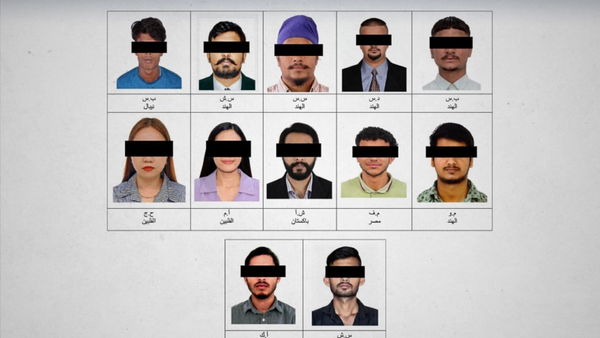
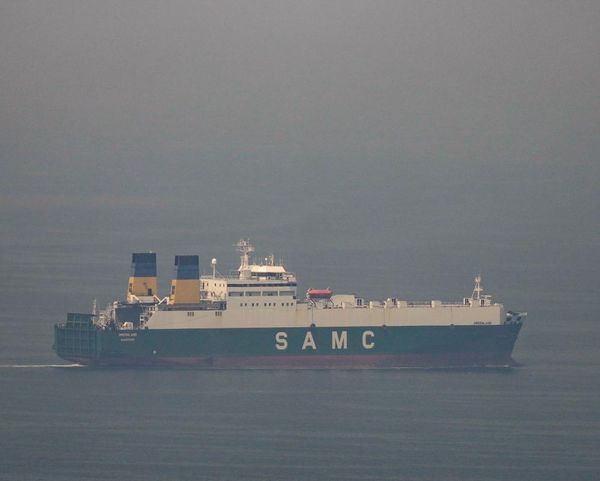
In September, al-Qaida announced the formation of a formal south Asian affiliate. Previously such franchises have involved a tie-up with an already existing outfit. This one was apparently created entirely anew. A sign of weakness? Of a desperate desire to compete with Isis? Possibly, or perhaps of a new confidence that a few successful, spectacular operations might prompt a wave of radicalisation and mobilisation. A bid to hijack a Pakistani warship and possibly turn its missiles on shipping in the Arabian Sea narrowly failed a month after al-Qaida’s call to arms.
Though all these groups are very different – and are not organisationally connected - they do share certain characteristics beyond the broad principles of violent Sunni extremism.
Inevitably, they thrive where the authority of governments is weak – in the drug trafficking heartlands of Afghanistan, slums in provincial Bangladeshi cities, in the rugged hills around Peshawar, or the unpoliced no-go zones of Karachi, Pakistan’s commercial capital. Some claim to represent communities that see themselves as marginalised within a particular state, such as the Pashtuns on both sides of the Afghan-Pakistan frontier or the Rohingya Muslims in Bangladesh and Burma. Many groups are deeply embedded in local social conflicts unseen from afar. In the case of the Pakistani Taliban, this means low-ranking clerics confronting local traditional religious and non-religious leaders; minor tribes taking on historically major ones; and low status individuals battling for wealth and power customarily denied them. Mullah Fazlullah, the leader of the movement, is a former mechanic from a minor tribe with no real claim to religious credentials at all. They also fight over rackets, turf and cash.
Over the last decade or more, analysts have sought to determine the centre of gravity of militant Islamic activism. Some have argued for the Middle East, for Afghanistan, for Pakistan and even for the west. But with the current resurgence of violence across such a wide swath of territory – last month a bomb attack on the Grand Mosque in the Nigerian city of Kano, 5,000 miles from Peshawar, killed 120 people – the reassuring idea that there is one specific battleground where the more general counter-terrorist campaign might be won is looking far-fetched. Over the last year or so, western intelligence services have been switching resources and focus away from south Asia. As events this week have shown, this sadly may have been premature.