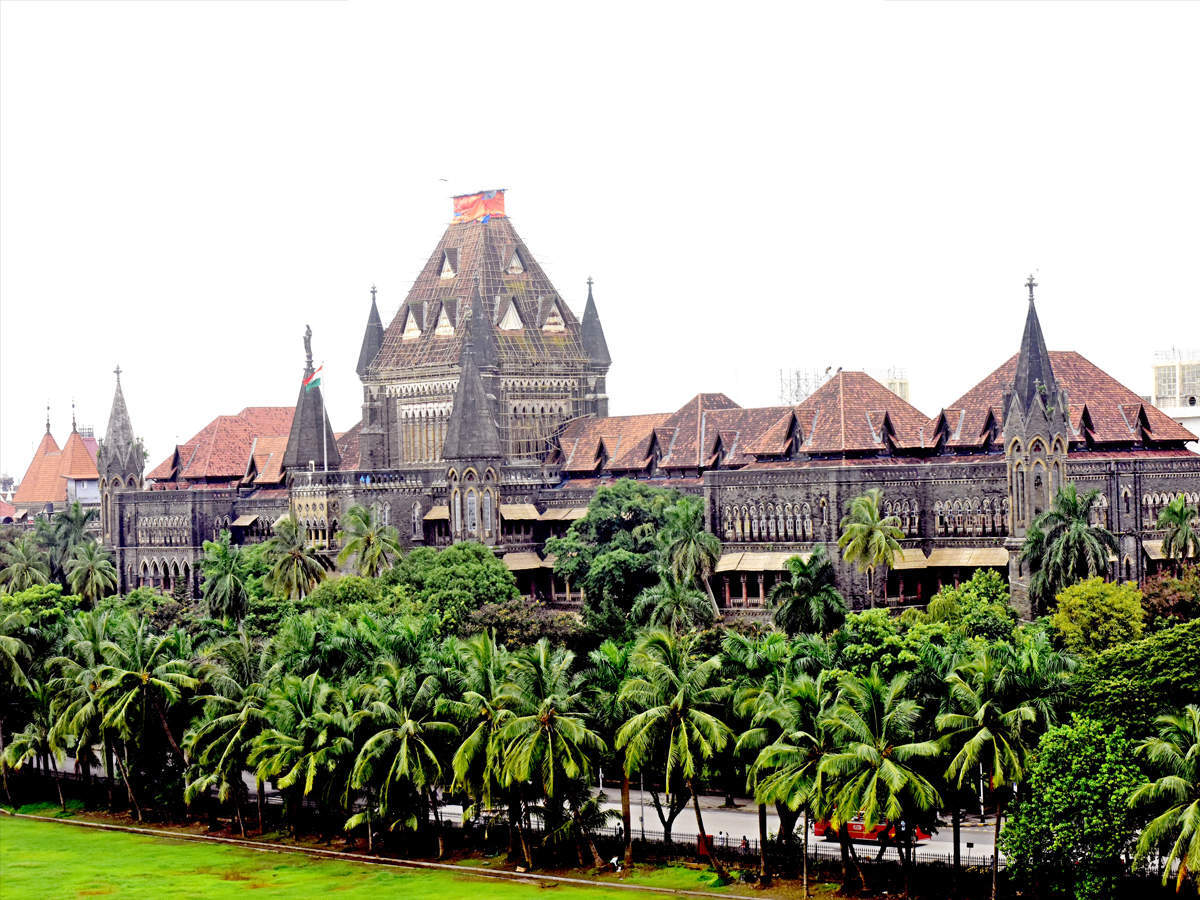
MUMBAI: Bombay high court on Thursday dismissed petitions to quash an FIR, completely or partly, registered by Central Bureau of Investigation (CBI) against former state home minister Anil Deshmukh and unknown others for criminal conspiracy and offence of undue gains as a public servant under the Prevention of Corruption Act.
A bench of Justices S S Shinde and N J Jamadar while dismissing state’s petition to delete two paras from the FIR said that the CBI can legitimately inquire into aspect of transfer and postings of police officers so also reinstatement of Sachin Waze after 15 years, to the extent those transfers and posting have nexus with offences alleged against then Home Minister and his associates keeping in view the observations of the bench in the order of April 5.’’ It added, “conversely” the April 5 order “cannot be construed as giving unfettered authority to CBI’’ to probe the transfers and postings “generally which do not reflect upon the alleged acts and conduct expressly attributed to then HM…’’
The HC noting, state’s concern expressed by senior counsel Rafique Dada of CBI using the April 21 FIR to do roving inquiry into its administration and demoralizing the police force, said the transfer and posting referred to in the para of the CBI FIR which the state wanted gone, “is essentially linked to allegation of abuse of official position by then home minister and his confederated.’’
The state’s objection was to two unnumbered paras mentioning Waze’s reinstatement as API, him getting all sensational cases and Deshmukh’s alleged ‘exercise of undue influence’ over transfers and postings and hence, over performance of police officers’ duties.
Deshmukh, 70, through his senior counsel Amit Desai had said the FIR was “vague’’ and “motivated,” needed a prior sanction since he was a public servant and state’s prior consent for CBI to probe. His counsel Amit Desai had said even “Ajmal Kasab got the benefit of the rule of law in this country.’’
The HC had on April 5 directed CBI to do a preliminary enquiry(PE) into a complaint by an advocate Jaishri Patil based on ex Mumbai police chief Param Bir Singh’s March 20 letter, three days after his transfer, alleging ‘corrupt malpractices’ by Deshmukh who allegedly asked Waze to collect Rs 100 crore per month from almost 2000 restaurants and bars.
The HC also noted that it had expressed its anxiety during the hearing on how or whether the probe would be broadbased to “investigate the acts and omissions of officers who might have had a role,’’ apart from Deshmukh. The HC judgment records that CBI through solicitor general Tushar Mehta assured it about the “integrity of investigation’’ and that it would be “done dispasstionately’’ as investigation is “issue centric’’.
It was not uncommon that person who sets law in motion is also eventually indicted CBI had submitted adding its “endevour would be to honour the spirit of the order under which the investigation has been directed.’’
The HC did not accept state’s submission that consistent demand by CBI for Shukla’s report amounts to derailing or interference of its probe into the leaking of her report. If the state is saying that nothing of substance was found her report, “we are unable to appreciate the steadfast resistance’’ by state to share it with CBI.
The HC agreed with Mehta, for CBI, that plea by Singh was to “cleanse the system of police postings and transfers allegedly made for extraneous consideration, in future’’.
To State’s submission that Singh had sought to put past postings and transfers on the radar, the HC said that on April 5 the CJ-led bench had and that the April 5 observed that Singh’s letter raised issues that placed citizens’ faith in police and state machinery at stake, necessitating an independent probe.
The granted no stay on the dismissal verdicts. To State’s plea for stay it said “it was not expedient to stay’’ else it would amount to interfering with the investigation which is underway’’ and to Deshmukh’s counsel Desai who sought stay saying question of law was involved, HC saw “no justifiable reason to stay’’ its judgment.
Advocate Kamlesh Ghumre for Deshmukh later said, “Once we study the judgment, we will be able to decide the future course of action.’’
“We clarify that the observations are made” only for the State’s petition, said the HC and not on other pending petitions of Shukla and Param Bir Singh, which are to be heard on July 28.
Inherent powers to quash FIR are required to be exercised in exceptional cases, said t he HC. “At the stage…, when the truth is yet to be unearthed, this Court cannot embark upon the inqiuiry into the correctness or otherwise of the allegations.’’
ASG, Aman Lekhi for CBI assured the HC that “nobody would be spared’’ and it would “not play favourites’’ and “it would be an unsparing investigation irrespective of the rank.”
The Bench said CBI must be alive to its responsibility and quoted from Lord Denning on police duties to say “they serve none but the law.’’
State’s counsel Rafique Dada sought a stay for two weeks, after first seeking an ‘interim arrangement’ to study the judgment for appeal. For CBI, solicitor general Tushar Mehta opposed and declined to continue its earlier statement of not pursing its request for certain documents including a phone-tap report submitted by former commissioner (SID) Rashmi Shukla on transfers and postings.
Deshmukh’s counsel Desai also sought a stay to go in appeal as “questions of law were raised.’’ The CBI through Mehta and ASG Anil Singh opposed. The HC too said no questions of law are involved and declined any stay, thus giving the CBI a green signal now to proceed head on with its investigations against the leader from Nationalist Congress Party (NCP) and unknown others.
Advocate Kamlesh Ghumre for Deshmukh later said, “Once we study the judgment, we will be able to decide the future course of action.’’
The Bench concluded by saying that the “CBI, a premier investigation agency, are and must be fully alive to their responsibility” and that the duty of the police constituted under either the state enactments or special acts is to act in accordance to law of the land. “They serve none but the law,’’ said the HC. It quoted the celebrated Lord Denning from the English courts, who had described the police duty as follows: “I hold it to be the duty of the commissioner of police as it is of every chief constables to enforce the law of the land. He must take steps to post his men so that crimes may be detected and honest citizens may go about their affairs in peace. ….He is not the servant of anyone save of the law itself.”
In State versus CBI, the HC held that, “Implicit in the allegation that funds were to be extorted from specified and vulnerable sources, is the element that there would be either no enforcement or laxity in enforcement of law.’’ It added, “The charge is also of criminal conspiracy. Conspiracy is hatched in private or in secrecy. It is rarely possible to establish a conspiracy by direct evidence. There is often multiplicity of human agency and plurality of means. In the backdrop of the nature of the allegations, whether the police officers were given particular posting and assignments, so as to exercise undue influence over them, and also reinstatement of Shri Vaze after 15 years, cannot be said to be matters which are beyond the purview of the inquiry ordered by the court.’’
While in Deshmukh versus CBI, the HC said, “Whether police officers were transferred and posted to achieve the alleged desired objective of collection of funds, whether those amenable to Deshmukh’s influence brought in too allegedly influence course of investigation, where police were posted to a particular post are all “matters which are inextricably intermingled with the allegations against (Desmukh).’’
In Deshmukh’s petition, HC had framed four questions. The first was whether prior State consent was necessary for CBI probe into its FIR and it held it was not, “especially when the Division Bench has adverted to the necessity of entrusting the enquiry to an independent agency as it found that cognizable offences were prima facie made out.’’
The second was prior sanction as mandated under section 17 A under PCA since he was a public servant and FIR alluded to his public duties. The HC said section 17A is not held by the court to be a fetter when a higher court is convinced that an impartial probe is needed by an independent agency.
While Deshmukh’s counsel Desai “undaunted and at his combative best’’ as the HC judgment noted, had argued that there was no specific averment to suggest any offence, nor had he received any money, CBI said Deshmukh’s acts were not his “official duty’’ thus needed no sanction for prosecution and his petition was “entirely misconceived.’’
It also said, “The audacity of the submission that the FIR does not disclose a prima facie offence is belied by the hard facts of the case.’’
“The FIR makes reference to the advocate Jaishri Patil’s complaint and Param Bir Singh’s letter… We find it difficult to accede to submission that allegations in Singh’s letter be discarded, on ground of being hearsay…a bare perusal of complaint ...and letter would prima facie indicate that the (Deshmukh) allegedly identified the source from which the funds were to be collected, the probable number of such units, and the amount to be collected from each of them.”
The HC also said, “We agree with the submissions of (Additional solicitor general Aman) Lekhi that at this stage when investigation is underway any attempt to sieve through the material with a fine gauze to ascertain the existence or otherwise of the ingredients of the offences is uncalled for. It is trite that FIR is not an encyclopedia and the purpose of investigation is to unearth the truth.’’