Peru develops early warnings of melting glaciers – in pictures
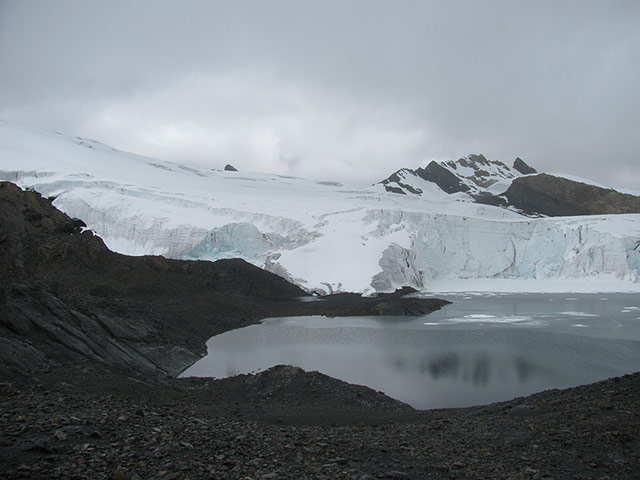
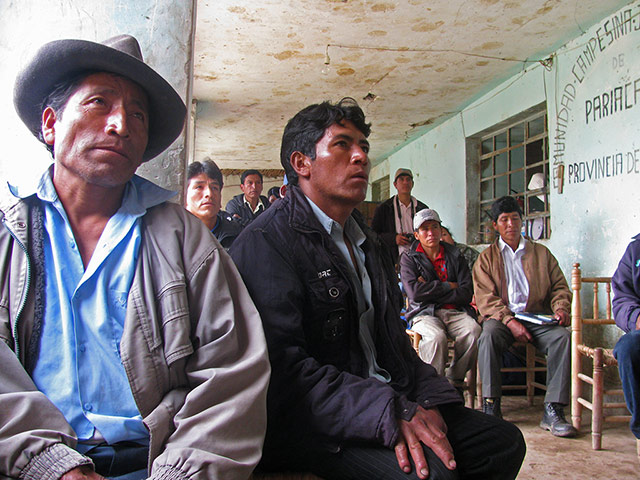
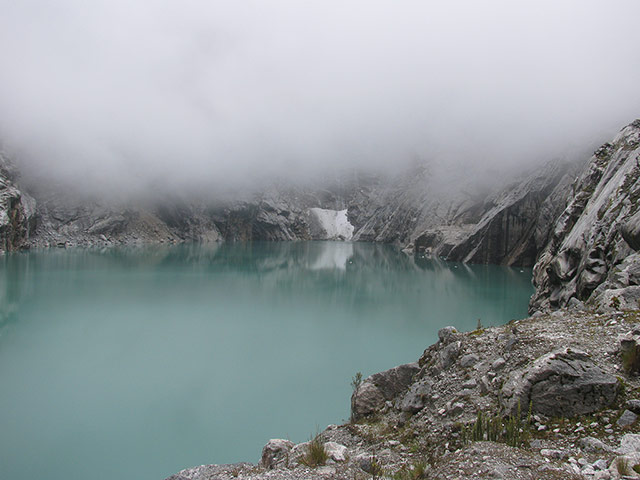
Peru has the world's largest concentration of tropical glaciers, and most are in the Cordillera Blanca, or white mountain range, in the north of the country. The Pastoruri glacier has become a symbol of the accelerated retreat of the white-topped Andean peaks. It used to be a ski resort; now its main attraction will be a climate change tour. 'Tourists come to see how much the glacier has retreated,' says Ozwaldo Gonzales, a ranger at Huascaran national park. The glacier has retreated 577m since 1982, according to Peru’s glaciology and hydric resources unit Photograph: Dan CollynsVillagers in Pariacaca watch a presentation about Peru’s first early warning system, which monitors glacial lake 513, located above their village. In 2010, they managed to escape a landslide precipitated by an ice avalanche into the lake because they had constructed tunnels to drain off extra water. As the glaciers melt, the excess meltwater will cause more floods in downstream villages such as Pariacaca. Now, with technical assistance from the University of Zurich and Swiss aid, the solar-powered early warning system allows them to sleep more easily at nightPhotograph: Dan CollynsWith its 24-hour video footage, the early warning system has an added attraction for livestock farmers, because it can help identify abigeos – ‘cattle rustlers’ – on the highland pastures. Villagers from Pariacaca used more than 40 mules to carry the materials and install the system at the lakeside at 4,750m above sea level. Workshops in the native Quechua language explain to the villagers they will have 22 minutes to evacuate using clearly marked escape routes if the lake overflows again Photograph: Dan Collyns
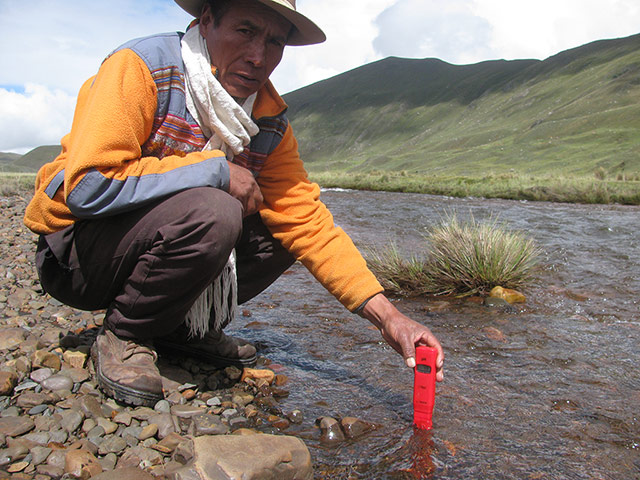
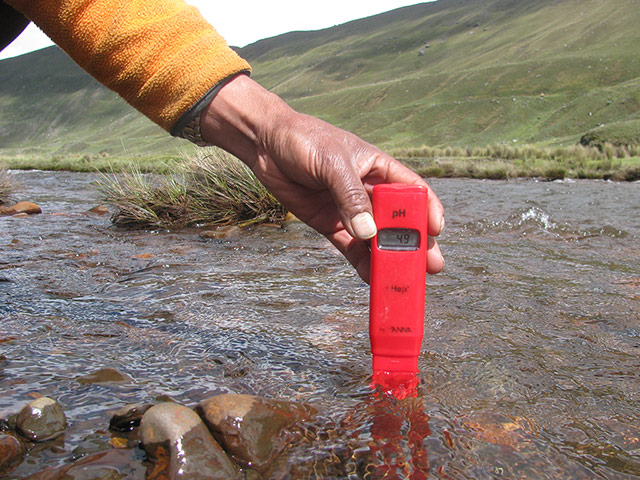
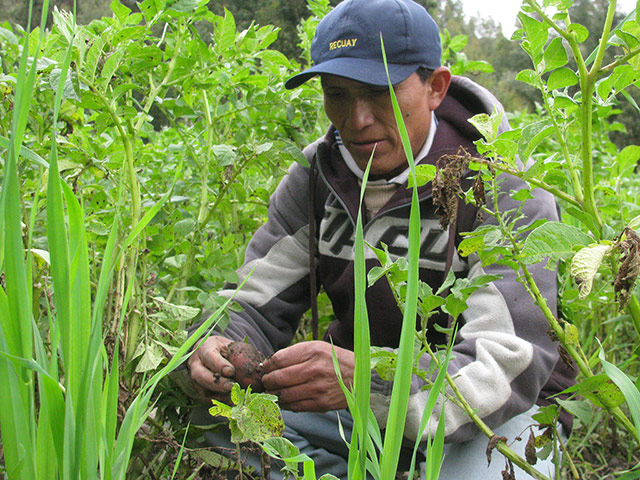
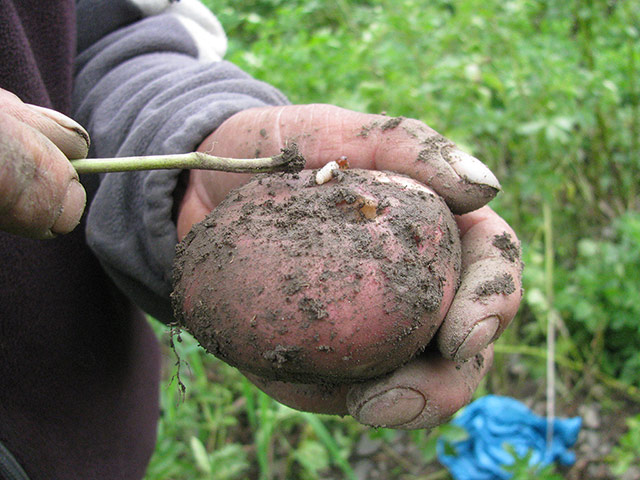
Farmer Alejandro Cruz measures the pH of the Black river, which is turning increasingly red due to acidic iron oxide deposits. An unexpected side-effect of the glacial retreat is the acidification of the meltwater, as the withdrawing ice exposes metal-rich rocks to the air for the first time in tens of thousands, or even millions, of years Photograph: Dan CollynsAfter heavy rainfall, the pH reading of the river water stands at 4.9 (highly acidic, for water). Cruz and his farming community are working with scientists to use local plants to counteract the heavy metals in the meltwater. Certain plants have an 'extraordinary capacity to absorb metals', says Raul Loayza, an aquatic toxicologist at Lima’s Cayetano Heredia University. Cruz and his fellow farmers are beginning to tailor the existing highland wetlands – which act like slow-release sponges for glacial meltwater – to combat the deteriorating quality of the water as well as storing it Photograph: Dan CollynsGeronimo Salvador examines his potato crops, which have been blighted by ‘rancha negra’: 'It happens when the soil is waterlogged. The potato looks burnt.' The weather is much more extreme than it used to be, he says. 'There are more rains in the rainy season, more droughts in the dry season, and more frosts in the winter' Photograph: Dan Collyns'We never used to have pests at 3,500 metres above sea level, but now that it’s warmer at this time of year, we do,' says Salvador. 'Some farmers are starting to use insecticide for the first time,' he adds. Farmers in the Cordillera Blanca are now learning about irrigation from farmers in the Cordillera Negra on the other side of the Santa valley. They are preparing for a time when there will be less water, both in quantity and quality after the glaciers have melted Photograph: Dan CollynsLake 513, underneath the Hualcan glacier, now has 24-hour monitoring but scientists warn there are another 34 glacial lagoons in the Cordillera Blanca which could overflow if a chunk of glacier fell into them or if there was an avalanche or earthquake. Huaraz, the regional capital, with about 70,000 inhabitants, lies underneath the Palcacocha lagoon. In 1941, the lagoon overflowed and devastated the city. Experts say early warning systems are a necessary investment to protect these vulnerable populations Photograph: Dan Collyns
Sign up to read this article
Read news from 100’s of titles, curated specifically for you.