
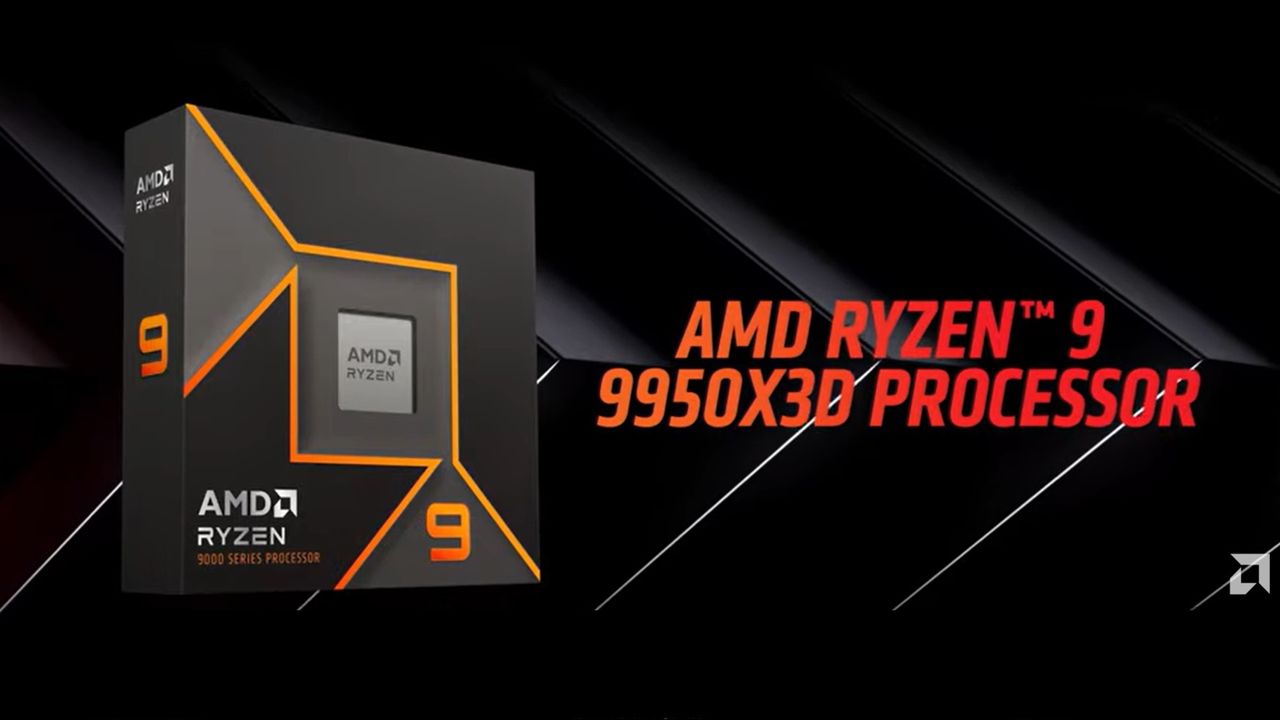
- AMD introduces dual V-cache processor aimed at heavier mixed workloads
- Zen 5 architecture, paired with expanded cache, drives a new performance focus
- AMD Ryzen 9 9950X3D2 Dual Edition records modest gains across creative software and compilation tasks
AMD has introduced its most advanced desktop processor so far, the Ryzen 9 9950X3D2 Dual Edition, with cache size now forming a central part of its performance strategy.
Jack Huynh, the Senior Vice President and General Manager of the Computing and Graphics group at AMD, claims this is “the world’s first dual AMD 3D V-Cache technology enabled processor.”
The processor is built on the Zen 5 architecture and integrates 16 cores with a total cache of 208MB.
Dual cache and real workload impact
AMD’s 3D V-Cache design stacks additional memory directly on top of the processor die, reducing the distance data must travel.
This approach is intended to improve latency and throughput in demanding applications.
With both chiplets now using this design, the company claims a measurable shift in responsiveness rather than a marginal upgrade.
According to AMD, the chip delivers between 5% and 10% over its predecessor in workloads such as DaVinci Resolve, Blender, and large code compilation projects.
These gains are not dramatic on paper, but they suggest incremental refinement rather than a complete redesign.
“Expanded on-chip memory helps reduce latency and keep demanding workflows responsive, from complex timelines and large datasets to parallel builds and simulations,” AMD said in a YouTube video.
However, the launch of this processor raises questions about how close desktop chips are getting to workstation-class products like Threadripper and EPYC.
Those platforms have traditionally been defined by higher core counts and broader scalability, but they also come with higher costs and platform requirements.
By combining high core counts with large cache reserves, AMD appears to be reducing the practical differences for certain users.
Tasks such as rendering, simulation, and software builds are increasingly feasible on a mainstream desktop platform without moving to specialized hardware.
Alongside the processor itself, AMD continues to build around the AM5 platform, maintaining its emphasis on long-term compatibility across multiple generations.
This approach reduces the need for full system replacements when upgrading processors, extending a pattern that was already established during the AM4 era.
The new chip fits within that same framework, offering an upgrade path that does not require a complete rebuild.
This may carry practical importance for users maintaining systems over longer cycles, as AMD describes this processor as an effort to reduce trade-offs between gaming performance and productivity workloads, particularly with the introduction of dual-chiplet 3D V-Cache.
The chip is set to launch on April 22, 2026, when these performance claims will be tested against real-world use.