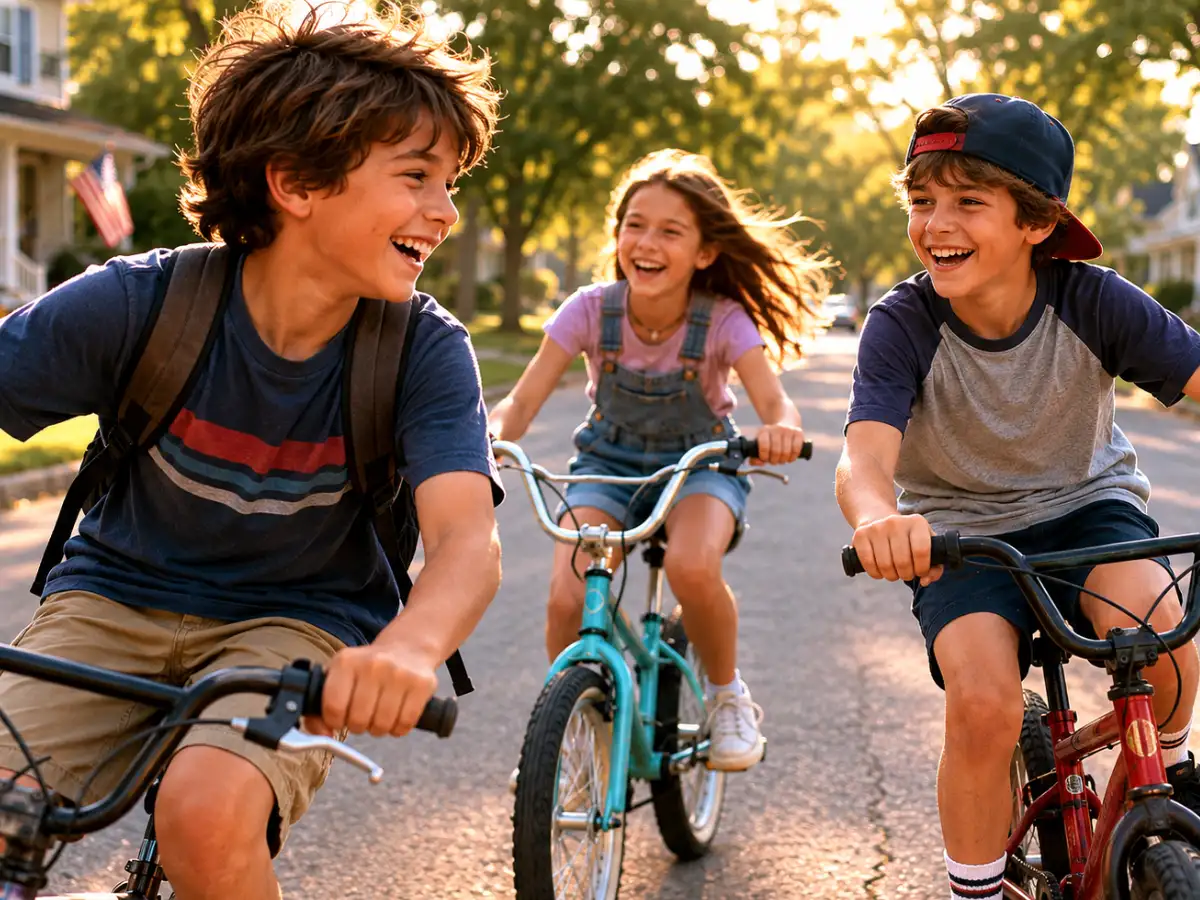
If you grew up riding your bike until the streetlights came on, without a phone and without much of a plan, you are not imagining that things were different. A 2023 paper in the Journal of Pediatrics by Boston College psychologist Peter Gray, anthropologist David Lancy, and psychologist David Bjorklund stated that the key driver of falling mental wellbeing in young people is the decline in children’s independent activity. It’s the kind of research that helps put some form to a feeling many millennials have had for years: that something has changed in how kids grow up, and not for the better.
What ‘free’ really meant
For a lot of millennials and older Gen Z, the freedom of childhood was not a huge philosophical issue. It was normal. You left the house after breakfast, you came back for dinner, and nobody really knew where you were in between. You had to learn to fight other kids yourself. You got lost and found your way back. Sometimes you got bored, and that was fine.
That doesn't mean everything about it was great. Kids got hurt. Some of the independence perhaps was just the lack of anyone paying attention. And it’s worth being honest that this kind of freedom was never equally available to everyone. The unsupervised afternoons that one kid fondly remembers may be the same situation another kid experienced as simply not enough support at home. Any fair look back at this era has to hold both of those realities at once.
Why supervision took over
That shift to constant supervision wasn’t really about kids being in more danger. Gray's research shows that children today spend far less time outdoors making friends and creating their own games, and far more time at home doing homework or consuming media under parental supervision. He argues that this shift has been detrimental to their development and wellbeing.
A lot of this goes back to the 80s and 90s when media coverage of child abductions exploded, although they are statistically rare events. Parents began to watch more closely, schedules filled with organized activities, and unsupervised play was no longer the norm. Even when enough families changed habits, there often weren't other kids around to play with outside anyway. Today, children are seen as requiring regular adult supervision and protection as opposed to the view of children as competent, responsible and resilient children which persisted in the past, and this has steadily diminished children’s freedom to undertake some risk and personal responsibility activities away from adults.