Seven months have passed since the World Health Organization declared the novel coronavirus to be a pandemic.
A new way of life is taking root in society after it was shaken by the unknown virus. Many people, including those in Japan, have avoided unnecessary outings and shunned areas with the "three Cs" -- closed spaces, crowded places and close-contact settings.
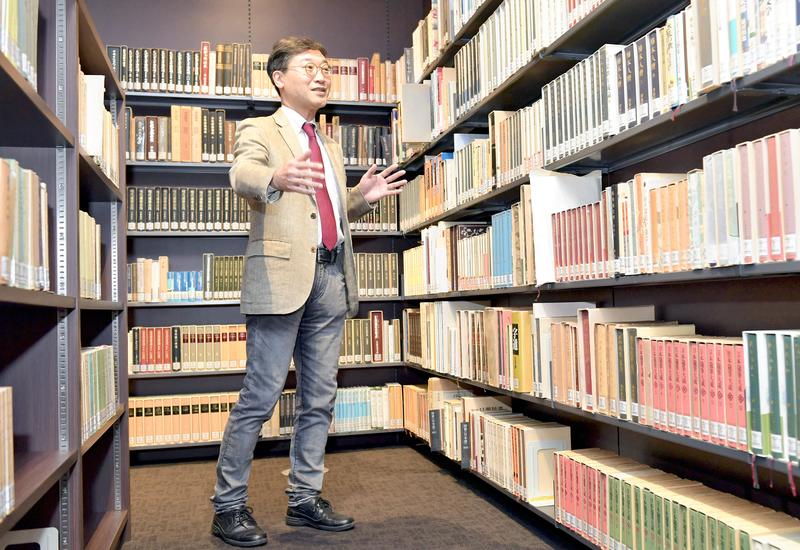
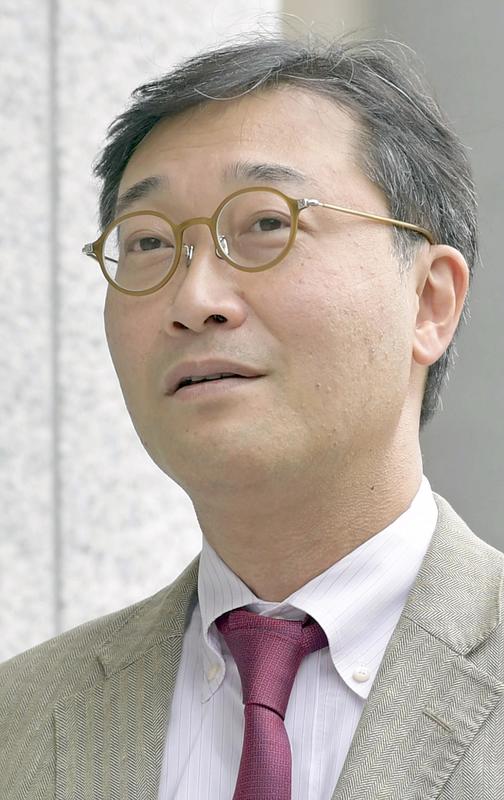
We are not at the end of the coronavirus disaster, and there is a question of whether we can keep accepting this new norm of caution over freedom. The Yomiuri Shimbun interviewed Ritsumeikan University Prof. Tatsuya Mima, who is a medical sociologist and doctor, on what to make of the societal transformation caused by the pandemic. The following is excerpted from the interview.
-- Voluntary restrictions
In terms of infections, Japan has steadily seen several hundred cases per day, but Europe, where cases had once peaked, is now seeing them rise again. The virus' spread has been contained by individual behavior, such as refraining from going out, and also by measures such as restricting stores' operations. Once those restrictions are relaxed, however, the virus will regain its power. I think there is a high possibility that such a seesaw effect will continue in Japan and other countries.
The coronavirus, which first broke out in the Chinese city of Wuhan at the end of last year, soon spread to places like Europe, the United States and Japan. The difference between this and the plague of the Middle Ages or the Spanish influenza of the early 20th century is that the coronavirus rapidly spread around the world via infected people on airplanes. It is said to symbolize the modern-day lifestyle.
On the other hand, the environment created by the pandemic is far from modern society, with its basic philosophy of freedom of movement and inviolable human rights. To my surprise, the majority of the urban population accepted restricting their movement and generally cocooned in their homes. Only some countries had to exercise legal coercion with fines. Especially in Japan, many people voluntarily observed social distancing even though regulations were loose.
Why would people reluctantly choose to limit their freedom and maintain social order?
-- Amid plague pandemic
French philosopher Michel Foucault (1926-1984) in his book "Discipline and Punish: The Birth of the Prison" depicted scenes from medieval European cities haunted by plague and presented them as the basis of the modern age. Cities were segmented to be locked down for isolation and quarantine, and watchmen monitored if there were any offenders. People were trained to dole out discipline and manage under surveillance. In a sense, it is an ideal model for maintaining order.
Foucault focused on aspects of management and surveillance and argued the lockdowns of urban areas due to infectious diseases had become the prototype of modern society. He wrote that surveillance sat in the center of power, and it could be used to subjugate the public and maintain order in modern society.
The author pointed to panopticon as a symbol of modern surveillance. It is a system to monitor an entire prison that was introduced in the 19th century, wherein many prison cells are arranged around a monitoring tower.
The system is just like a teacher standing behind students in the classroom while making them study by themselves. The students don't know who the teacher is looking at, so they sit still at their desks because they may be being watched. Prisoners, students and people living in modern society like us all have the idea of "we are constantly being monitored" and so we end up self-monitoring. With the coronavirus crisis, isolation, quarantine and stricter-than-usual self-monitoring became the means of managing a city, and people have followed a new model of behavior, such as refraining from going out.
However, there is also overly aggressive surveillance in the form of the self-appointed "self-restraint police," who criticize via social media restaurants that do not suspend their businesses. I believe this to be a sign people are unhappy with the inconveniences the pandemic has caused them and so are jealous of people who seem to be enjoying a "normal" life.
On the other hand, we are far removed from the time of the plague, when the fatality rate was overwhelmingly high and people had to be prepared for death when the epidemic started. Although medical advancements have been made, we have been able to control the spread of the coronavirus to some extent by voluntarily securing social distance. It is extraordinary that the public realized their collective power of being able to suppress the virus' spread through their actions. I think this kind of realization will translate into stopping climate change.
In this sense, it is sad to see that some developed countries are trying to secure vaccines individually for their own countries. If the world does not come together to stop the spread, the virus will never be stopped. Only when we reach across borders to help one another can it be contained.
-- Modern-day panopticon
Technologies that did not exist in Foucault's time played a major role in the coronavirus disaster. Information communication infrastructure such as the internet is one of them.
Even if we stay at home, we can communicate via the internet and hear about the situation around us and the world. I believe this is a major reason why people voluntarily accepted restrictions.
Monitoring systems were also strengthened. In China, a system has been introduced to determine the need for active restrictions. In Japan, a COCOA smartphone app is available that can notify users of possible contact with infected people.
The idea of downloading a contact-tracing app onto your smartphone is a transformation of the panopticon practice wherein people are monitored at random. In Japan, you decide whether to download the app, instead of being forced, meaning you are not being "unwillingly monitored." It is a modern concept of weighing the burden of being monitored with the benefit of avoiding risks, and some choose to voluntarily submit to being monitored. At the beginning of the outbreak, of course, the fear of the virus provided a great motive for accepting surveillance and consent to restricting one's actions. Since then, people began to gradually see the benefit of being monitored and thus have continued to do so.
-- 'Price' of freedom
I am a neurologist. In the late 1980s, when I was a student, patients with AIDS were discriminated against in Japan, and I became interested in the relationship between society and medicine.
The similarity between AIDS and this coronavirus disaster is that discrimination and prejudice against infected people have become a social problem. In the case of AIDS, people who were infected with HIV, such as homosexuals and women, were considered outlaws and immoral, and they became the target of discrimination. There was a different view of those who contracted the virus via medical treatment.
In the coronavirus disaster, there is a strong social tendency to question whether the infection was caused by the person's failure to follow the new way of life, and such sentiment has led to infected people and their families being criticized. So-called nightlife districts and other places are also being discriminated against. The public considers them as "unclean" and outside the law, despite there being little medical evidence supporting their view.
Public health surveys that show the status of infections by region provide numerical data to protect people's health. With regard to lifestyles, however, the data cannot prevent moral criticism and "unclean" views. Criticizing infected people does not help prevent the spread of infections. The challenge for the future is finding a way to fill the gap between science-based public health and moral sentiments.
The coronavirus disaster will be an opportunity to think about the way society deals with freedom and order. Restrictions on freedom vary greatly from country to country, and China, which forcefully locked down cities, was the most successful in containing the virus.
It is ironic that a country without freedom was able to preserve order and human life. Even in countries where freedom is the foundation of the nation, inconvenience was tolerated and sometimes compulsory restrictions were accepted amid the pandemic. What we have come to see is the penchant for a "market tendency" of freedom that is rooted in lifestyle and lives. The power of surveillance is not an absolute evil; it can actually protect people's lives. The question is how we integrate freedom into our lives.
-- Tatsuya Mima
Born in Osaka Prefecture, Mima completed his Ph.D. in medicine at Kyoto University. He serves as a professor at Ritsumeikan University and was an associate professor at Kyoto University. He specializes in medical sociology and brain science, and he has authored many books. He is 54.
-- This interview was conducted by Yomiuri Shimbun Senior Writer Fumihiko Abe.
Read more from The Japan News at https://japannews.yomiuri.co.jp/