The Pentagon said on Wednesday that it was unlikely to conduct a new investigation into the exposure of US service members to chemical weapons encountered during the last Iraq war, despite allegations that troops had been exposed to thousands of munitions.
The Pentagon said that it estimated that only 20 service members were exposed to dangerous chemical weapons. But the Pentagon press secretary, Rear Admiral John Kirby, said on Wednesday that a Pentagon-level investigation into the extent of troops’ chemical vulnerability was not on the cards.
After the New York Times published an extensive investigation about Iraq veterans’ exposure to chemical weapons like sarin gas, which it said had been considered a state secret, Kirby told reporters he had no information about US troops being denied medical treatment owing to the secrecy surrounding the operation.
“The treatment they received on the battlefield was at the operational level, and the treatment that they are or are not receiving now is either for the VA or for the services to speak to,” Kirby said, referring to the Department of Veterans Affairs, which is recovering from a scandal over the length of time veterans have had to wait to receive medical care.
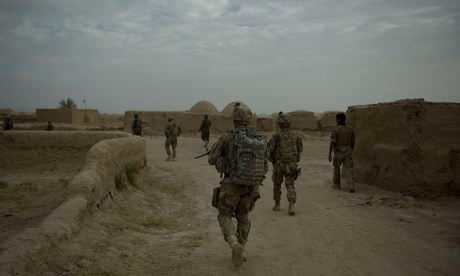
The Times found cases, dating back to 2004, of US troops serving in Iraq encountering some 5,000 munitions containing sarin, mustard gas, nerve agents and other chemical weapons. It reported that the Pentagon has acknowledged 17 exposure cases, but a fuller accounting remains classified.
Soldiers, particularly those tasked with explosive ordnance disposal, recounted to the Times painful blistering on their skin after encountering what one called “full-up sloshers” of oozing and mysterious chemicals. They received inadequate or inappropriate medical care, occasionally from doctors unprepared to address chemical burns, and were encouraged by superiors to describe chemical munitions they found as insignificant, owing to the sensitivities around the origins of the war.
George W Bush fatefully launched an invasion and occupation of Iraq in 2003 to rid the country of stockpiles of chemical and biological weapons and an active nuclear weapons programme. Those programmes were inactive or abandoned at the time of the invasion, investigators later determined. The chemical rounds encountered by US service members and detailed by the Times are said to be remnants of Saddam Hussein’s pre-1991 chemical weapons stocks, much of which were destroyed by United Nations inspectors.
The Islamic State (Isis) appears to be in control of the Muthanna State Establishment, a formerly crucial facility for chemical weapons production. Some 2,500 chemical-filled rockets are said to be in the facility, which, the Times reported, was never encased in concrete, per an Iraqi government plan.
Kirby expressed confidence that Isis was not “in possession of those kinds of munitions,” nor was Isis in a position to capitalise on degraded chemical weapons.
“We still believe it would be very, very difficult for them to weaponise it,” he said.