The Pentagon has expressed concern that US national security could be endangered by former special forces members going public with details of operations such as the 2011 raid that killed Osama bin Laden.
The warning came amid an unseemly public squabble involving former members of the elite US Navy SEAL Team 6 over who should be credited with firing the shot that killed the al-Qaida leader, which has also put the names of the traditionally anonymous special forces into the public domain.
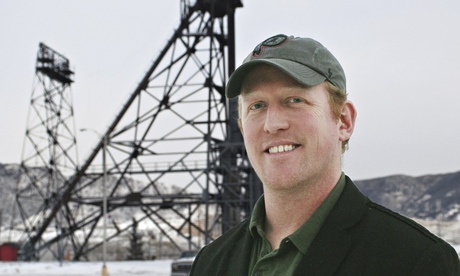
The identity of members of the team who raided Bin Laden’s Pakistani compound would normally never be disclosed. But two members of the 23-strong team involved have been identified: Matt Bissonnette, who wrote a 2012 bestseller No Easy Day under the pseudonym Mark Owen; and this week Rob O’Neill, who has been on 400 combat missions and was decorated 52 times. Now a motivational speaker, O’Neill’s skills include sniping, diving, demolition and high-altitude free fall. He has made 1,000 parachute jumps.
Not only are their identities now public, but Bissonnette and O’Neill offer different versions of Bin Laden’s last moments.
The US defence department declined to say which version it considers the accurate one. Even though the Pentagon itself briefed heavily in the aftermath of the raid, Naval commander Amy Derrick-Frost said on Friday: “The specifics relating to operations and personnel is classified.”
She reminded former members of the special forces about their obligations to maintain secrecy. “As private citizens, former members can speak to the media under their first amendment rights,” she said. “But they must adhere to the non-disclosure agreements they signed on joining and any breach of that places our national security at risk.”
Bissonnette has been under investigation over disclosures he has made either in his book or in speeches. Asked if O’Neill too could face investigation, Derrick-Frost said: “We do not speculate on what actions might or might not be taken.”
O’Neill, offered up his version of the raid in the Washington Post on Friday. He had been the first to tumble through the doorway of bin Laden’s bedroom, saw him standing there, shielding himself behind one of his wives, and shot him in the forehead, he said.
O’Neill said it was clear Bin Laden had died instantly, his skull split by the first of two bullets he fired at him. “I watched him take his last breaths,” he said.
O’Neill’s confirmation of his involvement in the mission comes after he was unmasked by sofrep.com, a website popular with special forces. He told the Post he had been planning to go public anyway after months of speculation about the identity of the man labelled by Esquire magazine as “The Shooter” in its account of the raid. But O’Neill’s version is at odds with another Seal who ended up in the bedroom too – Bissonnette. In his account, Bissonnette attributes the fatal shot to a third – unnamed – Seal, who was on point duty. According to Bissonnette, the point man saw a man pop out off the bedroom. The point man fired two shots. When he, Bissonnette and O’Neill went into the bedroom, Bin Laden was not standing, as O’Neill suggests, but prone on the floor, “in his death throes”, his body twitching and convulsing. Bissonnette and another comrade – presumably O’Neill – fired several more shots to make sure he was dead.
Bissonette, in an interview with NBC News on Thursday, offered a diplomatic response when asked about the conflicts with O’Neill’s account. “Two different people telling different stories for two different reasons,” Bissonnette said. “Whatever he says, he says. I don’t want to touch that.”
A definitive version may be impossible given that no autopsy was conducted and Pentagon said the body was dropped into the sea.
Current and former members of the special forces, speaking anonymously on chat-lines popular with the US military and to the media, have expressed unhappiness over so much being debated in public.
Some have backed O’Neill’s version and others Bissonnette’s. A handful have charitably defended the two, saying amid the confusion of the raid it is hardly surprising that there are variations in the accounts.