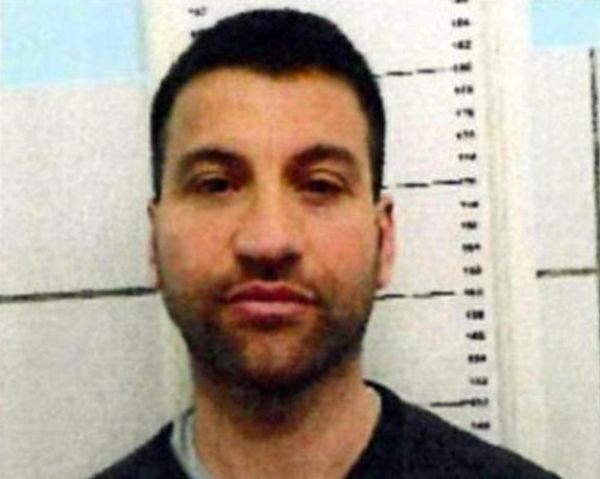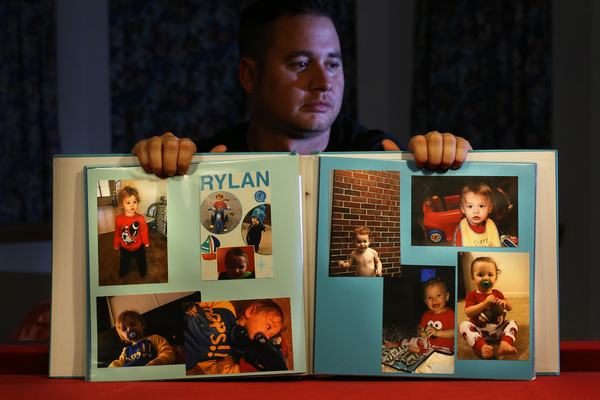
WASHINGTON _ In September 2011, Army Sgt. 1st Class Crispen Hanson's commander at Fort Bliss ordered him into a military treatment program for child abusers.
Texas child welfare authorities had formally reported a "reason to believe" the 20-year Army veteran had severely beaten his 6-month-old son, Malachi, leaving him with a broken leg.
For the next four months, Hanson met weekly with a therapist from the Family Advocacy Program, a $200 million-a-year Pentagon program known as FAP that seeks to prevent child abuse in the ranks.
When Hanson completed the therapy, FAP officials closed the case and a state judge allowed him to see his infant son.
But three months later, on April 9, 2012, El Paso paramedics called to Hanson's house found Malachi dead. An autopsy found "blunt force injuries" and "innumerable contusions of the head, torso and extremities."
The county medical examiner ruled the death a homicide.
Last year, Hanson pleaded guilty to two counts of injuring a child after prosecutors agreed to drop murder charges. A state judge sentenced him to probation. The Army gave him an honorable discharge and a full pension of about $28,000 a year.
Army officials said the decision to close the FAP case before the infant's death was appropriate. "No program has a 100 percent guarantee of success when dealing with individuals," said William Costlow, an Army spokesman.
The Pentagon has struggled to deal with a little-noticed cascade of child abuse and neglect cases in military families in the years since America went to war in Iraq and Afghanistan, a Los Angeles Times/Tribune Washington Bureau investigation has found.
Previously unreleased reports by the Army, Navy and Air Force reveal numerous cases in which military officials knew or suspected that child abuse or neglect was occurring, but failed to intervene or to alert the Family Advocacy Program or state child welfare agencies, The Times found.
In many cases, the reports blamed military personnel for failing to report cases of abuse and neglect to FAP officials.
FAP "is not accessing those most in need due to ... failure on the part of others to report concerns or maltreatment incidents," warned an internal 2014 report on 27 deaths in Army families.
"In several cases, command was aware of ongoing abuse but failed to report it," it said.
A 2014 report on 50 deaths in Air Force families over five years reached a similar conclusion.
"In numerous cases ... Air Force employees and other individuals were aware of suspected child maltreatment or domestic abuse and did not report it to FAP or any other authority," it said.
Citing privacy restrictions, Pentagon officials redacted parts of each report, which were released in response to Freedom of Information Act requests. The Times was able to identify many victims and their abusers by comparing the reports with court records and other legal documents.
Even senior FAP officials concede they are able to help only a fraction of the children who suffer abuse.
"We get about 25 percent of the incidents," said Rene Robichaux, who oversees an Army-wide clinical child abuse treatment program from the Army Medical Command in San Antonio. "The rest occur behind closed doors."
America's longest wars already have been associated with poor mental health in military families, behavioral problems in children, a higher risk of divorce, and higher rates of suicide, studies show.
Experts now add child abuse to that tragic list.
"We have a relatively high rate of child maltreatment," said Dr. Sharon Cooper, a pediatrician and retired Army colonel who treats child abuse victims at Fort Bragg in North Carolina. "And we know that child abuse and neglect is highly influenced by deployment."
Child fatalities have soared even as the armed forces have shrunk by 10 percent in recent years.
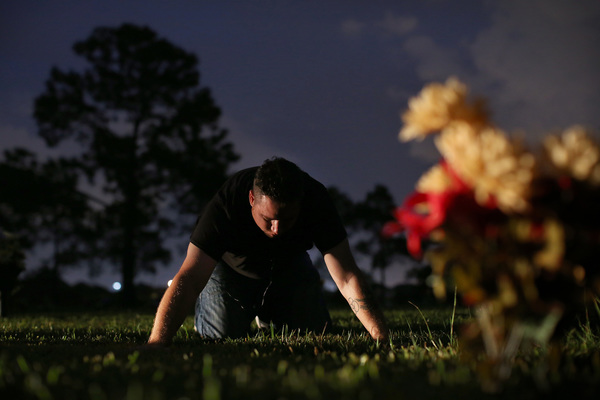
Fatalities more than doubled from 14 in 2003 to 38 in 2012. They remained above 30 a year through 2014 before dropping to 23 in 2015, the last year that Pentagon records are available. Overall, FAP counted 5,378 child abuse and neglect victims in military families in 2015.
The Pentagon long has claimed that child abuse is less severe in the military than in the civilian population. The military weeds out alcohol and drug users with random tests and annual fitness reports, and the mental strain of unemployment isn't a problem.
Moreover, base commanders are supposed to monitor their troops' daily lives and the welfare of their families. They can order FAP to counsel parents and even temporarily bar service members from contact with their families in abuse cases.
Military bases also are required to cooperate closely with state child welfare agencies, which share responsibility for protecting children in military families living on and off U.S. installations.
But in the last five years, the rate of child abuse and neglect in the military has gone up sharply _ from 4.8 incidents per 1,000 children to 7.2 incidents, according to Pentagon records. Civilian rates vary depending on how they're counted, but generally are higher.
The failure of base commanders to intervene has sparked special concern among child welfare advocates.
Experts say those failures may occur because a criminal charge of child abuse can lead to a soldier's discharge _ costing the family its livelihood _ and also can be seen as a blot on a commander's record.
"There's a real reluctance to address child abuse fatalities in the military because it's a career ender for soldiers," said Theresa Covington, head of the National Center for the Review and Prevention of Child Deaths, a nonprofit group in Washington that works closely with the Pentagon.
'Absurd' solution
Underlying the problems is the belief at senior levels of the Pentagon that the military can handle family violence by ordering an accused abuser into FAP counseling, experts say.
"Ultimately an allegation of abuse is plopped down on the desk of some commander, who is supposed to take action, as if ... you can discipline somebody who is abusing their children and make them stop, which is absurd," said Mark Davis, an attorney involved in a decadelong lawsuit against the Army over the abuse death of 5-year-old girl on a military base in Hawaii.
FAP, created after the Vietnam War, now has more than 2,000 case workers and administrators. They offer help to 1.2 million active-duty couples and 1.1 million children at almost every U.S. military base, including in Germany, Japan and other overseas posts where families are allowed.
In the most violent cases, FAP officials can seek a protective order from the military that bars an abusive parent from contact with a child, or ask a civilian court to place a battered child in foster care.
FAP and Pentagon officials say the program provides valuable counseling, parenting classes, home visits and other help to thousands of military families, many of them young parents living on their own for the first time.
"The welfare of our service members and their family members warrants the highest priority in the Department of Defense," said a Pentagon spokesman, Maj. Benjamin E. Sakrisson. "The department is actively committed to keeping children safe and healthy."
The Army, Navy, Air Force and Marines all have boosted training and staffing at their FAP operations over the last decade, officials say.
FAP staffing at Army bases, for instance, has grown from 136 to 390, with many new hires assigned to visit homes of new parents to teach parenting techniques.
But some FAP offices are overwhelmed, especially after units deployed overseas return home.
At Fort Bragg, the nation's largest Army base, soldiers often wait weeks to see a FAP therapist for routine counseling, said Anne Malena, a civilian social worker in private practice who mostly works with Fort Bragg families.
"They're extremely overworked, and they're working on crisis situations most of the time," she said.
FAP officials contend it is unfair to blame their staff for failing to foresee which military parents will abuse their children when warning signs often are fragmentary or ambiguous.
"Predicting these kinds of events is an extremely difficult thing to do," said Dr. Terri Rau, a psychiatrist and senior policy analyst for the Navy's Fleet and Family Support Programs in Norfolk, Va., which oversees FAP.
Yet in some cases, there were clear warning signs.