WASHINGTON _ With Vice President Mike Pence on a weeklong visit to South and Central America, the White House is grappling with the Western Hemisphere's most urgent crisis and offering little in the way of answers.
Venezuela, engulfed in political violence and humanitarian disaster, poses the geographically closest foreign policy problem for the Trump administration.
Since taking office, President Donald Trump has ordered economic sanctions against Venezuelan President Nicolas Maduro, whom Washington considers a dictator, and allied officials.
Trump has done so with rare and growing regional unity _ until he said Friday that he would not rule out a "possible military option" in Venezuela.
That sparked a backlash across Latin America, where it conjured the ghosts of past U.S. military interventions and covertly backed coups that crippled democratic development in Latin America.
It also drew bipartisan criticism in Washington, where members of Congress who have backed sanctions on Venezuela said they would not support going to war with the oil-rich nation.
"Congress obviously isn't authorizing war in Venezuela," said Sen. Ben Sasse, R-Neb. "Nicolas Maduro is a horrible human being, but Congress doesn't vote to spill Nebraskans' blood based on who the (president) lashes out at."
Trump's threat also gave ammunition to Maduro, who has blamed U.S. "imperialism" for the country's growing problems.
Maduro was elected president in 2013 after the death of Hugo Chavez, the country's charismatic ruler. Chavez chose Maduro as his successor.
But Maduro lacked Chavez's charm and political skills, and badly mismanaged the economy as global oil prices plummeted, depriving Caracas of its main source of income.
Shortages of basic foods and medicines became rampant, along with malnutrition. Venezuela's inflation and crime rates are now among the world's highest.
Maduro steadily moved to undermine the country's democracy. He stacked the Supreme Court with supporters, used other courts and jails to silence opponents, and, most recently, installed a Constituent Assembly to circumvent the legislature, where opponents had made gains, and to rewrite the Constitution.
Maduro's critics see the latest move as a brazen power grab to allow him to stay in office indefinitely.
In reaction, millions of Venezuelans have staged street demonstrations that the government has sought to repress. At least 120 people have been reported killed in recent clashes.
U.S. sanctions on Venezuelan officials, which began under President Barack Obama, have not slowed the country's political and economic turmoil.
Last month, the Trump administration threatened "strong and swift economic actions" if the Maduro government conducted the election of the constituent assembly to rewrite the constitution. The vote took place July 30, but the White House only added more individual sanctions, not something tougher.
"It's left a lot of room for confusion," said Michael Camilleri, the National Security Council's director for Andean affairs under Obama, and now a program director at the Inter-American Dialogue, a Washington think tank.
The effectiveness of sanctions is "uncertain and unproven," he noted. Few of the officials targeted visit the U.S. or own U.S. assets, two areas the sanctions would hurt.
"You can't look at any individual and point to deep changes in their behavior," Camilleri said.
The administration is considering so-called sectoral sanctions that would target the oil industry, which provides 90 percent of Venezuela's income.
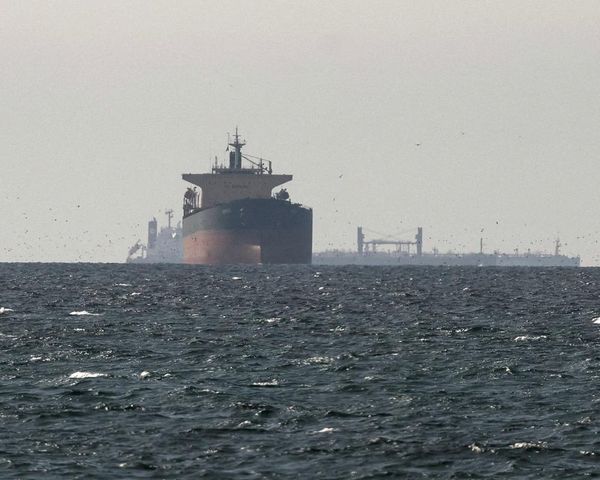
Venezuela has one of the world's largest reserves of crude oil and is the United States' third-largest supplier of crude, at 750,000 barrels a day, trailing only Saudi Arabia and Canada.
But many in the energy industry and elsewhere argue that oil sanctions would chiefly hurt U.S. consumers by causing a hike in gas prices while doing little to solve Venezuela's problems.
Pence arrived in Colombia Sunday and met with President Juan Manuel Santos. He later will visit Argentina, Chile and Panama. All are U.S. allies.
"A failed state in Venezuela threatens the security and prosperity of our entire hemisphere," Pence said in Cartagena. "What we're witnessing is Venezuela is collapsing into dictatorship. And the United States is going to continue to send a message of resolve and determination. We're going to continue to bring all the resources of our nation to bear."