"A house divided against itself cannot stand." Abraham Lincoln's observation aptly captures Pakistan's situation.
Get breaking news anytime, anywhere. Download the TOI app now!
While Islamabad chases the image of an indispensable diplomatic player, its own foundations appear increasingly fragile. From brokering peace in Middle East to courting Washington and Beijing, Pakistan has sought a larger role in global diplomacy.
Yet back home, it remains weighed down by economic distress, political unrest, separatist movements, water shortages, terrorism, and accusations of human rights abuses, an uneasy contradiction that defines the country's present-day reality.
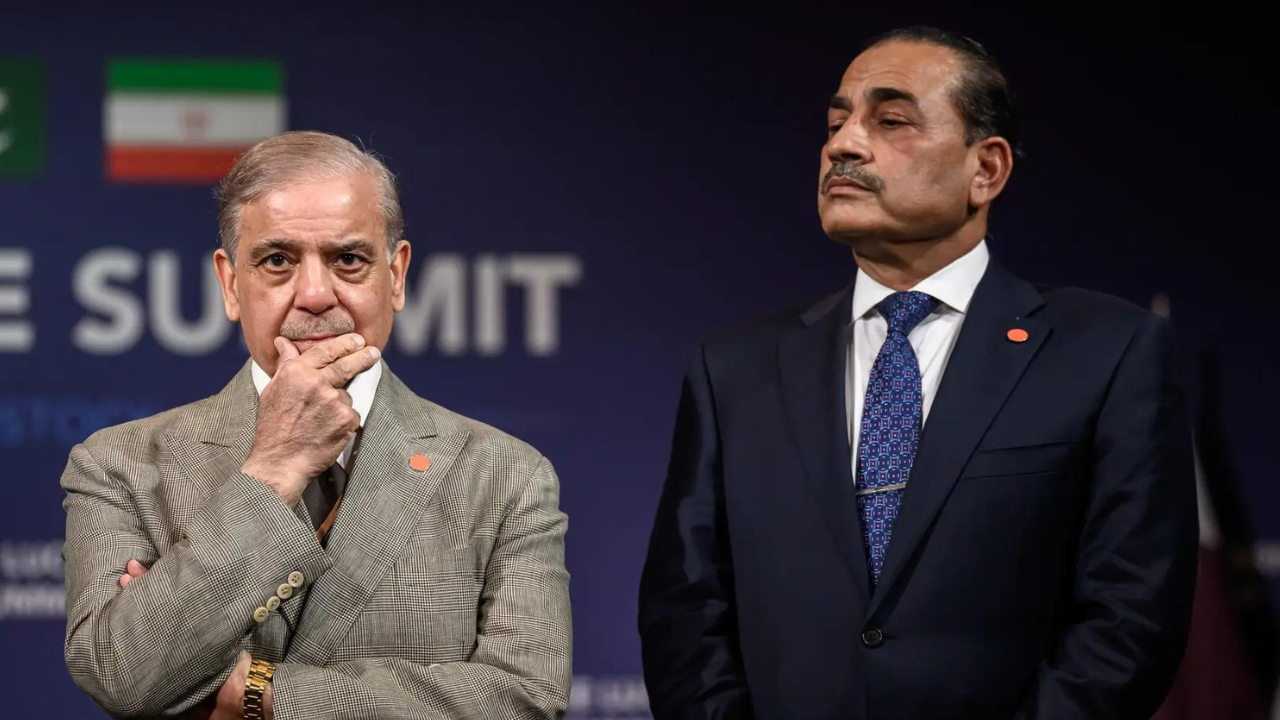
Much of Pakistan's strategic direction continues to be shaped by its military establishment, with army chief Asim Munir, the country's de facto centre of power. His influence extends well beyond defence matters, as Pakistan's military continues to function as a parallel authority that heavily influences domestic governance as well as foreign policy.
That contrast between projecting stability abroad and confronting instability at home, has become one of Pakistan's defining geopolitical challenges.
From military confrontation to diplomatic outreach
Just over a year ago, Pakistan suffered one of its most difficult periods on the diplomatic and military fronts following India's response to the Pakistan-backed terror attack in South Kashmir's Pahalgam.
New Delhi's "zero-tolerance" policy under Prime Minister Narendra Modi translated into a series of retaliatory actions that once again placed Pakistan under international scrutiny over terrorism.
Yet, even as tensions with India remained elevated, Islamabad quickly sought to recast its international image.
Already maintaining close ties with China, Pakistan simultaneously attempted to deepen engagement with Donald Trump's United States. For a country grappling with a fragile economy, maintaining goodwill with both Washington and Beijing has become increasingly important.
It was in this backdrop that Pakistan pitched itself as a potential mediator between Iran and the United States.
The Iran gamble
Pakistan's bid to position itself as a regional peace broker did not begin smoothly.
Its initial attempt to host talks between Iran and the United States faltered after Tehran rejected Islamabad as the venue. According to The Wall Street Journal, Iran formally informed mediators that it would not attend the proposed talks with American officials in Pakistan.
Islamabad, however, persisted.
Prime Minister Shehbaz Sharif and military head Asim Munir stepped up engagement with Washington, with Munir's growing proximity to the Trump administration earning him the title of Trump's "favourite field marshal".
Around the same time, Sharif attended President Xi Jinping's grand military parade in Beijing alongside leaders including Russian President Vladimir Putin and North Korean leader Kim Jong Un.
The event reinforced Pakistan's continued strategic closeness with China even as it simultaneously sought stronger engagement with Washington.
A war next door, and Pakistan's opportunity
Six months later, the geopolitical landscape shifted dramatically as President Donald Trump launched military strikes against Iran, joined by Israeli Prime Minister Benjamin Netanyahu under Operation Epic Fury.
Global Shia icon and longest-ruling Supreme Leader of Iran Ayatollah Ali Khamenei was killed on the opening day of the offensive on February 28, 2026 in Pakistan's neighbourhood.
The raging Tehran regime's response left the Middle East region totally disturbed. Bombs, missiles and drones fell, almost hitting every country in the region.
Retaliatory strikes and military activity engulfed large parts of the region, with airspace disrupted across Iraq, Kuwait, Syria, Lebanon, Yemen, Oman, Jordan, Turkey, Saudi Arabia and the United Arab Emirates.
However, Pakistan, despite its border with Iran, remained untouched and safe.
That made Islamabad a potential venue for talks with Iran's new leadership under Mojtaba Khamenei.
Sensing an opportunity, Pakistan declared itself a peace broker. On April 8, Sharif posted on X announcing a ceasefire that actually wasn't close to peace.
He wrote: "With the greatest humility, I am pleased to announce that the Islamic Republic of Iran and the United States of America, along with their allies, have agreed to an immediate ceasefire everywhere including Lebanon and elsewhere, EFFECTIVE IMMEDIATELY."