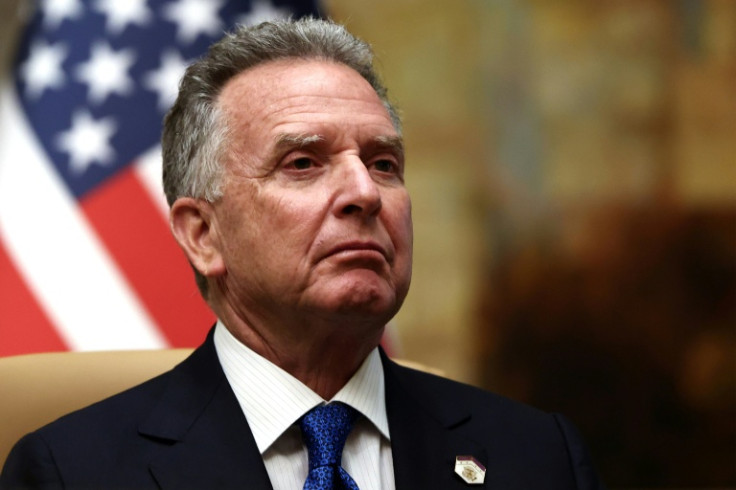
Steve Witkoff, U.S. President Donald Trump's special envoy, arrived in Moscow today with Jared Kushner for pivotal talks with Russian President Vladimir Putin. This meeting could define the next phase of the war in Ukraine and reshape the geopolitical balance across Europe.
Their mission is to present a revised U.S. peace plan after days of intense negotiations with Ukrainian officials in Florida. Washington has described those talks as "productive" and "optimistic," but even the updated proposal faces deep skepticism among Ukraine's allies. The revised document reportedly eases several of the most controversial elements from an earlier 28-point draft, but it still preserves potential territorial compromises and constraints on Ukraine's long-term security posture.
In Moscow, the timing of the visit is far from incidental. Russian forces have claimed fresh gains on the battlefield, though Ukraine disputes these claims. The optics nonetheless strengthen Russia's leverage as it enters negotiations. Putin is expected to use the moment to test how far Washington is willing to push Kyiv toward concessions that could formalize some of Moscow's recent advances.
A Fractured West Watches Uneasily
Even before Witkoff's plane touched down, European officials voiced alarm. Many fear the U.S. initiative risks isolating Ukraine and legitimizing Russia's invasion by pressuring Kyiv to surrender occupied territory or limit future military capabilities. EU leaders have publicly warned that any peace deal must not reward aggression or weaken Ukraine's sovereignty, a point they argue cannot be compromised in a rush toward ceasefire.
Ukraine itself remains cautious. President Volodymyr Zelenskyy has signaled openness to dialogue, but insists that territorial integrity and security guarantees are non-negotiable. With Russian missiles still hitting civilian targets even as diplomacy accelerates, Kyiv worries that Moscow may be using negotiations not to end the war but to freeze it on favorable terms.
Human-rights advocates have added further pressure, warning that any settlement that ignores political prisoners and Russian domestic repression risks leaving key humanitarian issues unresolved, turning a diplomatic breakthrough into a moral failure.
The Real Stakes: Peace or a Precedent?
The question now is whether the U.S. delegation can craft a deal that stops the fighting without endorsing the principle that borders can be redrawn by force. If Washington tilts too far toward Moscow's demands, it could fracture Western unity and embolden authoritarian powers globally. If it demands too much from Russia, talks could collapse, prolonging a war that has already exhausted both armies and economies.
For Moscow, the presence of Trump's envoys carries symbolic weight because it suggests the U.S. is willing to negotiate directly and urgently. For Kyiv, the talks carry existential risk. For Europe, they reshape the strategic question of who sets the terms of peace along NATO's frontier.
The next 48 hours will reveal whether these envoys emerge with a workable framework or whether today's meeting marks only another chapter in a grinding conflict with no clean off-ramp.