
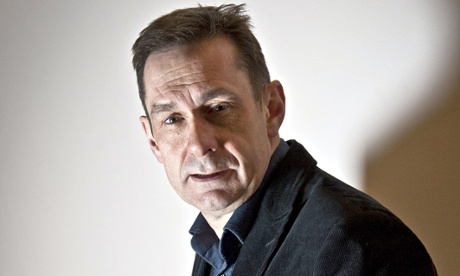
That's it! Many thanks for all your questions
thetopnote asks:
Paul, Perhaps we are just seeing the end of neo-capitalism as opposed to capitalism itself. What’s neo-capitalism? Perhaps it can be summarised as ‘mark-to-market’ capitalism.
 Guardian contributor
 I think you could get neo-capitalism - but in two forms: either permanent stagnation, with a jackbooted state to enforce consent; or a genuinely dynamic info-capitalism that would have to solve the question of: what do we do with the suddenly useless monopoly tech companies whose shares are worth nothing, plus the $4trillion stranded assets in the hydrocarbon industry. For this reason i think the most likely outcome - and most benign - is that we redesign the social relations around us to facilitate a tech-enabled world. Markets, states and post-capitalist micro-economies might have to coexist for some time and we can -paradoxically - learn from the best of soviet economics in the 1920s how to conceive of such "transitions" as having their own dynamics.
SteB1 asks:
I like a lot of your analysis, but I feel that like lots of economists, you fail to grasp the importance of the need to address climate change and environmental/ecological sustainability. I feel that most economists do understand and comprehend the real scale of change needed to create a true sustainable economy and to avoid global suicide. Do you accept this is a problem?
28 January 2011 – Secretary-General Ban Ki-moon today called for “revolutionary action” to achieve sustainable development, warning that the past century’s heedless consumption of resources is “a global suicide pact” with time running out to ensure an economic model for survival.
“Let me highlight the one resource that is scarcest of all: Time,” he told the World Economic Forum in Davos, Switzerland, in a session devoted to redefining sustainable development. “We are running out of time. Time to tackle climate change. Time to ensure sustainable, climate-resilient green growth. Time to generate a clean energy revolution.”
Calling sustainable development the growth agenda for the 21st century, Mr. Ban recited a litany of development errors based on a false belief in the infinite abundance of natural resources that fuelled the economy in the last century.
“We mined our way to growth,” he said. “We burned our way to prosperity. We believed in consumption without consequences. Those days are gone. In the 21st century, supplies are running short and the global thermostat is running high.
“Climate change is also showing us that the old model is more than obsolete. It has rendered it extremely dangerous. Over time, that model is a recipe for national disaster. It is a global suicide pact.”
http://www.un.org/apps/news/story.asp?NewsID=37405#.VbYjt_nFB8E
Guardian contributor Yes. But what I am doing here is trying to get people to look beyond the transition to zero carbon. These models often assume capitalism can deliver them, when I argue this is unlikely.
"I would educate my kids to understand the transformative power of producing stuff collaboratively, for free"
Branislav Cika asks:
I guess the natural question would be how to make a difference. I’m a concerned father and my children’s future is precious. I would love to leave them at least as many opportunities as I had, and if I possible can, a world better than mine... What do I, as an individual, do to ensure that? How do I help in changing what must be changed so their futures are bright... Not sad and grey!
Guardian contributor In your life you've probably got several examples of things you do that are not work and not simply leisure, or hobbies. A lot of people volunteer, or do philanthropic work, or give to charity. The next stage is getting involved in something that's just as charitable but has an overt purpose. I think I would educate my kids to understand the transformative power of producing stuff collaboratively, for free, or near free. We see it as non-economic and pointless but I would say: when we clean up the surf beach; when we setup a small scale project in our neighbourhood - this is no longer something mimor or negligible - it's part of a new system that is being born.
ID3749878 asks:
Is this really the rise of postcapitalism or is the supposed “sharing economy” a hyper-connected form of rentier capitalism? Businesses now seem to make profits merely from running an auction algorithm that connects buyers and sellers. They input no labour or intellect themselves. I could see it might tend towards a post-capitalism if we nationalised the data centres and made companies bid for CPU time (returning dividends from the data centres to the people).
Guardian contributor To be really clear: I am not saying the "sharing economy" as exemplified by Uber is postcapitalism. You correctly identify these as rent seeking business models. Rather than nationalise them I think you could easily collectivise them, transfering the benefit to the user.
"My favourite Northern Soul track? She'll Come Running Back by Mel Britt – there's a universal truth in there"
thecruiseboy asks:
What is your all time favourite Northern Soul track?
Guardian contributor Mel Britt - She'll Come Running Back - his voice is amazing and of course for all of us "she" rarely does so there's a universal truth in there somewhere!
Niall Webb asks:
1. Is it not just the case that we’re exporting our work to the third-world and so so the time spent labouring is only actually decreasing in the west? You only have to look at how primark uses child labour for it’s clothing.
2.Is exploitation not an issue in post capitalism? Information may want to be free, but what about food production? clothes production?
3.A california court recently ruled that Uber drivers are employees, how is this a sharing economy? The capitalist still exists getting money of fees off someone elses work?
4. The time spent labouring has gone down, but wages have been falling in the uk for six years? We have more free time but less purchasing power, how can this lead to the utopia of post-capitalism? Whenever it looks like the capitalist cannot lower wages any further without hurting aggregate demand, a way is found to overcome it such as credit cards. Surely we’re just watching capitalism morph rather than the beginnings of something truly revolutionary.
Guardian contributor I'll just address the Uber question and the exploitation issues - Sure a court rules they are employees; elsewhere a court's going to rule they are independent contractors or even consumers. The inability of commercial law under capitalism to properly understand the peer-to-peer economy is one reason why lawyers were among the first to notice the scale of the change. I don't think Uber is a good example of the sharing economy. Do you remember when AOL merged with Time Warner and everybody said "the internet's going to disappear into walled off private spaces"? It didn't. I think Airbnb and Uber might turn out to be the Alta Vista of peer-to-peer... a postcapitalist version of both would be very easy to design and implement.
Pam Foley asks:
In the Guardian Live, Is Capitalism Dead?, discussion, you were asked from an audience member: What is the credible agent for change, if an agency exists, and what is it’s philosophy? To this you answered with seriousness, Conchita Wurst, as epitomising a human revolution and liberation at first internalised and then demonstrated and accepted by others. If Wurst is the result, what is the thinking behind your example? To this could you credit the work of feminist thought over the past 4+ decades which advocates and promotes, among other pursuits, inclusivity? In practice, such a society echoes what Pat Kane said was one where individuals have the ‘resilience of the artistic life’, i.e., employing a creative approach to one’s life (while at the same time dismantling western patriarchy), with respect and acceptance of those encountered on the journey. How do you integrate feminist thinking into your argument?
Guardian contributor Okay what I said was that the victory of Conchita Wurst in the Eurovision last year was a good example of the kind of change we're going through. I use the example because i am trying to jerk economists out of trying see, and critique, the postcapitalist idea from the point of view of economics only. If we manage to create a society where work is scarce, things and information abundant, the real revolutiuon will be how human life changes. I think the fact that lesbians and gay men can get married, and women control their own fertility, and all the other massive changes in behaviour we're living through, are the precursors of what happens if you place self-liberation at the centre of the project. One specific thing relating to feminism in this discussion is of course the feminisation of the workforce and the resulting change in the economy of family life. I don't write specifically about that in the book because it's been done already.
antipodean64 asks: Hi Paul,
I wonder if your optimism like Keynes’ fails to consider central element of this issue –that human beings struggle with the concept of ‘enough’. How will post-capitalism and technology overcome this?
Guardian contributor Keynes thought we would achieve abundance simply through higher producitivity. I think we can achieve abundance through the fact that information is actually abundant. Here the absence of human willingness to be satiated is not a problem. If all the information in the world were - within limits of anonymity and privacy - freely accessible, "enough" becomes a relative concept. The point is then to make abundance spill over into physical things. Have a look at this - the price of energy from solar panels - to see what I mean!
Updated
Trina FH asks:
So you are a kid right now, all of life before you. What should that kid be doing to survive the death of capitalism and the era to follow. How do old farts like me stay engaged when all we know is what it takes to (just about) to get by in this economy. Are we, us, to be collateral damage?
Guardian contributor 1. Understand capitalism is not eternal and that, contrary to what you're being told, you might be living through its end phase. 2. Watch Wolf Hall! That depicts what it's like to live through the end phase of a social system - feudalism - and the risks you take by trying to live a new kind of lifestyle. 3. Equip yourself to be a person who works with knowledges.. by this I mean, expect the received wisdom in many disciplines to change radically in your lifeime. You may have to uninstall or reformat your way of thinking more than once. I am 55 - so though I've been an enthusiastic user of tech since my first Spectrum ZX in the 1980s - my life has been about adapting to the tech. The next generation will grow up as if the tech is universal, normal and irreversible. Unless they're in Turkey, where the government keeps trying to switch off Twitter!
PhyllisOrrick asks:
How would you address the “wealth makes wealth faster than labor” issue that dominated last year’s economic best-seller? Also I worry that your analysis doesn’t give enough consideration to the distorting effect of racial and ethnic forces such as the US legacy of slavery.
Guardian contributor Phyllis I have covered many times the long-term legacy of both slavery and segregation on US African-American communities: the book itself is an attempt at a fairly general, global analysis of the economic forces at work. As to Thomas Piketty's point, I agree with him: but the outcome is inevitable boom/bust cycles because asset wealth inflation cannot permanently detach from incomes. So many of the "assets" in the finance system are student loans, subprime mortgages, car loans - and without rising wages these will always create a stop-signal to every financial mania.
RobinS asks:
When I read sentences like this “The coming wave of automation, currently stalled because our social infrastructure cannot bear the consequences, will hugely diminish the amount of work needed – not just to subsist but to provide a decent life for all.” I think, for a short while, of people in the already well-off countries, but rapidly jump to wondering how people who presently subsist on a few acres of land in a remote part of, say, Ethiopia will experience such conviction. I do not see them, or many millions of people in similar circumstances benefiting for a long time yet. Nor do I see the millions of people sucked into urban centres by any kind of capitalism (past, present or post-) seeing a grand improvement in their livelihoods coming along as fast as the wealthy and powerful grab yet more for themselves. What is your response?
Guardian contributor a) The poor sucked into the cities are for sure living exploited lives: but my experience of reporting from slums and informal settlements is they are a "solution" to the rural poverty you describe. I dont idealise them, but the process of urbanisation is real, rapid and does produce engagement with the digital world, even in very poor communities.
b) I take your point about substistence communities - but if you look at a different example, the use of cellphones to do peer-to-peer money transfers in rural Kenya under a scheme called MPESA the transformative power of networks can be glimpsed even here.
Above all I think technology empowers the individual - in societies like sub-Saharan Africa, to have a better chance of walking away from paternalistic, coercive economic relationships.
Craig Brittain asks:
Why have you taken a bunch of concepts from Marxism and rebranded Marxism as postcapitalism? Also, why are you selling your books? That’s an act of capitalism. Why not give them away for free? After all, the postcapitalist economy will support you! No need to turn a profit by selling books.
Guardian contributor If you read the book it's most definitely no Marxism. It's materialist - in the philosophical sense - and looks for a pattern in history where a society based on markets produces the seeds of its own downfall - but I have a different concept of the route to postcapitalism and a different understanding of who the "agent of change" is - and also a different methodology for analysing the global system. As to why I've chosen to publish it as a book - rest assured, if I could change the dynamics of capitalist publishing I would do it. I started publishing creative commons stuff this year - like this: http://www.scribd.com/doc/250612659/Wtf-is-Eleni-Haifa
"We're in the middle of a revolution in journalism"
pfunk1 asks:
Last year I saw you quoted, in relation, I think, to a Newsnight report, as tweeting something along the lines of: ‘interesting to note the difference between truth and editorial, so glad I’m out of there’.
How limited do you feel you are in what you can say by the requirements of keeping your job and how concerned are you that you might say something that ‘scares the horses’, so to speak, and calls your position into question?
Guardian contributor I think we're in the middle of a revolution in journalism as well - I've never felt pressured to say something I don't believe in public service TV. At times it's the rules on balance and "decency" that get in the way of truth - like in Gaza I wanted to use a shot of donkeys who'd been killed to show what high explosive actually does, but it was deemed not possible at 7pm... stuff like that.
But every day is a struggle for the truth, and that's why you come into journalism. The obstacles are not editorial bosses but the governments and corporations constantly on the case of trying to shape the message.
Updated
mattuponthames asks:
In a developing economic model reliant on information, how significant is it that activities converting raw materials into information processing and communications hardware are the domain of corporations?
Guardian contributor Obviously it's significant. The dominance of the tech corporations relies on this; and also don't forget states - China has 95% of the world's supply of Rare Earth minerals, vital for all infotech, so there's a state and corporate chokehold on the materials we need for the technology. However, there's no business model for infotech unless people actually use it - and its in the forms of use I think the revolution will take place first. I say in the book the raw material economy (together with energy) will be the hardest to "de-marketise" but i can see a long transition where private/market companies dig the titanium out of the ground but collaborative/non-market organisations actually dominate in the service sector.
Archerman555 asks:
Any thoughts on what will happen when the workers simply are not needed?
The poor are basically stuffed, more now than ever. Even an uneducated peasant could labour in a field and earn enough for a few months, yet today degreed people (10+ years of expensive education!) can barely get the modern equivalent, asking people if they “want fries with that?”
Guardian contributor You describe the problem correctly. I sense our fears of what happens in a world where " necessary labour time" - (c) Karl Marx - is minimal, is stopping us from pursuing automation aggressively. I think the universal basic income - where the state pays you a small amount of money just to exist, replacing welfare etc - could be a useful transitional measure to a low-work society. It would subsidise people's ability to navigate between the remnants of a work economy and the beginnings of a low-work economy.
"Capitalism is thriving like someone on a life support hospital bed is thriving"
MmmBisto asks:
As capitalism is thriving globally, isn’t the title of your book a bit daft?
Guardian contributor Its thriving like someone on a life support hospital bed is thriving. $12 trillion has been printed; interest rates close to zero in all the main economies; and long-range forecasts vary between weak growth and no growth. Don't mistake the one-off surge we're getting from higher education participation, women's inclusion in the workforce, and the development of the global south for permanent dynamism, I would say.
Circumbendibus asks:
Have you attempted to do a Fukuyama and be the first to claim the ‘end of’ something in a bid to attract headlines and shift units? I only ask this because the analysis seems weak to me.
Also, where does your thesis stand in relation to the Accelerationism movement?
Guardian contributor On Fukayama - he was basically predicting the end of change. I'm predicting the start of it. I'd be interested in what you make of the entire 120k word book - but the A Accelerationist movement - which says "accelerate capitalist development so we can transcend it as quickly as possible" - my book says different: it says the acceleration is impossible within the confines of neoliberalism.
Post your questions for Paul Mason
Paul Mason has struck a chord. An extract from his book Postcapitalism, published in the Guardian, has been viewed over 2 million times in less than a week, and shared over 317,000 times on social media. The book’s thesis – that the old, wildly unequal methods of doing business could be coming to a close – is bracingly utopian, and looks set to be one of the most-discussed of the year.
As economics editor for Channel 4 news, and in his former work with the BBC, Mason has reported from the rocky terrain of global finance: the fall of Lehman, the Libor scandal, the Occupy movement and the standoff between Greece and the rest of the EU. To viewers’ delight, his professional distance would sometimes dissolve into on-screen exasperation at the failures of the world’s financial elite. He also wrote Why It’s Kicking Off Everywhere, an exploration into the Arab Spring and other protest movements.
With Postcapitalism out on 30 July, he is joining us on Monday 27 July to answer your questions in a live webchat, beginning at 1pm BST. Post yours in the comments below, and he’ll answer as many as possible.
Updated














Hey everybody thanks for joining in this web chat. Follow me on Twitter @paulmasonnews for more on the book and these debates, and keep your eye on my Guardian column for more. Cheers...