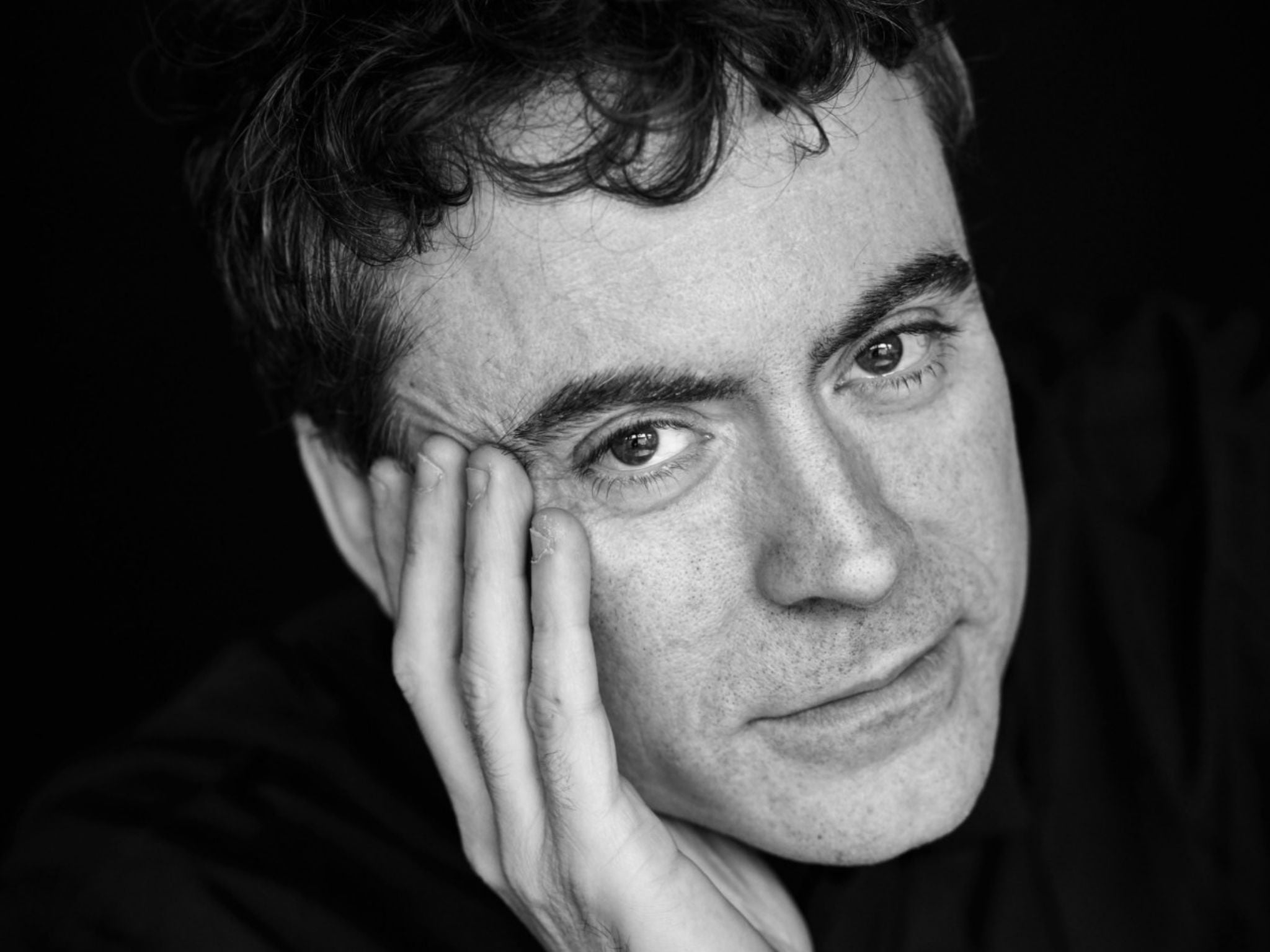
The British pianist Paul Lewis doesn’t have a wide repertoire, but he focuses on his chosen composers with white-hot intensity. For a while this meant wall-to-wall Beethoven and Schubert, with his interpretations eternalised in a string of brilliant CDs.
Now he’s beating the drum for Haydn, whose piano sonatas he rightly regards as being generally undervalued: I would happily swap Mozart’s sonatas for Haydn’s – the latter being more numerous and much more inventive – any day of the week.
In his current series of concerts, Lewis is pairing Haydn’s piano works with those of Brahms, and he’s fixed on Beethoven’s Bagatelles as the binding agent between them. For this Southbank recital he began with the Opus 119 Bagatelles, short pieces which Beethoven affectionately dubbed Kleinigkeiten – trifles – to season the massive symphonic works on which he was labouring at the same time.
Lewis’s way with these pieces was masterly. He played the first few with refined precision, letting each one’s character emerge, but as the ideas became denser, and the tonalities more ambiguous, he ran the pieces together into a single monologue. The effect was extraordinary: this music could have been written today. Next year Lewis will release a recording of these works; meanwhile, since this concert was broadcast live, we can get them back on the BBC iPlayer.
Next came Haydn, smart as a whip. The opening movement of the late sonata in E flat major sounded positively orchestral, with bold excursions by brass and woodwind; the Adagio offered a graceful alternation in colour and mood, and the Menuet had a weightless, tensile strength. Then came the martial sonata in B minor (Hoboken XVI/32): written at a time when keyboard works were still being performed on the harpsichord, it had figurations clearly designed to exploit the sonority of that instrument.
Then came Brahms in his late-autumnal guise, with the mysterious Four Pieces, Opus 119. The long chains of descending thirds which ushered in the first had ineffable grace, while the stutteringly-repeated chords in the second suggested suppressed passion; the third came with a light and dancing touch, and the fourth culminated in an explosion of splendour. Lewis’s encore was a Schubert Andante, the epitome of grave simplicity and – like everything else in this recital – exquisitely played.