"Use your voice!"
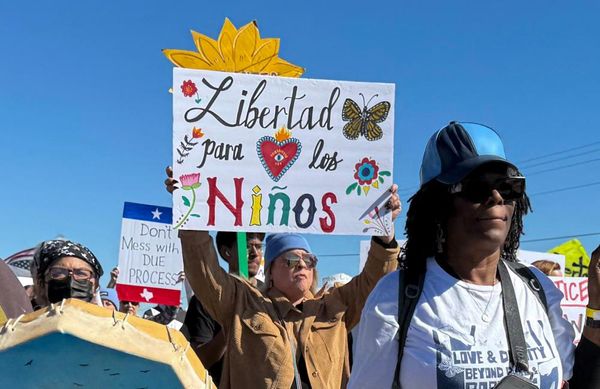
Then it’s time for some music: Lenny Kaye steps out to massive applause, and accompanies Smith on a trio of songs, including a singalong Because the Night, and a rousing People Have the Power. “Use your voice!” she implores the audience as she leaves the stage - to another standing ovation.
Thanks to everyone who contributed questions, and sorry if yours didn’t get answered - sorry also for our technical issues earlier in the evening. If you want to head to other Guardian Live events and see them in person, check out what’s coming up - the likes of Brian Blessed, Burt Reynolds and Nigella Lawson are all putting in appearances on stage. Hopefully see you there!
And finally... who is her favourite TV detective then? “Kenneth Branagh’s Wallander.” She also laments the end of The Killing: “Unfortunately cancelled, but not in my imagination.”
The creative form she couldn’t live without? “Writing. It’s the one thing I couldn’t live without doing. I would be sad not to draw or take photographs or perform, but I could live without that - but I have to write, it’s part of who I am.”
"Rock'n'roll is formed by the people, loved by the people, played by the people"
She defines rock’n’roll, brilliantly: “It’s just freedom, punk rock. It’s just another word for freedom. I just like to see anybody take rock’n’roll in their hands. It’s a grass roots art, formed by the people, loved by the people, played by the people.”
She’s asked where a new punk movement might come from. “I think that only the new generation knows that, and you don’t need a new punk movement, you need a movement that people care about. You don’t need a new anything, you just need the thing; it doesn’t need a name, it’s an energy. It’s bubbling beneath our feet - every generation makes its contribution.”
Updated
She remembers coming to London for the first time, playing the Roundhouse. “Our concert at the roundhouse was so awesome... It was mayhem, it was fantastic. It was sold out and there were some kids who didn’t have money, they found a hole in the roof, and shimmied down... one of them was Paul Simenon [of the Clash].”
A big question: can musicians effect activism and political change? “There’s so much information and the way people get it is so spread out,” she laments. “When I was young we had radio and records, everyone listened to the same records.” She mentions Ohio by Neil Young. “It could ignite a whole nation, and things are a little more complicated now. There’s so much information and people are almost numb to it - there’s so much strife people are almost numb to it. There’s just too much - but I don’t think people are complacent. We’re basically good people. In the end it’s people who make change - artists don’t make change. Gandhi didn’t make change - people made change, by the millions. We’re in such a complicated world now, we just have to agree on how we’re going to make change... Greenland is melting, there’s something to focus on, something that’s going to affect every single person in the world.”
Her current tastes: opera, Rihanna, Jimi Hendrix
And what does she listen to now? “I really like opera, I’ve been listening to Tristan and Isolde obsessively.” Jimi Hendrix, My Bloody Valentine and Karen O all get a mention. “I like to hear the female voice: Rihanna, Adele or one of these girls sing. Amy Winehouse was so awesome. But I really love opera, Maria Callas. Or old R&B records.” She namechecks Hendrix again: “Hendrix isn’t even a guy or a girl, he’s beyond.”
The first record she owned? It was bought for her by her mother, when Patti was bedridden: Eleanor Steber, singing Madame Butterfly. The second: Another Side of Bob Dylan. “My mother said: I don’t know who this is but he looks like someone you might like.”
There’s a question about the Dalai Lama, and his appearance on stage with her at Glastonbury. “It was awesome. I think he was even more happy than me, he just loved it,” Smith remembers. “I’ve worked with his holiness before, but I was very excited to offer him our stage. He came on, and I thought he was going to walk off stage and onto the heads of the people... so much love, so much good feeling. It’s wonderful to see another human being that happy.”
Someone asks her about the recent incident where a suitcase of belongings that were stolen from her in the late 1970s were returned to her this year. “All of our equipment was stolen in 1978 in Chicago, including all my clothing, some from the cover of Horses...A girl came forward with a pathetic plastic bag, and she said she had belongings of mine from that suitcase.”
A man had stolen it, and shared it amongst some teenage girls - this woman had held onto her stash, including a blouse Smith wore on the cover of Rolling Stone, shot by Annie Liebowitz; a T-shirt with Keith Richards on it, which she was wearing when she met Bob Dylan, and most poignantly, a silk scarf worn by her late brother. “A piece of red raggedy silk, and that was the most moving, because my late brother was so cool, he was my tour manager, and he used to wear this red silk tie around his head Jimi Hendrix style, and I loved it, and I wore it as a talisman... it was one of the things I mourned the most to lose.”
Updated
Someone asks about her writing rituals. “I like having my own little table in my own little cafe, but sometimes it closes and you have to find a new place. More than anything, I like to write in the morning - wake up early before anyone else, when anything seems possible.”
Another person asks about advice for young female musicians. “I’m not a musician,” she asserts, and thinks. “Practice!”
Patti takes questions from the audience
It’s time for audience questions, and the first up is: what advice would you give your younger self? Smith says: “Be more considerate of others, especially your mother.”
Updated
The conversation turns to religion. “I don’t have a particular religion,” says Smith, “because I don’t want to be fettered by a religion... the rules make me feel like I’m in a club. I have a system of thought about where we go... It might be up to us where we go, but it’s one of those infinitely interesting characters we can never answer.”
O’Hagan wonders what she thinks of the power of religious dogma in the American political system. Smith looks dejected for the first time. “There’s so much wrong with the American political system - [religion] is not to me the biggest problem. It would be a drag to talk about - let’s skip it!” Laughter rings round the room.
O’Hagan asks about Horses, the classic debut album that turns 40 this year. “Horses was almost completely formed with poetry at its root,” remembers Smith. “It was never my intention to have a rock’n’roll band. I can see how years of writing poetry is infused in this book [M Train]. My process in writing poetry has somehow permeated. This book is the result of years and years of writing.”
"Books are the most precious things in the world"
O’Hagan asks her about friendship, and caring about people - he says she seems like the opposite of Sartre, for whom hell was other people. “I’m not a deeply social person,” Smith replies. “I’m awkward often in social situations. But I care about people. Every day my life I’m grateful to humankind’s imagination. It could be anything - a beautiful loaf of bread, or to make a garment. But books to me are the most precious things in the whole world material-wise. Before I could read I loved books. People have these thoughts and write them down and make books - it’s magnified my life and given me so much joy.”
She describes a Twilight Zone episode, where a man hates people and loves books - he is the sole survivor of a war, and finds himself elated at being in a vast library, alone. And he then breaks his one pair of glasses. “That would be the ultimate hell to me!” Smith laughs.
Andrew O’Hagan asks: is there anything that can’t be lost? Smith answers: “One thing, I know it’s sort of leftfield, but the poet Gregory Corso seemed completely fearless to me... one time I said: are you afraid of anything? And he was like: ‘The collapse of the imagination. I have fear it’ll be gone and I’ll wake up ordinary.’ I don’t think that answers your question, but that came to mind.
Updated
She speaks movingly about the loss of her husband in 1994. “Sometimes [memories] sneak up on me in a painful way - sometimes I don’t want to feel the presence of my husband, or feel the loss of my mother, I want to do what I’m doing but it takes me over, and I have to take a deep breath. It’s not even grieving - it’s wanting that person there and having it right in your face that they’re not. It’s not a sad thing; it quickens your breath, or something. When my children lost their father my daughter was six and my son was 12, he was such a beautiful man and he loved them. We keep him present every day... complain about him, pick out clothes he might like, discuss whether he would hate the internet. I keep him present in a practical simple way, but also a spiritual way.”
Updated
"I'm a mother, I'm a widow - how much time do I have left?"
On realising her mortality, and it being a spur for writing her new memoir: “We live in the trinity of memory... projecting the past, present and future simultaneously. I started this book when I was 65... I became conscious of my chronology - I realised I’m getting up there! I’m a mother, I’m a widow, and all of a sudden it occurred to me: how much time do I have left? Suddenly chronology looked me in the face. I was wrestling with that a bit when I was writing.”
Updated
Big apologies - the wifi in the venue couldn’t hack the sheer power of Patti’s vibes. But we’re back for now with plenty of transcribed portions of her conversation.
She says she loves British detective shows. “Whether it’s Morse, or Lewis, Wyecliffe, George Gently, I love them all. Often they drink too much, they’re bums, they’re obsessional - they have to be visionaries and unravel these deep puzzles. They drink too much wine at home at night listening to opera - just like me!”
Updated
She’s asked about travel. “I have a tendency to be a little restless - dreaming of going to the sea, going to the sea, and missing the city streets.... when I was a little girl I always wanted to travel. My family were lower middle class, we had no money, I was living in a town with people who never went out of the area... I’d look at old Vogue magazines and see pictures of Morocco, or Big Ben, or the leaning tower of Pisa... my dream was to have a magic carpet.
“I’m easily satisfied - I go to a country, find a weird cafe, and then never see anything else... the thing I like best about Pisa was this little botanical garden, with a palm tree from Chile that’s extinct in Chile. You never know what you’re going to see - but you never see what you think you’re going to see.” She remembers going to try and see Ho Chi Minh lying in state - “there was a sign saying his body was shipped back to Russia for repairs. That happens to me all the time.”
Updated
She talks about moving to Greenwich Village, away from the pig farms of her youth. “I never saw a cafe back then, so coming to New York City was Mecca, for a person who loves books to see a million bookstores... I was only intimidated because I didn’t have any money.” She talks about the Reggio cafe in the village. “I felt like Dick Whittington - the coffeemakers are made of gold! So I found a more modest one down the street, the Dante. I could afford a coffee there.
“You have the illusion of solitude but you have action all around you... I daydreamed about having a cafe, and came very close a couple of times. But I’m so impractical, and make such bad coffee.”
She elaborates on her love of the black stuff. “I was seriously ill as a kid, I went through every childhood illness... my body experienced a lot of insults by the time I was 20... so I don’t have the physical makeup for [drugs], my body couldn’t handle it. But also, I’m not self-destructive. I love life.” She remembers her mother keeping her alive - “Why would I just throw it away?” So coffee is her vice. “Coffee gives one the illusion that you’re sort of in the swing of things.” She says she remembers a $100 cup of Tokyo coffee as fondly as Dunkin Donuts coffee.
Updated
On being ill as a child: "I had dimensional movement... visitations"
She talks about her illness as a child. “William Burroughs and I had something called the Scarlet Fever Club... it’s akin with days of high fever, sometimes hallucinations, moving in and out of consciousness and William believed that opening that portal very young let us keep the portal open more than the average person which gives us a place to go back and forth in these different levels of consciousness... Many of the writers I admire were quite sickly - Frank L Baum, Robert Louis Stevenson.” She adds to the audience: “But don’t try to get sick a lot!”
“I had parallel images. I wasn’t a visionary like William Blake at all, but I had dimensional movement. Sometimes it was something very simple, like constantly seeing certain cats... visitations.”
O’Hagan asks her about her focus on angels. “Who wouldn’t want to believe in an angels - they’re beautiful. The imagination of man, so many things that we perceive and read about, whether it’s a theory of Einstein that we don’t understand... they can be believed in, so why shouldn’t an angel be believed in?”
Updated
She remembers Just Kids. “It was such a deep learning process, it taught me how to put a book together... when you’re writing a book that you’re going to put out in the world that you’re going to birth like a baby, it’s different from just going through notebooks.”
“Mostly good things have happened to me - but difficult things have happened to people I loved... I keep them with me, they’re still in my life.”
O’Hagen says it seems to be about loss. “Yes, I do revisit people I’ve lost - I didn’t expect to do that at all. My husband was very private and I always hesitate to speak for him - but he kept appearing... he must want me to speak for him, possibly because Mapplethorpe got so much attention.” She calls the experience of looking back “painful and beautiful.”
Patti begins by explaining why she wrote M Train. “I write all the time - most of my work is unpublished but I wanted to start concentrating on a book. I wanted to do something different to Just Kids... Robert Mapplethorpe asked me to write it the day before he died, and to tell our story... I had so much to be faithful to, and I wanted to write something completely unfettered [with M Train]... with no end in sight. I just wanted to be free.” M Train is a kind of “mind train”, she says.
Here's Patti!
The crowd whoop and give an instant standing ovation! Andrew O’Hagan begins an introduction of Patti as having Irish ancestors - and she interrupts him. “They’re English and Welsh... we found that the Welsh stock rose. One thing I will say: I’m all British.... sorry there’s no Scottish in there.”
You can sort of play along at home by asking Patti a question on Twitter, making sure to include #GuardianLive - some of the best Twitter questions will be posed to her. People are already at it:
#GuardianLive im a young musician, do you have any advice?
— Shauna (@shazstapleton) October 28, 2015
Patti, great to see you tonight. I'd love to know what you love most about London - qualities, buildings, culture etc. #GuardianLive
— LondonKaren (@KarenLondoner) October 28, 2015
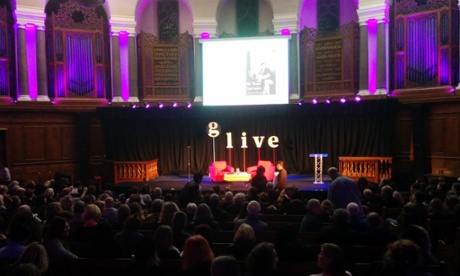
Meanwhile the audience are massing to the strains of Patti on the PA...
M Train of course follows Just Kids, Patti Smith’s memoir of her time in New York with photographer Robert Mapplethorpe – we recently reported that she’s to turn it into a TV miniseries for the US network Showtime. In slightly less grand TV projects, she also recently recorded a song lamenting the demise of preposterous cartoon Aqua Teen Hunger Force.
To get you warmed up, you can read an extract from M Train that was published in the Guardian, which in one short chapter takes in Mikhail Bulgakov, polar researcher Alfred Wegener, and her love for ITV crime dramas. Here’s one typically luminous passage:
The mist grew heavier, a full-blown fog, enveloping all we passed. What if it suddenly lifted and everything was gone? The column of Lord Nelson, the Kensington Gardens, the looming Ferris wheel by the river, and the forest on the heath. All disappearing into the silvered atmosphere of an interminable fairy tale. The journey to the airport seemed endless. The outlines of bare trees faintly visible like an illustration from an English storybook. Plane trees with pom-poms, dried brown seedpods, swinging ghosts of Christmas ornaments. One could well imagine a former century when a young Scotsman dwelled in such an atmosphere of dropping clouds and shimmering mists and gave it the name of Neverland.
Welcome to Guardian Live with Patti Smith
It begins and ends with a dream, and reads like one too. Patti Smith – whose writing and hit records stretch over 40 years – has written a new memoir, M Train, a dizzying journey through her memories and passions, from her late husband to CSI: Miami, from desert reveries to Jean Genet’s grave.
It’s lyrical and searching as she remembers her losses, like her husband Fred Smith and her brother Todd, who died within a month of each other in 1994. As Edmund White says, “she was once our savage Rimbaud, but suffering has turned her into our St John of the Cross, a mystic full of compassion.”
But Smith is still nevertheless full of the savage punk spirit that made Horses such a visceral record four decades ago – while performing it at Glastonbury this year, she fell over, only to roar at the crowd: “I’m a fucking animal!”
At the Emanuel Centre in London tonight, she’s discussing the book with writer Andrew O’Hagan for a Guardian Live event. It’s sold out, and won’t be filmed, but you can follow all the action on this liveblog as it happens – beginning at 7pm and running until around 8.30pm.
Updated