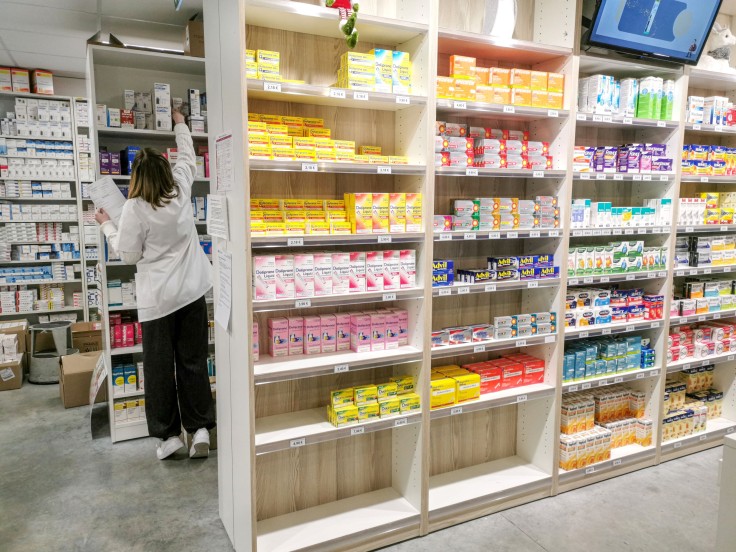
The moment a shortage becomes real for a patient is at a pharmacy counter, when someone says the medication is on back order and cannot say when it will return. There were 227 active drug shortages tracked in the second quarter of 2026, a third consecutive quarterly increase.
Almost nothing about that moment suggests a connection to a Federal Register notice about establishment registration. But the link is direct, and it runs through a specific question: whether the FDA knows which factories, anywhere in the world, are making the ingredients in a given prescription.
On July 13 the agency published a proposed rule that would change the registration requirements for two categories of drug manufacturing establishment. Comments are open through September 11. The agency's own economic analysis lists greater visibility into the drug supply chain among the benefits, and says it expects improved visibility to support efforts to prevent and mitigate shortages.
The Gap Concerns Factories That Never Ship Directly to the US
The more consequential half of the proposal deals with foreign establishments.
Under current practice, some foreign facilities that manufacture drugs or drug components, including active pharmaceutical ingredients, only for distribution to other foreign establishments may not be registered with the FDA. The ingredient reaches the United States, but it does so after passing through an intermediary abroad, and the original plant sits outside the agency's registration database.
That is a blind spot with an operational cost. If a facility three steps upstream halts production because of a quality problem, a fire, a flood or a regulatory action in its own country, the FDA has no registration record connecting that plant to the finished products that depend on it. The disruption surfaces later, when a US manufacturer reports it cannot supply, by which point the shortage has already begun.
The proposed rule would align regulations with a change Congress made in 2022 through section 2511 of the PREVENT Pandemics Act, which amended the Federal Food, Drug, and Cosmetic Act to expressly require registration by foreign establishments making drugs imported into the United States regardless of whether the drug undergoes further processing at a separate foreign establishment first. Those establishments would also have to submit drug listing information.
In announcing the proposal, the FDA said the change would give it greater ability to detect and respond to potential safety concerns.
The Second Half Addresses a Newer Manufacturing Model
The other component creates a registration pathway for distributed manufacturing establishments that operate on a hub-and-spoke model.
In that arrangement, a single quality unit at one physical location directs and monitors production units at multiple other locations, all built and operated to be equivalent. Under existing rules each unit registers separately, which is administratively heavy and, more to the point, produces a database in which the relationship between the units is not visible.
The proposal would let a qualifying network register as one establishment, with the hub and its spokes co-registered so the agency can map the configuration. FDA has said this would allow it to understand the relationships between all components, supporting shortage prevention and response.
Distributed manufacturing is still a small share of US drug production, but it is the model being promoted for onshoring and for producing critical medicines closer to where they are used. Registration rules written for a single-site factory do not describe it well.
Visibility Is Not the Same Thing as Supply
It is worth being precise about what this rulemaking would and would not do, because regulatory proposals attract more optimism than they usually earn.
Knowing where a drug is made does not create manufacturing capacity. It does not change the economics that drive shortages in generic injectables, where thin margins discourage redundancy and a single plant failure can eliminate national supply. Industry groups have argued for years that the root cause is structural, and better mapping does not address structure.
What earlier visibility can plausibly do is shorten the interval between a disruption occurring and the FDA responding. That response toolkit includes working with other manufacturers to increase production, exercising regulatory discretion on temporary importation, and issuing extended-use dates that let hospitals keep using product past its labeled expiration. Each of those takes time, and each works better when started earlier.
This is also a proposed rule, not a final one. Comments close September 11, a final rule would follow at an unspecified date, and compliance would take effect after that. Nothing about it will affect a prescription that cannot be filled this month.
MedicalDaily has previously reported on the gap between official shortage counts, which is a related visibility problem at the other end of the chain.
Steps That Do Help at the Counter Right Now
None of the above is actionable for someone whose medication is unavailable today. Several things are.
Ask the pharmacist whether the shortage is national or local. Regional supply gaps are common and another pharmacy in the same chain may have stock, which a pharmacist can often check directly.
Ask about therapeutic alternatives, and take that question to the prescriber rather than deciding independently. For many shortages a different strength, a different dosage form, or a different agent in the same class is clinically reasonable, but that is a prescribing decision.
For controlled substances, ask about a partial fill, which dispenses part of the quantity now with the balance available later, and about electronic prescription transfer where state law permits it. Rules differ by schedule and by state.
Check both the FDA drug shortage database and the ASHP shortage list, since the two do not always agree and each captures things the other misses.
Do not stop, skip or stretch doses of any prescribed medication without speaking to a clinician. Rationing a supply by taking less than prescribed is a clinical decision with real risk, particularly for cardiac medications, anticonvulsants, insulin, psychiatric medications and stimulants.
Patients and clinicians can file comments on the proposed rule through the Federal Register docket before September 11. Comment records in FDA rulemakings routinely include individual accounts, and they are read.
What happens next is a comment period, then a final rule at an unspecified date. MedicalDaily will report the final rule and any changes to the quarterly shortage counts.
Frequently Asked Questions
What is being proposed? An FDA rule that would require registration by certain foreign drug and ingredient manufacturers that supply the US indirectly, and create a single-establishment registration pathway for hub-and-spoke manufacturing networks.
How does that relate to shortages? FDA says improved supply chain visibility would support its efforts to prevent and mitigate shortages by letting it map which facilities feed which products.
Would it make more medicine available? No. Registration does not create manufacturing capacity. It could shorten the time between a disruption and a federal response.
When would it take effect? Comments close September 11, 2026. A final rule would follow at an unspecified date, with compliance after that.
What should I do if my prescription is unavailable now? Ask whether the shortage is national or local, ask the prescriber about alternatives, and check both the FDA and ASHP shortage lists.
Can I take a smaller dose to stretch my supply? Not without speaking to your clinician. Dose changes are clinical decisions and carry real risk with several drug classes.
Can patients comment on the rule? Yes, through the Federal Register docket before September 11. Individual accounts are part of the public record.