Hopes of a honeymoon period for the new government are but a dream as all sides agitate for fast policy execution to resuscitate the stagnating economy.
The new governing coalition will have a thin majority in parliament and find it hard to implement policies to cushion the impact of external headwinds on the Thai economy.
As the sagging export sector depends on external developments, the only means to shore up Thailand's economic growth momentum is to boost domestic demand and investment incentives.
The military-heavy government, a remnant of the junta that swept to power in the 2014 coup, will have to think long and hard before tuning the country's economic engine in the period ahead.
FRESH STIMULUS EYED
The Finance Ministry is creating a fresh round of stimulus measures to propose to the new government after the economy showed obvious signs of ebbing momentum.
The Fiscal Policy Office (FPO) is calling on each bureau to propose tentative stimulus measures, said director-general Lavaron Sangsnit. The degree of the stimulus depends on the economic circumstances when the measures are rolled out, he said.
A recent stimulus focused on low-income earners because they have high marginal propensity to consume, a measure of the proportion of extra income that is spent on consumption, Mr Lavaron said.
For instance, if the government provides a 100-baht cash handout to low-income earners, they will spend the entire amount, but not more because of personal budget constraints.
But the Finance Ministry prefers stimulus measures that nudge recipients to spend more than they receive from the government, he said.
Mr Lavaron would not disclose potential stimulus measures, as FPO officials are still working out the details. Any package will also hinge on the available state budget, the country's economy, export performance and developments in the Sino-US trade brawl.
A source at the Finance Ministry who requested anonymity said recently that 77 billion baht remained for the next government to spend in fiscal 2019, which ends Sept 30.
Recent stimulus measures comprised spending of 13.2 billion baht on public welfare benefits for low-income earners, plus tax measures worth 8.62 billion.
Regarding the fiscal 2020 budget expenditure expected to be postponed for 3-4 months after the start of the fiscal year on Oct 1, 2019 because of the time needed to form a new government, Mr Lavaron said it's in line with the ministry's expectations.
A delay in the budget bill could affect state spending during the final quarter this year until the first quarter of next calendar year, but the impact could be offset by ramping up state enterprises' investments, he said.
Tim Leelahaphan, an economist at Standard Chartered Bank Thai, said a delay in the state budget for fiscal 2020 is not a concern, as state agencies can rev up spending later.
The new government may use the previous year's budget to operate in the interim, he said.
PROBLEMATIC DEADLOCK
Although Thailand held the general election in March, a new government has yet to emerge because negotiations have been complicated.
Different parties seem to be negotiating about forming a coalition based on personal interest rather than public interest.
"Business operators are concerned that if Thailand cannot establish a new government amid prolonged negotiations, this would compound problems for the country," said Kriangkrai Tiennukul, vice-chairman of the Federation of Thai Industries (FTI).
"Business operators want to see a new economic team as soon as possible. Many ministries have only deputy ministers controlling government policies, which delays government projects."
Both foreign and local investors are adopting a wait-and-see stance before making further investment decisions, resulting in a private investment slowdown.
Private investment indicators (PII) fell by 1% year-on-year in the first quarter, according to Bank of Thailand data. Full-year PII expanded by 3.5% in 2018.
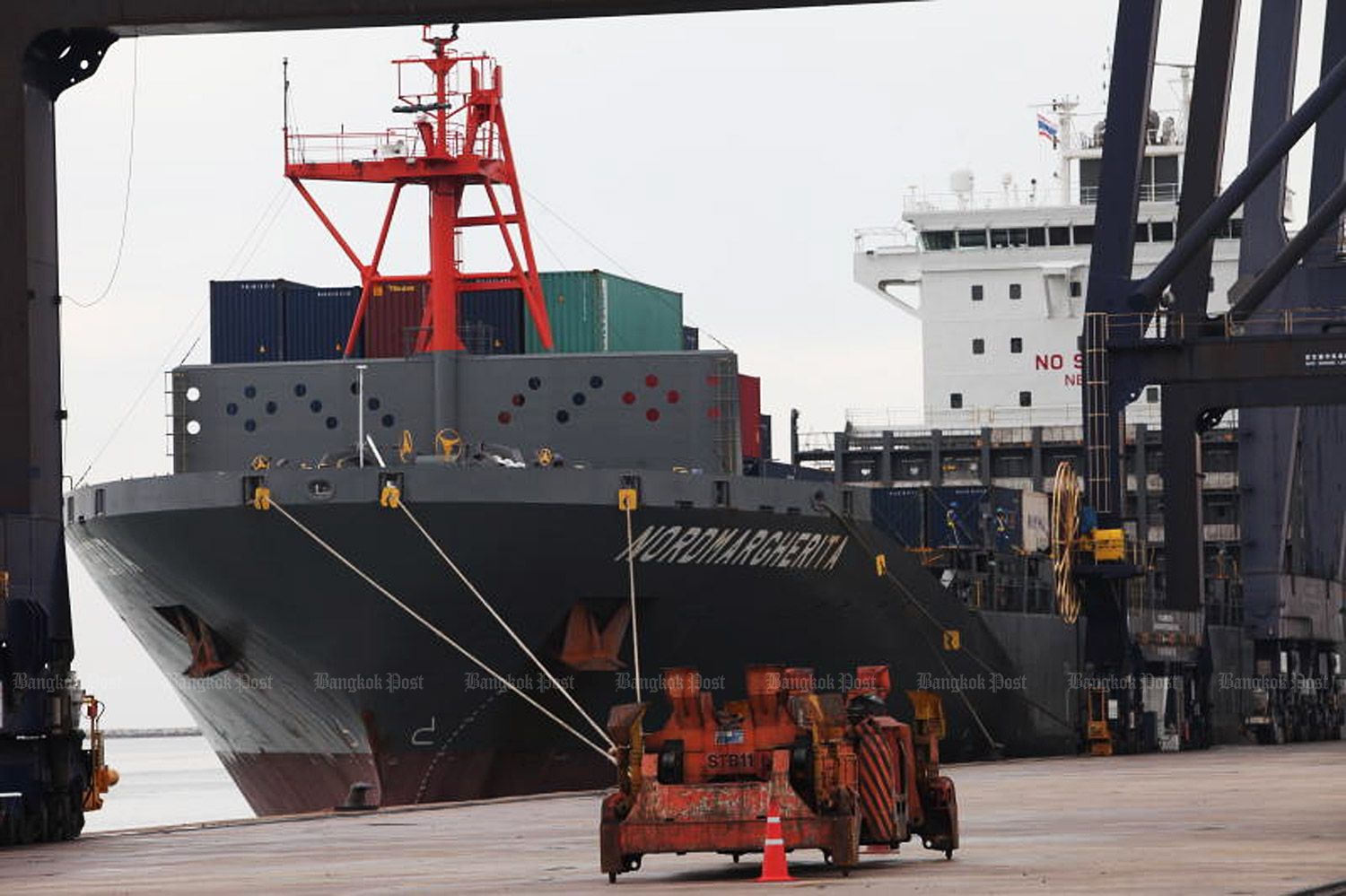
Besides domestic political wrangling, the US-China trade spat, Brexit uncertainty and the global economic slowdown all spell bad news for Thailand's export-based economy.
"The FTI hopes the new economic team will be able to cope with the trade war and Brexit," Mr Kriangkrai said. "Thailand has no economic leadership to manage these issues at the moment."
The trade war between China and the US has depressed global economic growth and trade, with Thailand already feeling the pain from a slump in business supply chains.
ANCHORING THE BACKBONE
As the backbone of Thailand's economy, small and medium-sized enterprises (SMEs) have been feeling the pinch from the economic doldrums and the political deadlock.
"SME businesses are wary to spend their investment budget on expansion because they are waiting to see the new government coalition and economic team," said Chonrungsee Chalermchaikit, president of the Federation of Thai SMEs. "This is causing local business spending to slow down."
The federation has more than 100,000 SME members nationwide.
Thai SMEs are estimated to account for 80% of the country's GDP.
Of 3 million SMEs nationwide, those registered in the tax system number 700,000, while micro SMEs tally 2.3 million.
The federation wants to see a new economic team continue the policies and measures of the previous government in supporting and promoting SMEs, Ms Chonrungsee said.
The group also wants the new government to continue implementing the SME Fund under the Pracha Rat scheme, worth 20 billion baht, to support local SMEs.
CLEAR TRADE MISSION
The new government should come up with new tax perks to stimulate domestic tourism and promote the renovation of hotels and theme park development, said Kalin Sarasin, chairman of the Thai Chamber of Commerce.
Existing government funds need to be adjusted to financially support the private sector or startups, while the continuity of key infrastructure projects initiated by the current government such as roads to link communities and villages and attempts to narrow income disparity are a must, he said.
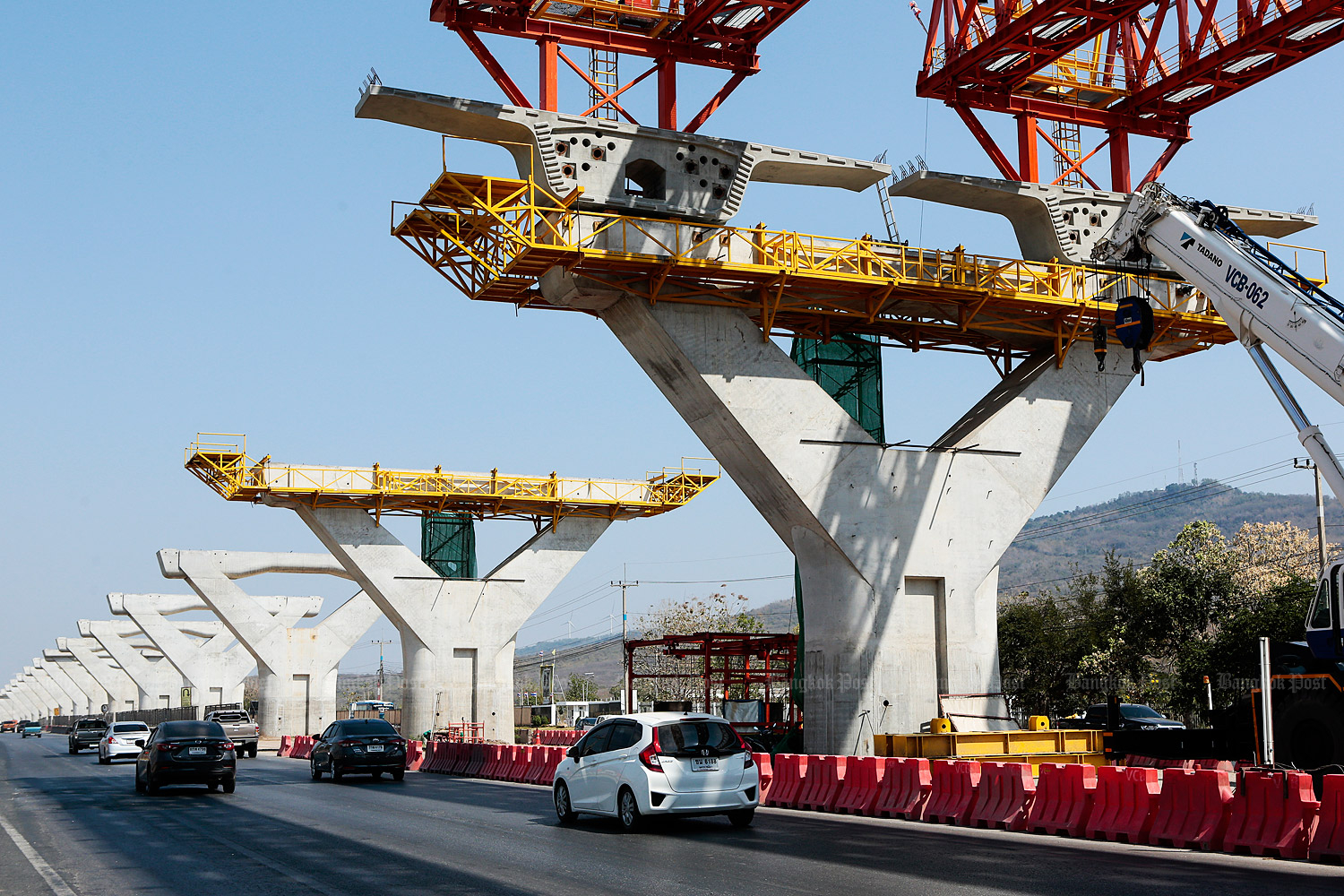
Double-track rail, high-speed trains and the Eastern Economic Corridor projects should be carried out to increase the country's competitiveness, Mr Kalin said.
He urged the next government to focus on raising the productivity of the agricultural and food industries, which employ 30% of the population.
Education should also be a priority for the new government to improve, while regulations to upgrade the ease of doing business should be addressed to attract new investment and promote business, Mr Kalin said.
On the export front, negotiations over the EU-Thailand free trade agreement (FTA) and the Comprehensive and Progressive Agreement for Trans-Pacific Partnership (CPTPP) should be sped up to boost Thai shipments, he said.
Visit Limlurcha, vice-chairman of the Thai National Shippers' Council, said the new government in the short term should establish a clear trade mission and take advantage of its status as Asean chairman this year to drive trade negotiations.
In the medium term, he proposed speeding up negotiations for the EU-Thailand FTA, the CPTPP and the Regional Comprehensive Economic Partnership. Other priorities include developing a business-to-business cross-border e-trading platform, creating a trade syllabus that meets international standards and promoting private sector participation in infrastructure investment and logistics.
The new government should also build financial stability and balance the exchange rate by negotiating dual tax treaties and promoting the development of the production sector to increase trade and investment via agricultural zoning, contract farming and economic forest certification, Mr Visit said.
In the longer term, the new government should promote international trade through electronic platforms by upgrading internet networks nationwide, develop infrastructure and improve logistics efficiency, he said.