Back by popular demand—or perhaps force of habit—it’s time for the annual college football Most Intriguing Lists. First up: The 25 most intriguing coaches.
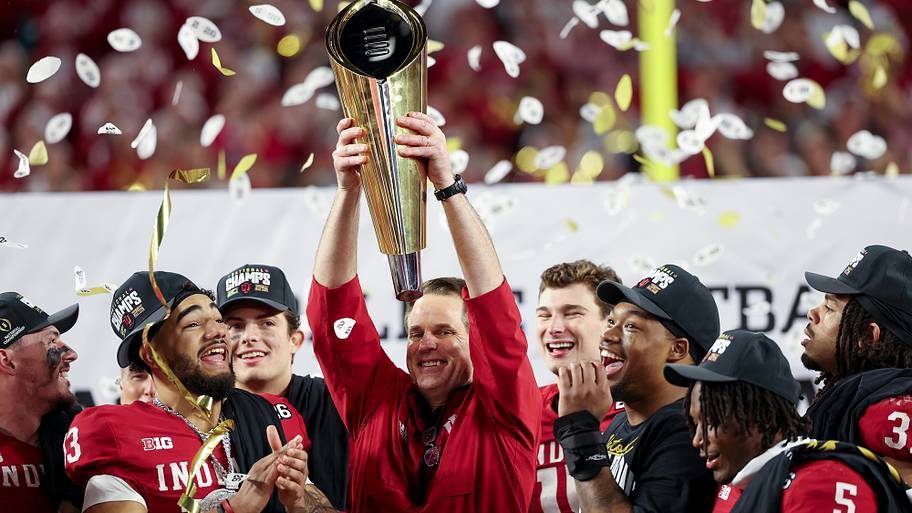
1. Curt Cignetti, Indiana
He is the game’s oracle until proven otherwise, a miracle worker who was hiding in plain sight for years. East Coast bias is generally overstated, but it’s the only explanation for the New York Knicks winning the ESPY for Team of the Year over Cignetti’s 2025–26 Hoosiers. What Indiana did was historic on multiple levels: the first 16–0 team at the highest level of the sport since the 19th century; the first new FBS national champion since Florida in 1996; the team that took the losingest program in FBS history out of the basement and far beyond anything previously experienced—and so forth. Along the way, Cignetti’s quirky personality, penchant for punchy quotes and scowling in-game demeanor have made him the biggest fascination in football.
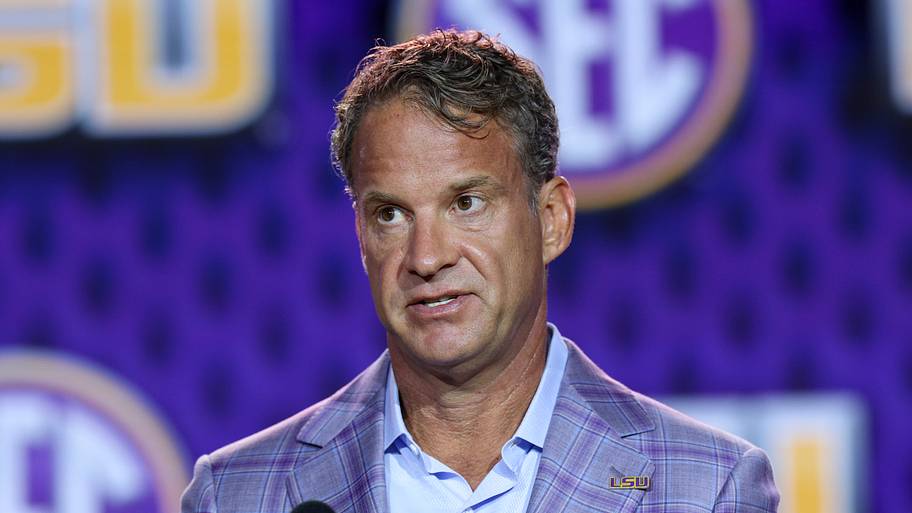
2. Lane Kiffin, LSU
In Dante’s Divine Comedy, the eighth circle of hell is occupied by sowers of discord. These are your people, Lane. Nobody has sowed more discord in college football over the last 16 years than Kiffin, who took his divisive act to new heights (or depths) last fall by accepting the LSU job while his Mississippi team was in the midst of a College Football Playoff season. That was so disruptive it may actually spawn a federal law forbidding such a move in the future, if the Protect College Sports Act is passed by Congress. Kiffin is now on the clock to deliver a national championship at a school that has won three of them with three different coaches this century, but first he must endure a crucible of his own making—LSU at Ole Miss on Sept. 19, which might be the most bitter game in history.
3. Kyle Whittingham, Michigan
The implosion of Sherrone Moore might be an inadvertent (and expensive) blessing for the Wolverines. There is an adult in charge now in Whittingham, who became available when Utah squeezed him out to facilitate its longstanding succession plan to elevate assistant Morgan Scalley. A guy with 177 career victories and eight 10-win seasons in the relative obscurity of the Mountain time zone falls into Michigan’s lap, anxious to prove himself at age 66 at a blueblood program. Whittingham inherits a quarterback most foresee as a future NFL first-round pick in Bryce Underwood and brings over some key player and staff pieces from Salt Lake City. He’ll need them against a rugged schedule that features four 2025 playoff opponents.
4. Matt Campbell, Penn State
Like Whittingham at Michigan, Campbell is stepping out of an overachiever role at a try-hard program to take over an established heavyweight. He’s the winningest coach in Iowa State history (72 victories) and has the highest winning percentage of anyone in Ames since 1919 (.567). If the sense was that James Franklin let some standards slip at the end of his tenure, Campbell has come in with a mandate to tighten things back up. He brought a lot of Cyclones with him to State College, including quarterback Rocco Becht—how well do players and staff that went 8–4 in the Big 12 last year translate to the Big Ten? A lenient schedule (no Indiana, no Ohio State, no Oregon) gives him a chance.
5. Pete Golding, Mississippi
With a full season of exposure to Golding, college football fans are likely to love him right up until they hate him. He’s a lot—quippy, lippy and unafraid to ruffle feathers or flout transfer rules, as Clemson has alleged. (“Let’s not act like recruiting in college football for the last 100 years is the most moral thing. What are we talking about here?”) Golding earned immediate credibility with Ole Miss fans by replacing Kiffin and taking the Rebels to the CFP semifinals. With arguably the best quarterback (Trinidad Chambliss) and running back (Kewan Lacy) in college football, expectations are higher than they have been in generations—with Sept. 19 shaping up to be nothing short of a crusade.
6. Mario Cristobal, Miami
After some in-game gaffes in previous years, the playoff run to the title game last season went a long way toward cementing Cristobal’s stature as an elite coach. Bringing The U back to prominence was the reason why the intense Hurricane alum left Oregon to take the job; delivering on that confers hero status upon him. All that remains is the final step, and he might have the team to take it this season with another splashy transfer quarterback and spectacular skill players. With the rest of the Sunshine State in decay or rebuilding, he owns the place. Can he actually win an ACC title, too?
7. James Franklin, Virginia Tech
The reinvention of Franklin in Blacksburg will be a fascinating undertaking. Very few places would fire a coach with a 104–45 record, half a season removed from going to the CFP semifinals, but Penn State did when a season of sky-high expectations crashed quickly. In truth, the Franklin–Penn State marriage had frayed to the point where separation was needed. Tech has considerable history of its own, but the early expectation is to get it off the mat and forwardly placed in the ACC again. (At minimum, Franklin has an immediate opportunity to restore the Lane Stadium aura of old.) This could be a sweet-spot job for the 54-year-old—if he emerges wiser in a few areas from his time in State College.
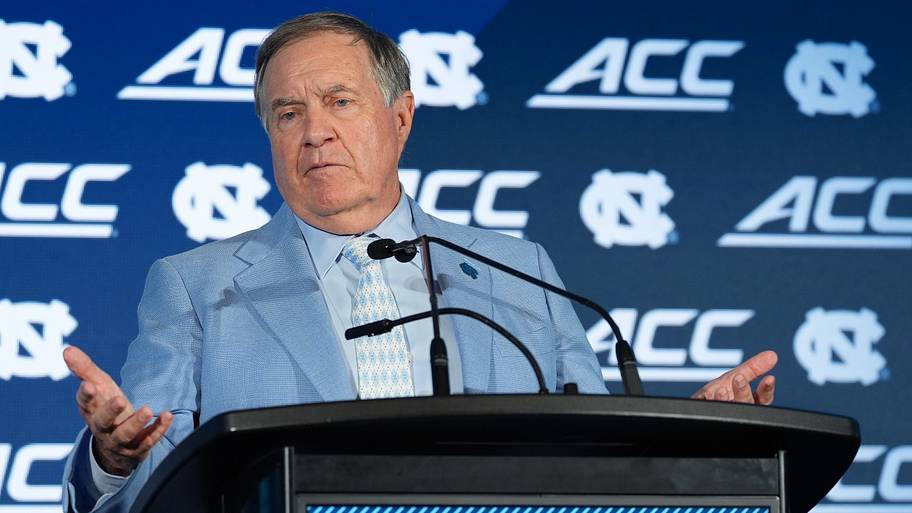
8. Bill Belichick, North Carolina
My, how The Hoodie has frayed. He led this list last year, before his debut season as a college coach turned into a dumpster fire. From the high-profile girlfriend who likes to file records requests to the disastrous general manager to the 4–8 debut record laced with blowout losses, all Belichick’s NFL winning was quickly erased. Now the curiosity is whether the dumpster fire has been extinguished and the program has made tangible progress. Bobby Petrino rides in to the rescue as offensive coordinator (hopefully not on a Harley) but DC Stephen Belichick (Bill’s son) is on medical leave. If the Tar Heels aren’t appreciably better, a 1–5 start is entirely possible. At that point, this expensive experiment would take on definitive bust dimensions.
9. Joey McGuire, Texas Tech
So, can he coach? We got some answers on that front last year, as a loaded Red Raiders squad went 12–2, won the Big 12 and made the playoff. But after leveraging a roster spending gap over the rest of the league, Tech was punked by a similarly well-funded program (Oregon) in the CFP, 23–0. So the question remains whether McGuire is a caretaker or a program elevator. The Brendan Sorsby debacle this spring also alienated the Red Raiders in the eyes of much of the rest of the nation. (How much McGuire had to do with that, as opposed to billionaire booster Cody Campbell, is open to debate.) Now McGuire and his staff have to show they can win big with a backup quarterback coming off knee surgery.
10. Lincoln Riley, USC
His hiring was a bombshell when it happened in late 2021, but since then the impact has been more like a bottle rocket. After an 11-win opening season, Riley has averaged eight over the next three. This season, the Trojans say they have everything in place to return to prominence, from a fully functional front office and NIL war chest to an experienced roster to a capable coaching staff to the nation’s No. 1 freshman class to a gleaming new football facility. “The momentum has been created,” Riley said last week. “It’s been fun to see our program grow in all the areas that you need to be a championship-level program.” It’s not a moment too soon for Riley, who will be under serious fire if the Trojans aren’t at least seriously in the playoff mix all season.
View this post on Instagram