Passengers are bearing an ever greater share of the cost of train travel, with government subsidy falling by almost a sixth since 2011, according to figures from the rail regulator.
In the fullest disclosure of the railway’s tangled finances, the Office for Rail Regulation figures showed that the taxpayer subsidy dropped a further 8% in real terms last year, while passenger numbers continued to grow.
Revenue from passenger fares was £8.2bn, accounting for 61.5% of the industry’s annual income – up from 55.6% in 2010-11, with the rest made up of subsidy.
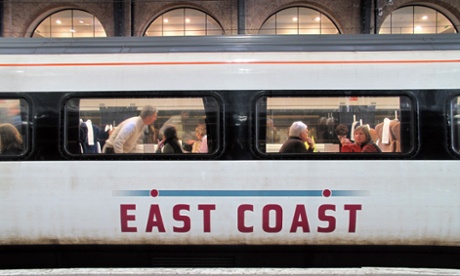
The publicly owned East Coast main line was one of only two train operations, along with SouthWest trains, that contributed to Treasury coffers rather than relying on subsidy to turn a profit.
Private operators paid out a total of £183m in dividends to shareholders, with Northern Rail – the recipient of £669m in subsidy – paying £27m.
Across Britain, the state paid £3.8bn to Network Rail and train operators, with the Department for Transport’s contribution falling. Scottish and Welsh governments’ contribution, however, rose.
State funding accounted for 24% of the industry’s total income in England, compared with 55% in Wales and 61% in Scotland. Per passenger journey, the overall British state contribution was 28% lower in 2013-14 than in 2010-11.
Gordon Cole, the head of regulatory finance at the ORR, said: “The level of passenger revenue as a proportion of the fare paid has shot up, and the taxpayer has been the beneficiary.”
The ORR’s chief executive, Richard Price, said: “There has been substantial growth in the use of the railways in the past four years. Passengers are increasingly the main funder of the railways and must be central to developing plans for future services and investment.
“ORR’s report also highlights that the rail industry has been successful in keeping costs stable despite carrying significantly more passengers.”
The annual cost of running the railways has remained stable at £12.7bn over four years when passenger numbers grew by 17% and freight increased by 18%.
Mick Whelan, the general secretary of the train drivers’ union Aslef, said the ORR figures again put into question the decision to privatise the East Coast main line.
He said: “The East Coast has now returned £1bn to the Treasury in the last five years. It’s perverse that this Conservative-led coalition, driven by its own ideological demons, is giving away a line which brings money back into the public purse, while companies such as Stagecoach and Virgin take ever more money from the taxpayer.”
Aslef added that offsetting the industry surplus, of £593m, could mean 7% cheaper fares for passengers.