A new species of sea sponge that was identified off the north Norfolk coast has been officially named by a 9-year-old girl.
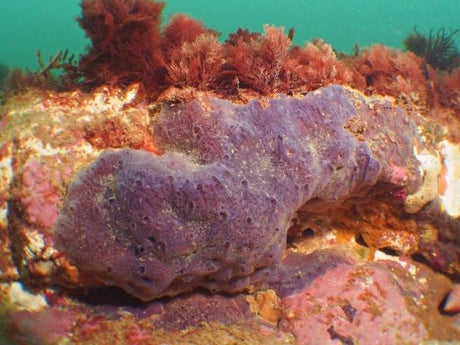
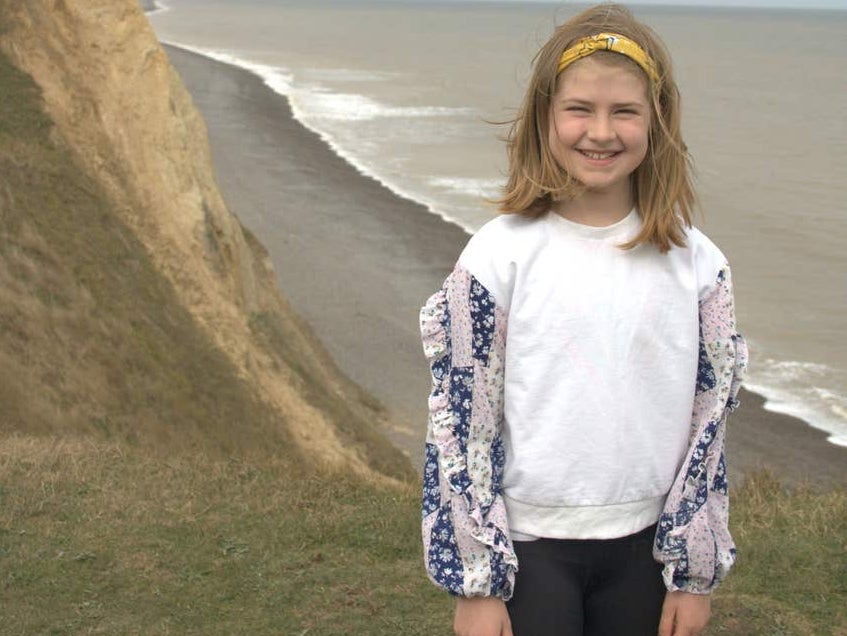
Sylvie, who attends Langham Village School in north Norfolk, is said to have come up with the winning name Parpal Dumplin due to the sponge’s purple appearance and what she believes is its close resemblance to a dumpling.
The Marine Conservation Society’s Agents of Change project asked children to use their creativity to name the species, which was found in chalk beds by volunteer divers from Seasearch a decade ago.
Panellists were unanimous in their decision, they said, noting their fondness for Sylvie’s spelling as it gives the sponge a “strong connection” to Norfolk.
Sponge specialist Claire Goodwin said she believed Parpal Dumplin to be “a species new to science, in a sub-genus of sponges known as Hymedesmia (Stylopus)”.
“We need to look at specimens deposited in museums to understand how many different Hymedesmia (Stylopus) species exist in the UK and how they differ from this new species,” she said.
“The Agents of Change naming project has given the sponge a common name that we can use until it has a scientific one.”
She added: “I loved seeing all the creative suggestions.”
Parpal Dumplin is encrusting, meaning it adopts the shape of whatever it covers, and it was identified in Cromer Shoal Chalk Beds Marine Conservation Zone.
Sponges help to keep seawater clean by filter feeding: consuming tiny particles of food that float by.
Despite the common misconception, sponges are not plants – they are relatively basic multi-celled animals without a brain or a central nervous system.
They also do not have tissues or organs like other animals do, instead they have specialised cells to perform necessary functions.
There are more than 11,000 different species of sponge around the world and they make up an entire phylum of animals: phylum porifera.
Some types of it have been found to live for over 200 years.
Additional reporting by PA