Being a straightforward soul, when someone offers consultation and "barrier busting" I take them at their word. Back in July 2011 the government sought views on its plans to change the way local government is funded by allowing the local retention of business rates.
This sounded promising. I duly suggested that business rates, at least in part, revert to the most local authorities, parish and town councils, so that they could finance 'big society' community ventures.
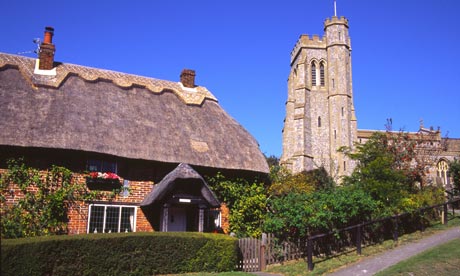
Alas, even though a business impacts on its most immediate locality (in terms of employment, traffic and waste) it is the more distant principal authorities – the districts and counties — that will cream off the dosh. Take my hometown of Winchcombe at the edge of the Cotswolds: the rates from the industrial estate, Chinese takeaway, funeral directors and 400 other businesses go to Tewkesbury borough council. It then disburses the money across its patch.
This is patently anti-localist or, at best, what I might call 'challenged localism'.
So I asked the government's "barrier busting" unit whether parish councils, in this brave new world of localism, could get a modest 40% share of local business rates – and if not, why not? A reply came back to in January, and it was a limp-wristed response at that.
Siobhan Scott, from the Department for Communities and Local Government's big society and community rights division, told me "if the government were to provide a proportion of business rates revenues to the parish and town council sector, then this would have to be accompanied by the transfer of an appropriate level of responsibility for delivery of services previously delivered by the principal authorities – rather than be used simply by the parish or town council to deliver big society/localism activity".
This seems perverse, odd; as if the left hand has lost sight of its right compatriot. The government itself has promoted, through the Localism Act, a community right to buy assets of local value. This February, a consultation went on to say that as part of the government's determination to shift power to local neighbourhoods, the community right to buy will ensure that community organisations have a fair chance to bid to take over assets and facilities important to them. This could include a shop or the last remaining pub in a village, the community centre or library building.
If local councils are restricted, prevented or hampered in raising finance by not being able to retain some business rate revenue then how can they contribute to David Cameron's stated passion for the big society?
Town and parish councils have changed drastically in the last 10 years, and though some parts of central government is now recognising this, others still dismiss the authorities as only being concerned with dog bins, litter and park benches. Pauline Whitehead, clerk to Cranleigh town council in Surrey, crystallised the problem when she said: "The Vicar of Dibley did us a huge disservice and this warped perception coupled with apathy and lack of awareness of how councils work is a real problem in making localism real."
It's not only the retention of business rates that could give town and parish councils a new role, but also the new homes bonus and the community infrastructure levy.
The government claims it will no longer seek to micromanage local authorities from Whitehall. It is time that it converted huff and bluster about localism into pound notes, so that the 9,000 parish and town councils can fulfil their destiny to deliver for their communities.
James Derounian is principal lecturer in community development and local governance at the University of Gloucestershire
This content is brought to you by Guardian Professional. Join the local government network for more comment and analysis – and the latest jobs – direct to your inbox