This live blog is now closed; we continue our live coverage here:
Closing Summary
Here are the latest developments:
- French fighter jets have launched massive raids in Syria, targeting the Isis stronghold in Raqqa just two days after the group claimed responsibility for the attacks in Paris.
- Three of the suspected terrorists have now been named: Salah Abdeslam, his brother Ibrahim Abdeslam, and Omar Ismaïl Mostefai. Mostefai, 29, was one of three men who blew himself up, killing 89 people in the bloodiest scene of the carnage.
- French police continue to hunt for Salah Abdeslam, believed to beone of three brothers involved in Friday night’s attack, who is on the run.
-
The death toll rose to 129 after a further three people died in hospital from their injuries, medical officials said. The attack left 352 injured, 99 critically.
- A stash of weapons were found in a getaway vehicle believed to have been used in the Paris attacks. Detectives found three Kalashnikov rifles along with fingerprints in the abandoned vehicle, discovered in the eastern Parisian suburb of Montreuil.
This is Raya Jalabi in New York handing over the liveblog to Claire Phipps in Sydney.
Updated
On Sunday afternoon, French Muslim leaders gathered outside the Bataclan concert hall in Paris to honour the 89 people who died there in the bloodiest attack by jihadi terrorists France has known.
They carried white roses, which they laid amid the hundreds of candles and bouquets left by members of the public and were accompanied, as a show of inter-faith solidarity, by representatives of Paris’s Jewish community.
As the group stood at the barriers around the music venue where heavily armed gunmen went on a murderous rampage on Friday night, they broke into a ragged rendition of La Marseillaise.
Before France conducted airstrikes on Isis’ stronghold in Syria on Sunday night, Pierre Haski pondered whether the Paris attacks would force France to change its Syria policy:
Worse for Hollande, his numerous calls for Assad’s removal from power, or even “elimination” as French foreign minister Laurent Fabius once said, have suffered several setbacks, isolating France as the diplomatic scene shifted.

[...] Until Friday, the French government was still insisting on Assad’s departure as a precondition for any political settlement in Syria, putting the Syrian president on a par with Isis in blame for the country’s tragedy. But France has become more and more isolated in this stand, with Russia and Iran increasingly pushing their agenda. The US listened. Only Saudi Arabia and the Gulf states have applauded the French attitude, rewarding it with big arms deals.
Hollande’s Syria strategy was caught between Putin’s offensive and Obama’s reluctance. He had chosen the high moral ground, refusing to associate either with a brutal regime or a bloody opposition, but this was not necessarily the most practical option in a situation that involves choosing the least bad option rather than the best one.
Have the Paris attacks changed the rules of the game? Both Hollande and his prime minister, Manuel Valls, proclaimed in martial words that the enemy is Isis, and that France’s response would be merciless. Has the shift been made from having two enemies to one?
Read the piece in full:
Updated

US political reaction to Paris attacks
US foreign policy hawks seized on the Paris terrorist attacks to argue for more aggressive military intervention in the Middle East, writes my colleague Dan Roberts (@RobertsDan).
Following a Democratic television debate on Saturday that was dominated by calls for a tougher response to Islamic State radicals, leading Republicans joined the fray on Sunday in a series of political interviews that also saw linked attacks on immigration and calls for more intelligence surveillance.
“This is clearly an act of war and an attack on one of our Nato allies, and we should invoke Article 5 of the Nato agreement, and bring everyone together to put together a coalition to confront this challenge,” Senator Marco Rubio said on ABC.
He was joined by his Florida rival Jeb Bush, who also demanded the US lead a new war to “eradicate Isis from the face of the earth” and warned that screening of Muslim refugees from Syria was unlikely to be fully effective in preventing terrorist infiltration of the US.
[...]“We should focus our efforts as it relates to refugees on the Christians that are being slaughtered,” he added, suggesting that specific efforts should take place to determine individuals’ religion before refugees were admitted into the US.
More on US political reaction here.
Meanwhile, the governor of Michigan Rick Snyder is putting efforts to accept Syrian refugees on hold following the deadly attacks in Paris, until federal officials fully review security clearances and procedures.
Snyder has said though Michigan is “proud of our rich history of immigration”, the state’s “priority is protecting the safety of our residents.” Several Republican presidential candidates have criticized the Obama administration’s plans to accept 10,000 Syrian refugees and urge much greater scrutiny.
As France announced its “massive” airstrikes on the Isis stronghold in Syria, the New York Times reports that the Paris attackers had communicated with Isis members in Syria, according to French and US officials.
The attackers in Friday’s terrorist assault in Paris communicated at some point beforehand with known members of the Islamic State in Syria, officials on both sides of the Atlantic say, adding evidence to the assertions that the radical group coordinated or helped carry out the attacks rather than simply inspired them.
President François Hollande of France has characterized the attacks as “an act of war” carried out by the Islamic State, also known as ISIS or ISIL. He provided no specific information, but the Islamic State released statements on Saturday claiming responsibility for the attacks, part of increasing indications that the group is becoming more capable of extending its reach far beyond its base in Syria and Iraq.
The French defense ministry has said the “massive” airstrikes which hit Raqqa on Sunday night, was carried out in coordination with US forces. Twenty bombs were dropped, destroying a command center, jihadi recruitment center, a munitions depot and a training camp for fighters, the defense ministry said in a statement.
AP: French police released fugitive suspect hours after Paris attack
Four French officials have told the Associated Press that police questioned and released the fugitive suspect hours after the Paris attacks.
The questioning came when police pulled over a car near the Belgian border, hours after authorities had already identified Salah Abdeslam as the renter of a Volkswagen Polo that was abandoned at the scene of the attack.
Abdeslam is now the focus of an international manhunt. One of his brothers detonated a suicide vest in central Paris and another was ultimately detained in Belgium.
He was one of three people in a car stopped by police Saturday morning, hours after the attacks that left at least 129 dead, the officials said.
Three French police officials and a top French security official confirmed all that officers stopped Abdeslam and checked his ID and then let him go.
The officials spoke only on condition of anonymity because they were not authorized to publicly disclose details of the investigation.
Paris death toll revised back down to 129
Paris hospitals have revised the death toll back down to 129, as three people wounded on Friday night who subsequently died had already been counted as part of Saturday’s figure of 129.
France conducts airstrikes on Isis stronghold in Syria
France has conducted airstrikes on the Isis stronghold of Raqqa in Syria, the French ministry of defence has said.
#BREAKING French air force pounds IS stronghold in Syria, defence ministry says
— Agence France-Presse (@AFP) November 15, 2015
Earlier on Sunday, the US said it would be intensifying strikes against Isis in Syria, along with France.
Updated
French senator identifies Stade de France attacker
Speaking to CNN, French senator Nathalie Goulet has confirmed that Bilal Hadfi was one of the suicide bombers who attacked the Stade de France. He is said to have been born in 1995, and had been living in Belgium.
The Washington Post had earlier named Hadfi as one of the attackers, and reported that he is thought to have fought with Islamic State in Syria.
Here’s a round-up of what we know so far about the attackers:
Goulet sits on the Senate Foreign Relations Committee and was briefed on several of the names being investigated in connection with the attacks.
Goulet said that the suspect on the run is most probably the bomb-maker and is one of the three brothers thought to have been involved in the attacks. “With such heavy material, they need a professional.”
Despite publicly confirming the details, Goulet still urged caution because information is still being confirmed slowly.
Updated
An emergency doctor who treated the wounded in both January’s Charlie Hebdo attack and Friday night’s massacre in Paris has said France must stand strong and united and show a “Churchill spirit”.
Patrick Pelloux said he felt there was a clear terrorist strategy to target France and other countries. “It means that the reaction should be European. We musn’t be afraid, we must all stand together to find a Churchill spirit. We’re at the start of something. We mustn’t give in. They won’t win.”

Pelloux, who wrote a column on the medical world for Charlie Hebdo, was one of the first at the scene of the massacre at the satirical weekly. He gave his colleagues emergency treatment as many of his friends lay dead, after two French gunmen opened fire with Kalashnikovs, killing 12 people.
Ten months later, on Friday night, Pelloux was in a Paris A&E department treating some of those seriously injured in the latest series of coordinated attacks that left at least 129 people dead and hundreds injured.
Updated
After an earlier false alarm caused a stampede, people have returned to Place de la République:
People are back at République. But it's a small crowd. Many restaurants closed after panic. pic.twitter.com/s2qKSrae5i
— Mathieu von Rohr (@mathieuvonrohr) November 15, 2015
This video shows the scene of people running away from Le Carillon restaurant in Paris, one of the six sites targetted on Friday.
Up to 20,000 people, among them Prime Minister Lars Lokke Rasmussen, gathered for a candlelight vigil at the gates of the French embassy in Copenhagen Sunday to mourn the victims of the Paris attacks, Danish police told AFP.

The mourners, some of them dressed in the French blue, white and red colours, held a minute of silence.
“What is the strongest response we can have? To keep on living, and to refuse to be intimidated. If we no longer dare to sit at a cafe terrace, then we have lost. We insist on (defending) democracy and the joy of living,” said Rasmussen, visibly moved.

Denmark too has suffered attacks by radical Islamists. On February 14, extremists killed a Danish filmmaker outside a cultural centre where a debate on Islam and free speech was taking place. Hours later a Jewish man was killed at a synagogue, as a bar mitzvah was being celebrated outside.
At the Élysée meeting, Hollande is also reported to have called for parliamentarians to keep separate the European discussions on refugees and that of terrorism.
Hollande a appelé à dissocier dans les discussions européennes la question des réfugiés et celle du terrorisme.
— Nicolas Chapuis (@nicolaschapuis) November 15, 2015
Updated
In a meeting earlier at the Élysée, President François Hollande told gathered members of parliament that regional elections scheduled just three weeks from now, will take place, according to Le Monde. He is also reported to have said that the Climate Summit scheduled to begin at the end of this month in the capital will not be canceled, as no world leader has canceled their trip.
Face aux parlementaires, Hollande a confirmé que la COP et les élections se tiendraient. Aucun dirigeant étranger n'aurait annulé sa visite.
— Nicolas Chapuis (@nicolaschapuis) November 15, 2015
The attacks in Paris have come at a supremely sensitive time in French politics and the far right is tipped to make historic gains in the regional elections.
My colleague Kim Willsher spoke to political analysts who predict that Marine Le Pen’s far-right Front National party, will use the national outrage to bolster its support in upcoming regional elections
Updated
More details have been released from the foiled plot in Turkey:
Police on Friday detained five people in Istanbul, the source told AFP, including a suspected close associate of the notorious Isis militant known as “Jihadi John” who Washington believes was likely killed in a recent drone strike in Syria.
[...] Aine Lesley Davis - like “Jihadi John” a British citizen who guarded foreign prisoners in Syria - was among the IS suspects detained in a swoop in Istanbul.
Davis, a London-born British Muslim who turned to Islamist militancy, has been described by British media in the past as a key figure in the network of IS in Syria.
Davis and the other four fellow jihadists had crossed into Turkey from Syria at an unspecified date.
Turkish authorities are investigating if the foiled plot had any links with the Paris attacks which killed 132 people, the Turkish official said.
French police have confirmed that Salah Abdeslam, the suspect wanted in connection with the Paris attack, is a French national.
.@DecolignyAch L'individu est bien de nationalité française.
— Police Nationale (@PNationale) November 15, 2015
French police issued an arrest warrant for Salah, who was born in Brussels. French police issued a wanted poster for Salah, believed to be one of three brothers believed to be involved in the terrorism plot.
Updated
Turkish officials have said that they foiled a major terror plot on Istanbul, on the same day as the Paris attacks.
#BREAKING Turkey foiled major Istanbul terror plot on same day as Paris attacks, official says
— Agence France-Presse (@AFP) November 15, 2015
Meanwhile, senior Iraqi intelligence officials are said to have warned coalition countries of imminent assaults by Isis just one day before last week’s deadly attacks, according to the Associate press.
Iraqi intelligence sent a dispatch saying the group’s leader, Abu Bakr al-Baghdadi, had ordered an attack on coalition countries fighting against them in Iraq and Syria, as well as on Iran and Russia, “through bombings or assassinations or hostage taking in the coming days.”
Latest summary
Here is the latest summary of where things stand on the aftermath of the Paris attacks:
-
French police issued an arrest warrant for an on-the-run terror suspect believed to have been involved in the Paris attacks, which left 132 dead and scores more injured. Police issued a wanted poster for Salah Abdeslam, believed to be one of three brothers involved in Friday night’s attack.
- France remains on the highest security alert after an official day of mourning. The day ended with two false alarms in central Paris, including one at the Place de la République that sparked a crowd of hundreds to flee the square in panic. The false alarm appears to have been caused by firecrackers.
The terrifying moment that a false alarm panicked crowds at the Place de la Republique in central #Paris (Reuters) pic.twitter.com/k31qlv82e3
— Julia Macfarlane (@juliamacfarlane) November 15, 2015
- The death toll rose to 132 after a further three people died in hospital from their injuries, medical officials said. The attack left 352 injured, 99 critically.
- Three terror suspects have now been named: Salah Abdeslam, who is on the run, his brother Ibrahim Abdeslam, and Omar Ismaïl Mostefai. Mostefai, 29, was one of three men who blew himself up, killing 89 people in the bloodiest scene of the carnage. Six people close to Mostefai are in custody, including his brother, father and sister-in-law.
- A stash of weapons were found in a getaway vehicle believed to have been used in the Paris attacks. Detectives found three Kalashnikov rifles along with fingerprints in the abandoned vehicle, discovered in the eastern Parisian suburb of Montreuil. The discovery will heighten fears that one or more of the attackers – or their accomplices – are still on the run.
-
Greek authorities say a passport found near the body of one of the Stade de France attackers was used by someone in Greece to register as a Syrian refugee. Serbia’s interior ministry said the holder of the passportcrossed into Serbia in October before claiming asylum there.
- Theresa May effectively confirmed that the SAS is on standby in Britain to deal with a multiple-shooting terror attack of the kind that happened in Paris. The home secretary told BBC1’s The Andrew Marr Show that arrangements were in place to provide “military support” in the event of a terrorist attack.
- A handful of British victims are feared to be among the 129 people killed in Friday’s atrocity, although only one has so far been named. Ninety-nine people remain critically injured in hospitals in Paris.
- Vigils have taken place across the globe to pay tribute to the dead and wounded.
This is Josh Halliday and Jonathan Bucks in London handing over the liveblog to Raya Jalabi in the US.
Updated
Footage has emerged of the shocking moment a false alarm sparked a stampede in Place de la Republique moments ago:
The terrifying moment that a false alarm panicked crowds at the Place de la Republique in central #Paris (Reuters) pic.twitter.com/k31qlv82e3
— Julia Macfarlane (@juliamacfarlane) November 15, 2015
At the same time, a separate false alarm prompted panic in Marais, in central Paris. One journalist there said she heard a loud noise and “ran like mad”. There were various rumours about what could have caused it but it appears to have been a false alarm.
Nous sommes dans le Marais. Un gros bruit. Glaçant. Mouvement de foule. On ne sait pas ce qu'il s'est passé. pic.twitter.com/qIZhJyyici
— Emilie Lopez (@emilielopez) November 15, 2015
Paris death toll rises to 132
Hospitals around Paris have said that the death toll has risen to 132 after three more people died on Sunday. Some 352 people were injured in Friday’s attack, nearly 100 of whom critically.
#BREAKING Death toll in Paris attacks rises to 132 after three die: hospitals
— Agence France-Presse (@AFP) November 15, 2015
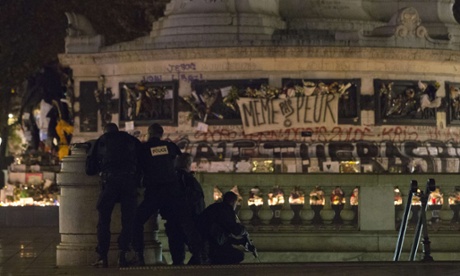
After an afternoon of defiance and mourning, crowds fled screaming from Place de la Republique soon after sunset - although the dispersal appeared to be caused by a false alarm, writes Emma Graham-Harrison.
“People were shouting ‘move, move’ and some people were saying the heard gunshots,” said Martin Duuachat, an actor who had come to pay his respects to the dead.
He had run with friends to take shelter in a nearby hotel. Within 15 minutes people were filtering back to the square, but still nervous amid reports of shooting elsewhere.
Updated
Who are the three brothers?
The police hunt for on-the-run Paris terror suspect Salah Abdeslam comes as the investigation into the attacks focuses on three French brothers based in Belgium.
According to Le Monde, the names of two of the brothers were on rental contracts for two cars with Belgian number plates and used during the attacks, a Volkswagen Polo and a Seat.
French broadcaster BFMTV reported that Salah is suspected of renting the black Polo, which was found near the Bataclan concert hall where 89 people died.
His brother Ibrahim Abdeslam was named by the Washington Post as another of the terror suspects, citing a senior European intelligence official. It is thought that he may be one of the suicide bombers killed in the attacks.
A third brother, who has not been named, is believed to have been among seven people arrested on Saturday in the Molenbeek-Saint-Jean district of Brussels.
Updated
The panic at Place de la Republique appears to have been a false alarm. Crowds are returning to the square, which is round the corner from the Bataclan concert hall.
My colleague, Emma Graham-Harrison, has tweeted:
May just have been panic in the crowd -- some people thought they heard gunshots but people still milling around.
— Emma Graham-Harrison (@_EmmaGH) November 15, 2015
The stampede at Place de la Republique was broadcast live on the UK’s Channel 4 News – we will get footage as soon as possible – with journalists told by police to move from the area.
Ed Fraser, managing editor of Channel 4 News, has tweeted:
Paris Live @mattfrei has been told by police to move following a stampede of people in Place de Republique. Armed police say "stand clear"
— Ed Fraser (@frasereC4) November 15, 2015
Local reports suggest there was panic and reports of gunshots. However, French channel BFM TV has a reporter on the scene who did not hear any gunshots.
Crowds run from Place de la Republique
There are a number of reports of crowds suddenly running from Place de la Republique, where an impromptu rally has been taking place today.
Screaming crowds running from the Place de la Republique -- not clear what's happening
— Emma Graham-Harrison (@_EmmaGH) November 15, 2015
Total panic on Place de la Republique #ParisAttacks pic.twitter.com/wwrVn1E9rS
— Rasmus J.-Nielsen (@RasNielsen) November 15, 2015
French police issue arrest warrant for Paris terror suspect
Police Nationale has just issued this arrest warrant for Abdeslam Salah, suspected of being involved in the Paris attacks.
The police warn people not to approach Salah and say he is “dangerous”.
[AppelàTémoin] La #PJ recherche 1 individu susceptible d'être impliqué ds les attentats du 13/11/2015 #ParisAttacks pic.twitter.com/Gpr4MY1I53
— Police Nationale (@PNationale) November 15, 2015
Salah is believed to be one of three brothers suspected of involvement in the attacks.
A senior European intelligence official quoted by the Washington Post said Salah and his brother Ibrahim, Frenchmen who lived in Belgium, were both suspects.
One of the brothers was said to be a suicide bomber, the Post said, while the other – believed to be Salah – was thought to be a logistics coordinator who rented one of the cars used in the attack.
Updated
Footage has emerged of Madonna crying during a show in Stockholm following the Paris attacks. Before being passed a tissue from a fan, the singer said:
It’s disturbed me all day and it’s been really hard to actually get through the show because in many ways I feel torn. Why am I up here dancing and having fun when many people are crying over the loss of their loved ones,” she said to cheers.
However, that is exactly what these people want to do. They want to shut us up. They want to silence us. And we won’t let them. We will never let them!
Large crowds have turned out at Place de la République in Paris, with people giving out “free hugs” and chanting “Non non non on n’a pas peur, so-so-so solidarité” (which translates as “No, no, no – there is no fear, so- so- so-solidarity.”)
"Non non non on n'a pas peur", so-so-so solidarité. Place de la république, deux jours après pic.twitter.com/TjEFUtAjBt
— Gilles Dhers (@gillesdhers) November 15, 2015
Place de la république #, distribution de " câlins gratuits" pic.twitter.com/aNDsUbWkPe
— Gilles Dhers (@gillesdhers) November 15, 2015
Updated
Three brothers involved in Paris attacks, according to reports
Agence France-Presse reports that three brothers were involved in the Paris attacks, with one believed to still be at large.
#BREAKING Three brothers involved in Paris attacks, one may be at large: security source
— Agence France-Presse (@AFP) November 15, 2015
One of the men arrested in Belgium is the brother of the man who rented the black Volkswagen Polo, BFMTV has reported. That man is still at large and being hunted by Belgian and French police.
A group of French imams have sung la Marseillaise, the French national anthem, outside the Bataclan concert hall in solidarity with the victims of the Paris attacks.
You can hear audio of the song around 50 seconds in here:
La Marseillaise chantée par des imams devant le Bataclan https://t.co/ErrL63OQql
— France Info (@franceinfo) November 15, 2015
Three of the seven suicide bombers were French, officials say
Three of the seven suicide bombers killed in the Paris attacks were French citizens, officials in France and Belgium have said.
Associated Press reports that one suicide attacker identified by a skin sample had been living in a Paris suburb.
A Belgian official said two of the seven suicide bombers were French men living in Brussels. Among the seven arrested in the Belgian capital is a French citizen, the official said.
The development will highlight growing fears of possible homegrown terrorism in France, a country that has exported more jihadis than any other in Europe.
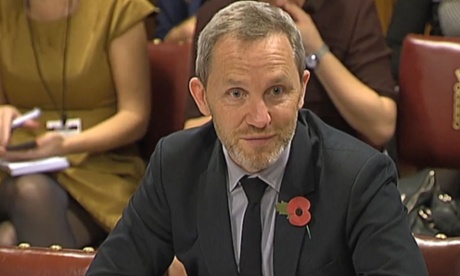
James Purnell, the BBC’s director of strategy and former Labour culture secretary, was caught up in the terror attack on Friday night.
Purnell was at L’Alsaciene restaurant near Chatelet with about a dozen friends when the attack happened, the Guardian has learned.
The former Labour MP found himself locked in the restaurant until 3am as police locked down the city.
The BBC confirmed that Purnell and his party were “all safe and well” after the ordeal.
Updated
Two Scottish women have described how they hid in a cellar for three hours to escape the killers at the Bataclan.
Mariesha Payne, 33, and Christine Tudhope were in Paris to celebrate Tudhope’s 35th birthday and were standing near the front of the stage, watching US rock band Eagles of Death Metal, when the shooting began.
Payne told the Daily Record she was afraid she would never see her two children again:
I cannot believe we got out alive. While we were hiding there was a pause in the shots for about 20 minutes but there was a lot of screaming - a witness we spoke to later said people were being tortured and stabbed at that point.
Speaking later to Sky News as they arrived back at Edinburgh airport, Tudhope said she initially thought the gunfire was firecrackers then saw bullets hitting the stage:
A second round went off, most people ducked, but I just said run, just get out of here. In the confusion, if we had gone left we would have instantly been out on to the street and probably the first people out of the building, but, just confused, we ran right and ended up being in a room that we couldn’t get out of.
There were no exits but we found a door to the cellar, which we just ran into but then realised we were trapped and there was no way out of there.
A few seconds later the door burst open and we just thought, they’re coming we are going to die. It was two other concertgoers. We managed to barricade ourselves in, turn the lights out and we were then trapped there for the next three hours just having to listen to what was happening.
Updated
The suspects: what we know so far
Here is what we know so far about the suspects in the Paris attack.
Seven attackers were killed in the atrocity. An eighth man is still feared to be at large.
- Only one of the attackers, Omar Ismaïl Mostefai, has so far been named by French police. Mostefai’s brother, father and sister-in-law are among seven people being questioned by police in France. The 29-year-old, who is of Algerian origin, was from Courcouronnes, a town in Essonnes south of Paris. He was identified by his severed finger, which was found among the wreckage of the Bataclan concert hall, where he and two other militants blew themselves up.
- Two of the attackers were French nationals who lived in Brussels, according to the Belgian prosecutor.
-
At least seven people have been detained following raids in Brussels. Three men were arrested on Saturday, with at least four further arrests taking place on Sunday. Police are still investigating whether those detained can be linked to the Paris attacks.
- A passport was found near the site of one of the bombings belonging to a Syrian man named Ahmed Almohamed, 25, who is considered a suspect in the attack. The Serbian newspaper Blic said he had crossed into the country on 7 October, having arrived four days earlier in Leros, Greece. The paper also reported that French security officials had asked their Serbian counterparts for help as the man had been registered in the southern Serbian town of Presevo. A Greek newspaper, Protothema, said he was travelling with a second man, Mohammed Almuhamed, and published pictures purporting to show their travel documents. As ever, such details are hard to verify. It cannot be ruled out that the men were travelling under false documents – the Guardian has previously reported on the burgeoning trade in fake and stolen passports.
- Police are still hunting one man involved in Friday night’s attacks, French media report. Citing police sources, BFM TV said a French national who rented a Volkswagen Polo seen outside the Bataclan where 89 people died was “not among the seven dead attackers or the men arrested so far in Belgium”.
Updated
A senior French diplomat has warned that France had to ensure it defended social cohesion and multiculturalism by promoting “love over fear” in the wake of Friday’s terror attacks in Paris, writes Severin Carrell.
Emmanuel Cocher, until recently deputy director of international security in the French foreign ministry and now consul general in Edinburgh, said France was right to attack Isis forces in the Middle East to prevent Islamist extremism from taking greater power in the region.
French consul general Emmanuel Cocher, @JohnSwinney & Rev Calum MacLeod #JeSuisParis after 700 attend St Giles pic.twitter.com/RmbtSXHqPt
— Severin Carrell (@severincarrell) November 15, 2015
Speaking after a special commemorative service attended by hundreds of French students and emigres at St Giles cathedral in Edinburgh, Cocher said calling for an “exclusive, excluding national identity” that rejected multiculturalism would be a mistake. It would fail to prevent further attacks.
Pointing to next month’s French elections, where the far-right Front National is expected to make gains, Cocher said:
That is why it is so important to stress that really what is at stake is staying respectful, staying cohesive and expressing the importance of love over fear etc. This is a message that not everyone is going to hear today.
It would be easy to blame others or question whether France’s heavily military involvement in the suppression of Isis in Syria was to blame:
“As a nation we take risks, we expose ourselves and we face these risks and what they mean at home, but that would be a lower level negative reaction,” he said.
“The higher level negative reaction would be to say multiculturalism doesn’t work – we have to return to a strong national identity but an exclusive, an excluding national identity. But that would be extremely damaging. First of all, it’s impossible to achieve and is also extremely negative.”
Cocher said social cohesion was essential to limit further terror attacks. The level of risk faced by France was “extremely high”, he said, because hundreds of French citizens were joining Islamist terror groups and coming home after experiencing atrocities and war.
“On the foreign policy side, people are clever enough to realise that if we were withdrawing from what we were doing in the Middle East, we wouldn’t be any safer because these people would prosper and then there would be an arc of crisis,” he said.
“Because we [France] are very closely linked to northern Africa and central Africa, so if that part of the world was entirely invaded by terrorists and not challenged at all in what they were doing, then we would be extremely, extremely threatened on a daily basis.
“So people really realise it is absolutely key to our security that this job is carried out, and that we disrupt the wider Isil project. I think people are clear about that.”
Updated
US and France 'intensify' strikes against Islamic State
The US and France are to “intensify” their strikes and coordination against Islamic State in Syria and Iraq, the US deputy national security adviser, Ben Rhodes, has said.
#BREAKING US, France to 'intensify' military, intel coordination: White House
— Agence France-Presse (@AFP) November 15, 2015
Here is some Reuters copy on Rhodes’ comments:
Speaking in an interview with US network NBC’s Meet the Press on the sidelines of a G20 summit in Turkey, Rhodes said getting arms directly to fighters on the ground in Syria and Iraq seemed to be working in the fight against Islamic State. Separately, Rhodes told reporters that Islamic State has the aspiration to launch attacks on any member of the US-led coalition but said there was no specific credible threat against the US.
Updated
Two Paris attackers were French nationals who lived in Brussels
The Belgian prosecutor has said two of the Paris gunmen were Frenchmen who lived in Brussels.
#BREAKING Two attackers killed in Paris were Frenchmen who lived in Brussels: Belgian prosecutor
— Agence France-Presse (@AFP) November 15, 2015
It is not clear whether these are the same two gunmen described earlier by the Belgian broadcaster RTBF as being from Brussels.
Updated
Two of the Paris gunmen 'were from Brussels'
Two of the attackers involved in the Paris atrocity came from Brussels, reports Belgian public broadcaster RTBF.
A police source told RTBF that two of the attackers in Paris on Friday night were from Brussels and one of its districts, Molenbeek-Saint-Jean, respectively.
Police have carried out raids in Molenbeek in connection to the Paris attacks, with seven people arrested so far.
Updated
Police still hunting for one suspect, French media report
Police are still hunting one man involved in Friday night’s attacks, French media report.
Citing police sources, BFM TV said a French national who rented a Volkswagen Polo seen outside the Bataclan concert hall where 89 people died was “not among the seven dead attackers or the men arrested so far in Belgium”.
The station said three men were stopped by police on the French-Belgian border on Saturday night, but since their names were not on any wanted list they were allowed to continue – presumably to Molenbeek, the Brussels suburb where eight people have have been arrested since Saturday, including five this morning.
“It’s not known whether he took part in the attacks or was an accomplice, but what is clear that his name does not figure among those who have been arrested so far,” the station said.
Updated
One of the men arrested in the Belgian town of Molenbeek had been inspected at the France-Belgium border earlier that day, reports French channel BFMTV. He was reportedly driving a VW Golf with two other men.
Updated
In a strange twist, a man arrested in Germany two weeks ago with explosives and Kalashnikovs in his car has told police he was on his way to Paris “to see the Eiffel tower” – but refused to discuss Friday’s terrorist attacks.
The 51-year-old man, from Montenegro, was arrested during a routine stop on a motorway in Bavaria.
But police are now trying to establish whether there is a connection to the Paris attacks, according to Agence France-Press (AFP). A spokesman for police in southern Bavaria said:
We want to talk [about the Paris attacks] with him but he doesn’t want to talk. Not about this subject in any case.
AFP reports that an address in Paris was found on a written note in the car as well as in his satnav system, along with eight assault rifles, three handguns and explosives, according to a police statement:
The suspect said he “wanted to see the Eiffel tower in Paris, and then return home” and had “no knowledge (of the presence) of arms and explosives” in his vehicle.
Updated
Total of seven arrests in Belgium linked to Paris attacks
Police in Belgium have made four arrests on Sunday in connection with the Paris attacks, after detaining three men on Saturday.
Associated Press reports:
BREAKING: Belgian official says 7 people detained in all in Belgium linked to the Paris attacks.
— The Associated Press (@AP) November 15, 2015
In France earlier on Sunday, police detained six people close to one of the seven gunmen, named by police as Omar Ismaĩl Mostefai. His father, brother and sister-in-law are among those in custody.
Updated
New footage of shootout outside Bataclan concert hall
New video has emerged of the moment police and gunmen exchanged fire outside the Bataclan concert hall in Paris. At least 129 people were killed on Friday during the Paris attacks, including more than 80 at the hall.
Updated
One of the most chilling details from the Paris attacks is that the passport of a Syrian refugee was found on or near the body of a dead suicide bomber – but the development should be treated with caution, writes Patrick Kingsley.
Investigators still need to verify the Syrian passport was carried by an attacker rather than a dead bystander. There is also the possibility that the document was planted, forged or stolen. It may, however, turn out to be genuine.
French newspaper Liberation reports that as well as three Kalashnikovs, police found five full magazines and 11 empty ones in what they suspect to be the getaway vehicle used by Friday night’s attackers.
Dans la Seat retrouvée à Montreuil, 3 kalach, 5 chargeurs pleins et 11 chargeurs vides #AttentatsParis
— Willy Le Devin (@Will_ld) November 15, 2015
Who is Omar Ismail Mostefai?
Omar Ismail Mostefai, the first Paris gunman to be identified, was born and spent his teenage years in Courcouronnes, a town 16 miles (25km) south of Paris in Essonne.
My colleague, Angelique Chrisafis, has sent this dispatch from Courcouronnes:
He grew up in the Canal neighbourhood, which is ethnically diverse with a young population and a high proportion of social housing. The low-rise council blocks of flats beside the canal are much calmer and less troubled than the more difficult low-income estates of the neighbouring town of Évry. The French prime minister, Manuel Valls, used to be mayor of Évry and was vocal about the problems facing the banlieue suburban estates outside Paris.
As news emerged of Mostefai’s role in the attacks, people in Courcouronnes were milling around near the shopping area and one young man was fishing in the canal. One man who did not want to be named who was at high school with Mostefai said:
He was not a troublemaker. He was someone who stood up for himself – you wouldn’t provoke him because you knew that he’d stand up for himself if you did. But he wasn’t someone who went looking for problems. He was calm, he wasn’t someone who you’d notice, who stood out.
He said Mostefai went to Friday prayers and observed Ramadan, but he didn’t stand out as someone very serious about religion. He added: “I’m really surprised to hear he was involved in this, really surprised.”
Updated
Further arrests in Belgium
Police in Belgium have made a further two arrests linked to the Paris attacks, following the three people detained on Saturday.
Françoise Schepmans, mayor of the Molenbeek district of Brussels, was quoted by Reuters: “There have been five arrests made linked to the attacks in Paris.”
French and Belgian prosecutors said a car found near the Bataclan concert venue in Paris, where the deadliest attack was carried out on Friday, had been hired in Belgium.
Updated
The use of suicide vests in the Paris attacks marks a worrying change of tactics by Islamic State (IS) militants – and means that the munitions specialist who made them could still be at large in France or Europe.
A former French intelligence chief told Agence France-Press:
Suicide vests require a munitions specialist. To make a reliable and effective explosive is not something anyone can do.
A munitions specialist is someone who is used to handling explosives, who knows how to make them, to arrange them in a way that the belt or vest is not so unwieldy that the person can’t move. And it must also not blow up by accident.
French authorities say the vests appeared to have been made with TATP, or acetone peroxide, which is easy for amateurs to make at home but is highly unstable.
The former intelligence chief added:
They didn’t bring these vests from Syria: the more you shake these things, the more you multiply the risks. It’s very likely he is here, in France or Europe, one or several guys who have come back from jihadist areas and who learned over there.
Updated
Security is still high in the French capital, with police advising residents to stay indoors as much as possible.
Man just coming out of #Paris metro remarked there were 'more police than passengers'
— katya adler (@BBCkatyaadler) November 15, 2015
Police have also asked people to refrain from making prank calls or using fireworks.
A police helicopter was dispatched to the Parisian suburb of Bagnolet on Saturday after firecrackers set off at a wedding were mistaken for gunfire.
Updated
Home Office signals it will reject calls to rush surveillance bill through parliament
In an article in the Mail on Sunday this morning, Lord Carlile, the Lib Dem peer and the UK government’s former independent reviewer of terror legislation, said the government’s internet surveillance bill should be rush through parliament following the Paris attacks. A draft bill has been published, but a joint committee is being set up to scrutinise it. The proper bill is not due to be published until spring next year, and it is not due to become law until the end of 2016.
On Sky’s Murnaghan programme, Carlile put a timetable on his plan to speed it up. It could all happen within a month, he said.
My view is that we don’t have time to wait, that what is in the bill is for the most part perfectly reasonable, it could pass through parliament in the next three to four weeks if the government decided that should happen. And I believe that the necessary powers need to be on the statute book as quickly as that. It could have been London.
But Diane Abbott, the Labour MP and shadow international development secretary, told the same programme it would be a mistake to rush the bill through parliament.
We have to get on with it, but it has to go through the parliamentary process ... It is always a mistake to short-circuit processes of parliamentry scrutiny.
And, significantly, that is what the Home Office is saying too. A source at the department say that ministers were not minded to try to rush the bill onto the statute book. He said:
We are committed to the pre-legislative scrutiny process that the home secretary has set out [which involves a joint committee of MPs and peers looking at the draft bill before a final version is agreed] and we cannot pre-judge what the committee will make of the bill. We have a timetable, and I don’t think we will be rolling back from that. With something so important, I cannot see us suddenly setting that aside and rushing the bill through parliament.
UPDATE: The Home Office has now issued a statement confirming that it is rejecting Carlile’s call to rush the investigatory powers bill through parliament. This is from a Home Office spokesman: “The draft investigatory powers bill was published on 4 November. It will be scrutinised by a joint committee of both houses of parliament, and the government will introduce its final proposals to parliament in the spring with a view to the bill becoming law before the end of 2016.”
Updated
Nigel Farage, the leader of Ukip, the British rightwing anti-European party, has said little on the Paris attacks so far. He posted this on Twitter yesterday.
Profoundly shocked by the events in Paris. We need a rethink.
— Nigel Farage (@Nigel_Farage) November 14, 2015
He was expected to appear on the Andrew Marr show to elaborate, but in the event he did not appear.
But he is determined to have his say. Journalists have been sent an operational note saying that he will “address the terrible events in Paris” in a speech in Basingstoke on Monday.
And what he is going to say? If you cannot already guess, then John Bickley, the Ukip candidate in next month’s Oldham West and Royton byelection posted this on Twitter earlier today. It will probably be along the lines of, ‘We told you so.’
UKIP predicted this & was vilified:Paris Terrorist Was Migrant Who Registered As A Refugee In Greece https://t.co/PHs3figxLe
— John Bickley (@JohnBickleyUKIP) November 15, 2015
For some time now Farage has been claiming that mass immigration could lead to jihadis entering Europe. For example, this is what he told LBC in September.
Islamic State have said they will use this tide of humanity across the Mediterranean to embed thousands of their jihadist fighters into Europe. They mean it.
And yet what do we have? We have people who want to feel good about themselves holding up signs saying refugees welcome.
As I said earlier, so far British politics has been relatively united in its response to the Paris attacks. By tomorrow evening that will no longer be the case.
World leaders 'to step up border controls'
The leaders of the world’s 20 most powerful countries have agreed to step up border controls and aviation security in the wake of the Paris attacks, according to a draft statement seen by Reuters.
The news agency reports that the heads of the G20 economies, meeting in Turkey, condemned the attacks claimed by Islamic State as “heinous” and said they remained united in fighting terrorism, according to the draft document.
Reuters says the finalised document is due to be released later on Sunday.
Updated
A French journalist has tweeted pictures of smashed glass in the spot where police found a getaway vehicle linked to the Paris attacks.
Three Kalashnikovs were found in the abandoned black Seat, which has since been removed from the scene in the east Parisian suburb of Montreuil.
The car pictured is not the black Seat suspected of being the attackers’ getaway vehicle.
Le verre recouvre la place de parking. "La plus célèbre de #Montreuil", dit un riverain. #ParisAttacks pic.twitter.com/2u97zGX8pF
— Romain Baheux (@RBaheux) November 15, 2015
Des traces de verre au sol à Montreuil, où la police a trouvé la voiture dans la nuit de samedi à dimanche. pic.twitter.com/kDHuIkBuCf
— Romain Baheux (@RBaheux) November 15, 2015
Updated
Passport found near bomber travelled through Serbia, Croatia and Austria
Greek and Serbian sources have been sketching out the putative route into Europe of another man considered a suspect in the attacks. The Serbian newspaper Blic published a picture of a passport found in Paris belonging to a 25-year-old man named Ahmed Almohamed, and said he had crossed into the country on 7 October, having arrived four days earlier in Leros, Greece.
It said he continued on into central Europe via Croatia and Austria. The paper reported that French security officials had asked their Serbian counterparts for help as the man had been registered in the southern Serbian town of Presevo.

A Greek newspaper, Protothema, said he was travelling with a second man, Mohammed Almuhamed, and published pictures purporting to show their travel documents.
As ever, such details are hard to verify. It cannot be ruled out that the men were travelling under false documents – the Guardian has previously reported on the burgeoning trade in fake and stolen passports.
Updated
Obama vows to 'redouble' fight against Islamic State jihadists
President Obama has been speaking on the sidelines of the G20 summit after a meeting with his Turkish counterpart, Recep Tayyip Erdoğan.
Agence France-Press has this story on Obama’s pledge to help hunt down the Paris attackers, but his key quote was:
We will redouble our efforts working with other members of the coalition to bring about a peaceful transition in Syria and to eliminate Daesh as a force that can create so much pain and suffering for people in Paris and Ankara and other parts of the globe.
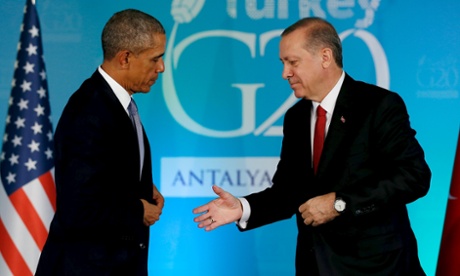
Updated
Juncker: no need for rethink on refugees after Paris attack
Jean Claude-Juncker, the European commission head, has urged Europe not to rethink its policy on refugees after the Paris attack.
Speaking on the sidelines of a G20 summit of world leaders in the Turkish coastal province of Antalya, Juncker said:
The one responsible for the attacks in Paris ... he is a criminal and not a refugee and not an asylum seeker.
I would invite those in Europe who try to change the migration agenda we have adopted – I would like to remind them to be serious about this and not to give in to these basic reactions that I do not like.
French news agency Agence France-Press has the full story on Juncker’s remarks.
Updated
The Labour party, the main opposition party in the UK, is divided over foreign policy. Jeremy Corbyn, the new leader, has strongly opposed all the western military interventions in Libya and the Middle East in recent years, but there are many figures at the top of the party who still support Blair-style use of force. But for the moment the party seems to have found a position behind which it can unite. Lord Falconer, the shadow justice secretary (and an arch-Blairite) and Hilary Benn, the shadow foreign secretary (who is more interventionist than Corbyn), have both been giving interviews this morning, and they have both said there must be an international solution to the Syria crisis, and that just bombing Islamic State (Isis, or Isil) is not, on its own, the answer. Beyond that, they did not offer much detail on what this might involve.
- Falconer said that he and Corbyn were agreed on the need to defeat Isis. He made this point when it was put to him that he disagreed with his party leader. Falconer also said there should be a “consensus” before the government decided to act. He told Andrew Mar:
Jeremy Corbyn and I are absolutely clear that we must do everything we possibly can to end Isil. How that is to be done is the debate that now has to be had, and we want to participate strongly in that debate ...
It [defeating Isis] cannot be done without there being a major international effort. That is what needs now to be looked at, and looked at as a matter of urgency. And it needs to be thought out in a way that convinces the people of Britain; there needs to be a consensus.
And, in a separate interview, Benn said:
There has to be a comprehensive plan if you are really going to end the threat from Isil/Daesh. If the government wants to bring that forward, then we would look at it. But you are not going to defeat Isis/Daesh in Syria just by dropping bombs.
- Falconer said that western foreign policy overall had failed to stop the rise of Isis. He made this point when he was asked if he agreed with what Corbyn was due to say in a speech on Saturday. Extracts from the speech were released to the media before the Paris attacks and in them Corbyn said:
For the past 14 years, Britain has been at the centre of a succession of disastrous wars that have brought devastation to large parts of the wider Middle East. They have increased, not diminished, the threats to our own national security in the process.
After the Paris attacks, Corbyn chose not to deliver the speech. But Marr read out the extract quoted above, and Falconer (who supported the Iraq war) said he accepted western policy had not succeeded. He told Marr:
The foreign policy overall that has been adoped has not worked. Whether or not there should be an intervention here, or not an intervention there, it’s very difficult to know what the right answer in relation to that is.
Updated
BBC News Europe reporter Gavin Lee reports that up to 30 victims of the Paris attacks are yet to be identified:
French PM Manuel Valls says 20 to 30 bodies of the #Paris attacks have not yet been identified.They should be identified in the coming hours
— Gavin Lee (@GavinLeeBBC) November 15, 2015
Updated
An Egyptian passport found near the Stade de France belonged to a football fan and not a suspect in the attacks, according to Egypt’s ambassador to France.
Ihab Badawi said the passport belonged to Waleed Abdel-Razzak, a spectator who reportedly sustained serious injuries following two suicide attacks and a bombing near the football stadium.
Separately, a second passport was found outside the stadium, belonging to a Syrian national. That passport is said to have been used by a refugee who arrived on the Greek island of Leros on 3 October and later that month to claim asylum in Serbia.
However, the legitimacy of the passport has not been verified. It is not known whether the same person who used it to pass through Greece was the person who was involved in the Paris attacks.
Updated
Latest summary
Here are the latest developments:
- A stash of weapons has been found in a getaway vehicle believed to have been used in the Paris attacks. Detectives found three Kalashnikov rifles along with fingerprints in the abandoned vehicle, discovered in the eastern Parisian suburb of Montreuil. The discovery will heighten fears that one or more of the attackers – or their accomplices – are still on the run.
- The first attacker has been identified as Omar Ismaïl Mostefai. The 29-year-old was one of three men who blew himself up, killing 89 people in the bloodiest scene of the carnage. Six people close to Mostefai are in custody, including his brother, father and sister-in-law.
-
Greek authorities say a passport found near the body of one of the Stade de France attackers was used by someone in Greece to register as a Syrian refugee. Serbia’s interior ministry said the holder of the passport crossed into Serbia in October before claiming asylum there.
- Theresa May effectively confirmed that the SAS is on standby in Britain to deal with a multiple-shooting terror attack of the kind that happened in Paris. The home secretary told BBC1’s The Andrew Marr Show that arrangements were in place to provide “military support” in the event of a terrorist attack.
- A handful of British victims are feared to be among the 129 people killed in Friday’s atrocity, although only one has so far been named. Ninety-nine people remain critically injured in hospitals in Paris.
- Vigils have taken place across the globe to pay tribute to the dead and wounded.
Updated
Nicolas Sarkozy, the former French president, has said there should be “drastic changes” to his country’s security policy following the Paris attacks.
Speaking after his meeting with President François Hollande, Sarkozy said:
I told the president that I believe we should put together appropriate responses, which means a shift in our foreign policy at the European level and some drastic changes to our security policy.
We need the whole world to destroy Daesh, in particular the Russians. Europe must regroup to set the conditions for a new immigration policy. We must learn the consequences of failures and turn our resources towards all those who look at jihadi websites.
Updated
Here are the key points from Theresa May, the British home secretary’s interview on The Andrew Marr Show.
- May effectively confirmed that the SAS were on standby in Britain to deal with an urban, multiple-shooting terror attack of the kind that happened in Paris. The authorities had been preparing for this ever since the Mumbai attacks in 2008, she said. She also suggested that attacks of this kind from Islamic State (Isis, or Daesh as May called it) were becoming more likely.
What we have seen from Daesh is that in the past there has been a focus on perhaps individuals conducting attacks, encouraged to conduct attacks. What we have seen from the attack in Paris is a coordinated attack, a planned attack, so an attack on a larger scale.
Since the Mumbai attack in 2008 we have been building our capability here, building the capability of our police to be able to react to a firearms attack of that sort. We have been increasing the ability of the emergency services to save lives in high-risk conditions. But we will now review that and see if there are any further lessons we need to learn.
When pressed on whether the SAS were on standby to help, she said:
What we have done over the years since the Mumbai attack is ensured that we have the capability, that our police have the capability. They have changed their training so that they can go and deal with these incidents. And there are tried and tested arrangements in place to provide military support.
But she could not discuss special forces, she said. In his Red Box email this morning, Tim Shipman, the Sunday Times’s political editor, says “an SAS counter terrorism unit, around 50 strong, has been moved from its base in Hereford to RAF Northolt with unmarked helicopters and on short notice to move” to deal with this sort of threat.
- She played down suggestions that the government would push for an early vote on airstrikes against Isis in Syria in the light of the Paris attacks. The government was still committed to only acting if it can get a consensus in the Commons, she said. (And, as Hilary Benn, the shadow foreign secretary, confirms in an Independent on Sunday interview today, Labour is opposed, meaning this consensus does not exist.)
- She said the government would consider whether security needed to be tightened in the light of the Paris attacks. She would chair a meeting of the Cobra emergency committee to consider these measures this morning, she said.
These are issues where we are always looking to see if there is more that we need to be doing in these areas. We will be looking at the lessons to be learnt from the Paris attacks. That is partly what the Cobra meeting this morning will be about. As things develop, as we learn more about what has happened in Paris, we need to look to see if there are more lessons that we need to learn here in the UK.
She said the government had already increased policing at some events, and introduced more checks at the borders, since Friday night.
- She said that, although only one Briton had been confirmed dead, there were fears about “a handful of other” Britons.
- She said the Syrian refugees who were coming to Britain were being thoroughly screened. The first who are arriving under the government’s plans to take 20,000 over the next five years are coming this week, and they have been screened by UNHCR, the UN refugee agency, as well as by the British authorities.
- She said the Foreign Office was not advising people not to travel to Paris. People should be “alert but not alarmed”, she said.
Updated
Three Kalashnikovs found in getaway car, reports say
Le Figaro has more detail on the getaway car that was found in the east Parisian suburb of Montreuil.
The French newspaper reports that three Kalashnikovs were found in the abandoned black Seat, which investigators have linked to the Paris attacks.
The Paris prosecutor last night indicated that the terrorists who attacked a number of bars and cafes in the 10th and 11th arrondissements were carrying Kalashnikovs.
The discovery will add to fears that some of the attackers or their accomplices are still on the run.
Updated
Theresa May: Britain stands 'shoulder to shoulder' with France
The UK home secretary, Theresa May, has said Britain stands “shoulder to shoulder” with France as security is ramped up in the wake of the Paris attacks.
Speaking on BBC 1’s The Andrew Marr Show, May said:
British nationals have been caught up in this as well as French nationals. We stand absolutely shoulder to shoulder with the French in relation to this issue. I think we are both very clear that the terrorists will not win, we will defeat them.
The attack aimed at inflicting mass casualties has been seen as a sign the threat posed by IS - also known as Isil, Isis and Daesh - is “evolving” and May said a review of the security response was taking place:
What we have seen from Daesh is that in the past there has been a focus on individuals conducting attacks, being encouraged to conduct attacks.
What we have seen from the attack in Paris was a co-ordinated attack, a planned attack on a larger scale.
She said the police and emergency services had prepared for a marauding attack by gunmen since the Mumbai assault in 2008. But she added: “As a result of what has happened in Paris, we will now review that and see if there are any lessons to be learned.”
May declined to comments on reports that the special forces would be deployed on British streets, but said “we have arrangements in place, where necessary, for the police to have military support”.
Updated
A number of vigils have been taking place around the world for the victims of the Paris attacks. Here is our film from the London vigil:
Channel 4 News has footage of the moment Belgian police made an arrest in connection with the Paris attacks. Three French nationals were held in Molenbeek on Saturday.
This is the moment Belgian police swooped on a suspect in connection to the Paris terror attack (courtesy: RTL) https://t.co/MkLlNlP7rH
— Channel 4 News (@Channel4News) November 15, 2015
Holder of Syrian passport found near gunman sought asylum in Serbia
Serbia’s interior ministry has said the holder of the Syrian passport found at the scene of the Paris attack crossed into Serbia on 7 October and claimed asylum there, Reuters reports.
The Syrian passport is also said to have been used to register on the Greek island of Leros in October.
The legitimacy of the passport has not been verified, and it is not known whether the same person who used it to pass through Greece was the person who was involved in the Paris attacks.
Updated
A South African graduate has described in vivid detail how she played dead for over an hour after gunmen opened fire at the Bataclan concert hall.
Writing on Facebook, Isobel Bowdery said:
It wasn’t just a terrorist attack, it was a massacre. Dozens of people were shot right in front of me. Pools of blood filled the floor. Cries of grown men who held their girlfriends’ dead bodies pierced the small music venue. Futures demolished, families heartbroken, in an instant.
Shocked and alone, I pretended to be dead for over an hour, lying among people who could see their loved ones motionless. Holding my breath, trying to not move, not cry – not giving those men the fear they longed to see. I was incredibly lucky to survive. But so many didn’t. The people who had been there for the exact same reasons as I – to have a fun Friday night were innocent.
Isobel described how the gunmen “meticulously” shot at the crowd “without any consideration for human life” after entering the concert hall during a show by US rock band Eagles of Death Metal. She initially mistook the gunfire as “part of the show”, she said, but realised the true horror of what was unfolding as dead bodies began to fall.
She added:
Being a survivor of this horror lets me be able to shed light on the heroes. To the man who reassured me and put his life on the line to try and cover my brain whilst I whimpered, to the couple whose last words of love kept me believing the good in the world, to the police who succeeded in rescuing hundreds of people, to the complete strangers who picked me up from the road and consoled me during the 45 minutes I truly believed the boy I loved was dead, to the injured man who I had mistaken for him and then on my recognition that he was not Amaury, held me and told me everything was going to be fine despite being all alone and scared himself, to the woman who opened her doors to the survivors, to the friend who offered me shelter and went out to buy new clothes so I wouldn’t have to wear this blood stained top, to all of you who have sent caring messages of support – you make me believe this world has the potential to be better.
Isobel’s post has been shared widely on Facebook, with more than 1.3 million people liking it and nearly 500,000 sharing it with friends.
Updated
Nicolas Sarkozy, former French president and leader of France’s main opposition party, Les Republicains, is meeting with President François Hollande at the Élysée.
🔴ATTENTATS PARIS @NicolasSarkozy reçu à l’Élysée par @fhollande à 10h00 (@vnataf) pic.twitter.com/B5Ith0dE7R
— infos140 (@infos140) November 15, 2015
Updated
Weapons found in getaway car, reports French media
Weapons and fingerprints have been found in a vehicle suspected of being involved in the Paris shootings, the French TV channel BFMTV is reporting.
The car – a black Seat – was found abandoned in Montreuil, an eastern suburb of the French capital.
Police put out an alert about the vehicle on Saturday and warned both police officers and the public not to approach the vehicle.
This message of defiance – “fluctuat nec mergitur”, which translates as “battered by the floods but not sunk” – was spotted in Paris by my colleague Emma Graham-Harrison.
Weeping for France pic.twitter.com/M5sNmRUNbU
— Emma Graham-Harrison (@_EmmaGH) November 15, 2015
Special forces will be deployed to the streets of Britain in the wake of the Paris massacre, according to reports.
The Sunday Telegraph and Sunday Express report that personnel from the elite Special Reconnaissance Regiment (SRR) will back up undercover armed police officers to guard key public places in the UK.
Scotland Yard’s assistant commissioner Mark Rowley Britain’s most senior counter-terrorism police officer, said on Saturday that Britons should “be alert, not alarmed”. He added:
We have been strengthening our policing at ports and we have been strengthening policing on the street. People may notice some changes at events at big cities across the country.
We will constantly keep that under review in the forthcoming days and weeks but we can’t let the terrorists defeat us by becoming fearful and withdrawing from the streets.
Updated
In Britain politicians have until now been relatively united in their response to the Paris attacks. David Cameron, the prime minister, delivered a statement condemning the killings and expressing his determination “to redouble our efforts to wipe out this poisonous extremist ideology”. Jeremy Corbyn, the Labour leader, also strongly condemned the attacks, in a statement and in an open letter to the French president, although he also said it was important “not to be drawn into responses which feed a cycle of violence and hatred”. Even the far-left Stop the War Coalition, which was criticised on Saturday for posting a tweet (since deleted) saying western policy in the Middle East was to blame, later issued a statement condemning the attacks unequivocally.
But it is likely that political divisions over the response to attacks will soon open up. There is some evidence of how this will happen in the Mail on Sunday where Lord Carlile, a Lib Dem peer and the government’s former independent reviewer of terror legislation, said that, in the light of what happened, the government’s proposed new surveillance legislation should be introduced as quickly as possible.
I and other politicians want this bill to be expedited, so that rather than becoming law by the end of 2016, which is the plan, it should become law as soon as possible.
Theresa May, the home secretary, will shortly be interviewed on The Andrew Marr Show where she is bound to say more about how the UK government will react politically.
Updated
We have just published this picture gallery of messages of support and condolence from around the world.
Updated
Friends and family members of those who died in the Paris attacks are paying tribute to their lost loved ones.
Nick Alexander, 36, was named on Saturday as one of the Britons believed to have been killed, with fears that more will be confirmed.
Alexander’s former girlfriend Helen Wilson, 49, has described how she tried in vain to save his life after the massacre at the Bataclan concert hall, where he was selling merchandise for the US band Eagles of Death Metal when the gunmen arrived.
She is quoted in the Sunday Times:
Nick was in front of me when we were lying on the ground and somebody moved and they just turned round and started shooting us.
His back was to me and I couldn’t see what happened and I tried to keep him talking and then I tried to give him mouth-to-mouth resuscitation and they [the gunmen] were just sort of in the shadows and they would shoot if anyone said anything.
Then he couldn’t breathe any more and I held him in my arms and told him I loved him. He was the love of my life.
Updated
Vehicle used by attackers found
A vehicle suspected of being connected to the shootings on a number restaurants and bars in Paris has been found in Montreuil, an eastern suburb of the French capital, the radio station Europe 1.fr reports.
The car – a black Seat – was found abandoned nearly four miles east of Paris.
La deuxième voiture des terroristes retrouvée à Montreuil https://t.co/rucTr4EZuy pic.twitter.com/ePC5vmlnIF
— Europe 1 (@Europe1) November 15, 2015
Updated
Six people taken into custody
Six people have been taken into custody by police investigating the Paris attacks, according to French media reports.
Agence France-Press reports that the six people detained are all relatives of Omar Mostefai, the 29-year-old man identified as one of the attackers:
#ParisAttacks 6 gardes à vue dans l'entourage familial du kamikaze identifié (source judiciaire) #AFP
— Agence France-Presse (@afpfr) November 15, 2015
Mostefai’s brother, father and an unidentified woman are among those held, according to earlier reports.
Updated
The Wall Street Journal reports that at least one of the Paris gunmen had a ticket to the France-Germany football match at the Stade de France – and tried to enter the stadium before blowing himself up.
The Journal says the attacker was found to be wearing a suicide vest when he was frisked trying to enter the ground 15 minutes into the match.
The attacker then detonated the vest while backing away from security. Three minutes later a second person blew himself up outside the stadium.
A third suicide attacker detonated explosives at a nearby McDonald’s, police said. One civilian died in the attacks.
The account sheds light on why the suicide attacks on Stade de France failed to cause the carnage that occurred at the Bataclan concert hall and restaurants across Paris.
Updated
Many of those caught up in the Paris attacks are continuing to receive intensive care in hospitals around the French capital.
Ninety-nine are still in a critical condition after the atrocity on Friday night, which claimed the lives of 129 people. Here, my colleague Helen Davidson shares the stories of some of those victims.
Updated
Latest summary
Here is what we know so far, as Paris wakes up to a Sunday of official mourning for those it lost on Friday night.
- Prosecutors say seven attackers, in three groups, staged the six assaults across Paris on Friday evening, killing 129 people.
- 352 people were wounded, with 99 in critical condition. Victims have so far been identified from 15 different countries.
-
The seven attackers also died in the attacks: six blew themselves up with suicide vests – the first-ever suicide bombings on French soil – and one was shot dead by police.
- One of the attackers has been named in French media as Omar Ismaïl Mostefai, a 29-year-old Frenchman from the southern Paris suburb of Courcouronnes. He had been flagged as being close to radical Islam, but had never been linked to terrorism. He was reportedly identified from police fingerprint records as one of the attackers at the Bataclan music venue.
- Mostefai’s brother and father and an unidentified woman have reportedly been taken into police custody, and their homes searched. Mostefai’s older brother told AFP before going to the police station that he had not had contact with his younger brother for several years:
It’s crazy, insane. I was in Paris myself last night, I saw what a mess it was.
-
Three people were arrested at the Belgian border, the Paris prosecutor said, and Belgian police made several arrests after raids in Brussels.
- Investigators in France, Belgium, Greece and Germany are involved in efforts to identify the attackers and their network, but Greek authorities have told the Guardian that an earlier report that a second attacker had accessed Europe via Greece was incorrect.
- Vigils have taken place across the globe to pay tribute to the dead and wounded.
- Survivors’ tales are beginning to emerge, as some of those feared missing make contact with family and friends.
I’m now handing over this live blog to my colleague Josh Halliday in London, who will continue to bring you the latest updates. Thanks for reading.
Today, special church services are planned at Notre Dame Cathedral in Paris and across France for the 129 people killed and 352 injured.
Notre Dame, like other Paris sites, is closed to tourists on Sunday but will be open to churchgoers for services during the day.
A special mass by Paris Cardinal André Vingt-Trois will be held at 6.30pm local time for families of victims and survivors.
In a message to parishioners, the cardinal said:
Our country knows the pain of mourning and must face barbarity propagated by fanatical groups.

Updated
Vigils have taken place across the globe to pay tribute to the dead and wounded in Paris.
Rio de Janeiro, Sydney, Moscow, London and Paris itself have all held vigils following Friday’s attacks.
In Australia, the Sydney Opera House was lit up in blue, white and red, and the French flag flew over the Sydney harbour bridge.
In London, hundreds gathered in Trafalgar Square; in Barcelona, people lit candles at the door of the French consulate; in New York, hundreds gathered in Manhattan,near the Washington Square Arch, itself modelled on Paris’s Arc de Triomphe.
Guardian readers have been sharing their images of the vigils with GuardianWitness here; you can add your own contribution from anywhere in the world.
Who were the victims?
More details about the 129 people who died and the 352 who are wounded are emerging.
So far, victims have been identified as coming from 15 different countries, including France, which has borne the heaviest burden of casualties.
This list has been compiled from information from Associated Press and other sources, and numbers and details will change.
The victims
- Algeria: two Algerians were killed, the official APS news agency said, citing diplomatic sources as saying the victims were a woman aged 40 and a man named in media reports as Kheireddine Sahbi, a violinist studying at the Sorbonne.
- Belgium: At least three Belgians including a dual French national were killed, according to the Belgian foreign ministry. One was reported to be Elif Doğan.
- Brazil: two Brazilians were wounded in the attacks, president Dilma Rousseff said.
- Britain: one Briton was killed, identified as Nick Alexander. The UK foreign office has said “a handful” were feared dead.
- Chile: One man and a woman – the niece of Chile’s ambassador to Mexico – were among the dead.
-
France Among those confirmed to have lost their lives were Aurélie de Peretti, 33; Guillaume Decherf, 43; Djamila Houd, 41; Thomas Ayad, 34; Cedric Mauduit; Mathieu Hoche; Quentin Boulanger, 29; Lola Salines; Caroline Prénat, 24; Valentin Ribet; and Elodie Breuil, 23. Most of them were at the Bataclan.
-
Mexico: two of its citizens lost their lives. One of the women, who holds dual citizenship with the US, is Nohemi Gonzalez. Michelle Gil Jaimez, who held Mexican and Spanish nationality, was also killed.
- Morocco: one Moroccan has been killed and another injured, according to the embassy in France.
- Portugal: two Portuguese nationals are reported to have died, according to the Lisbon government. A 63-year-old national who lived in Paris and worked in public transport was killed near the Stade de France, while the second victim, killed at the Bataclan, was a dual-national born in France in 1980.
- Romania: two Romanians were killed, according to the foreign ministry in Bucharest.
- Spain: 29-year-old Alberto Gonzalez Garrido was killed while attending the concert at the Bataclan, Spanish authorities said.
- Sweden: one person of Swedish nationality was wounded by gunfire and another was killed, according to the foreign ministry, which said it was still verifying the information.
- Switzerland: reports that citizens were injured.
- Tunisia: Two young Tunisians, sisters who lived in the French region of Creusot and who were celebrating a friend’s birthday in Paris, were also killed, according to the Tunisian foreign ministry.
- United States: Twenty-three-year old Nohemi Gonzalez, a student from California was killed in the attacks, her university said. (She held Mexican citizenship and was the second of two women identified by the Mexican government.) Other Americans are reported to be injured.

Updated
My colleague Michael Safi has more on Omar Mostefai, the man identified by the French media as one of the attackers:
A severed finger at the site of the Bataclan theatre reportedly led French authorities to identify the first of seven terrorists responsible for killing 129 people and wounding 352 in a string of attacks across Paris on Friday night.
Multiple sources have identified to French media one killer as Omar Ismaïl Mostefai, a 29-year-old of Algerian origin.
He was one of three gunmen to storm the Bataclan theatre.
Mostefai’s former home and birthplace in the poor southern Parisian suburb of Courcouronnes, was searched on Saturday.
Jean-Pierre Georges, a French MP, said the alleged terrorist also lived in Chartres, in south-west Paris, until 2012.
Mostefai drove to the theatre on Friday in a black or grey Volkswagen Polo registered in Belgium. The other two gunmen involved in the attack on the venue are yet to be identified.
Read the full report here:
Footage shot by concert-goer Seb Snow at the Bataclan venue shows the moment the Eagles of Death Metal concert was interrupted by shooting on Friday evening in Paris.
Gunfire can clearly be heard; the film does not contain distressing images.
My colleague Justin McCurry sends this dispatch on some of the survivors’ stories that are emerging in the wake of the atrocities:
Some played dead as the gunmen scanned the room looking for new victims; others ran for their lives as soon as the shooting started. Stories of courage, fear – and sheer luck – have emerged in the wake of Friday’s terror attacks in Paris that left at least 129 people dead and 352 injured.
Massimiliano Natalucci, an Italian tourist, was coming to terms with his second lucky escape, 30 years after he survived the Heysel stadium disaster, in which 39 people died. Then, as on Friday, the 45-year-old escaped unharmed.
Natalucci’s family told Italian newspaper Corriere Adriatico that had suffered only scratches on one leg in the attack at the Bataclan venue, where 1,500 people were attending a concert by the US band Eagles of Death Metal. By the time the shooting ended, 89 concertgoers were dead.
Natalucci was aged 15 when he and his father and uncle got caught up in the disaster at the Heysel stadium in Brussels, when a wall collapsed just before the start of the 1985 European cup final between Liverpool and Juventus, killing 39 people.
Arrests in Belgium
Belgian police have arrested several people over alleged links to the Paris attacks in a huge sweep, including one who was in the French capital at the time of the attacks, AFP reports.
Justice minister Koen Geens said the arrests were in connection with a grey Polo that had been rented in Belgium that was found near the Bataclan concert hall.
The arrests – local media said three people had been detained – took place in the Brussels district of Molenbeek that has been linked to several other terror plots in Europe.
Police in Belgium – the European country with the highest proportion of citizens who have gone to fight for Isis – have opened a formal terrorism investigation.
Paris prosecutor François Molins said one of the vehicles used in Friday’s attacks was registered in Belgium and hired by a French national living there.
Witnesses in Paris said some attackers arrived in a car with Belgian plates.
The Observer’s Daniel Boffey reports that Molenbeek “was casually described by one Belgian broadcaster as a ‘den of terrorists’, where returnees from Syria have in recent years often made their home”:
First gunman identified by French media
Agence France-Presse has profiled the man identified by media reports – but, as yet, not officially confirmed – as one of the attackers: Omar Ismail Mostefai.
Omar Ismail Mostefai was known to police as nothing more than a petty criminal before he became the first gunman identified from Friday’s attacks in Paris, which left at least 129 dead.
Identified by his finger, which was found among the rubble of the Bataclan concert hall, the 29-year-old was one of three men who blew himself up killing 89 people in the bloodiest scene of the carnage.
Born on 21 November 1985, in the poor Paris suburb of Courcouronnes, Mostefai’s criminal record shows eight convictions for petty crimes between 2004 and 2010, but no jail time.
On Saturday Paris prosecutor François Molins said the man since named as Mostefai had been singled out as a high-priority target for radicalisation in 2010 but, before Friday, he had “never been implicated in an investigation or a terrorist association”.
Investigators are now probing whether he took a trip to Syria last year, according to police sources.
The killer’s father and 34-year-old brother were placed in custody on Saturday evening and their homes were searched.
“It’s a crazy thing, it’s madness,” his brother told AFP before he was taken into custody.
“Yesterday I was in Paris and I saw how this shit went down.”
The brother, one of four boys in the family along with two sisters, turned himself in to police after learning Mostefai was involved in the attacks.
While he had cut ties with Mostefai several years ago, and knew he had been involved in petty crimes, his brother said he had never imagined his brother could be radicalised.
The last he knew, Mostefai had gone to Algeria with his family and his “little girl”, he said, adding: “It’s been a time since I have had any news.”
“I called my mother, she didn’t seem to know anything,” he said Saturday.
A source close to the enquiry said Mostefai regularly attended the mosque in Luce, close to Chartres, to the southwest of Paris.
Updated
Opening summary
Welcome to continuing coverage of the aftermath of the terrorist attacks in Paris, as investigators build a picture of the attackers and their network, and we learn more about the victims.
Here is what we now know:
- Prosecutors say seven attackers, in three groups, staged the six assaults across Paris on Friday evening, killing 129 people.
- 352 people were wounded, with 99 in critical condition. Victims have been identified from 15 different countries.
-
The seven attackers also died in the attacks: six blew themselves up with suicide vests – the first-ever suicide bombings on French soil – and one was shot dead by police.
- One of the attackers has been named in French media as Omar Ismaïl Mostefai, a 29-year-old Frenchman from the southern Paris suburb of Courcouronnes. He had been flagged as being close to radical Islam, but had never been linked to terrorism. He was reportedly identified from police fingerprint records as one of the attackers at the Bataclan music venue.
- Mostefai’s brother and father and an unidentified woman have reportedly been taken into police custody, and their homes searched. Mostefai’s older brother told AFP before going to the police station that he had not had contact with his younger brother for several years:
It’s crazy, insane. I was in Paris myself last night, I saw what a mess it was.
-
Three people were arrested at the Belgian border, the Paris prosecutor said, and Belgian police made several arrests after raids in Brussels.
- Investigators in France, Belgium, Greece and Germany are involved in efforts to identify the attackers and their network, but Greek authorities have told the Guardian that an earlier report that a second attacker had accessed Europe via Greece was incorrect.
Updated