At the Paris Air Show, which starts Monday, bold talk from Boeing of new airplanes won't mask the precarious reality of the aviation industry.
At the biennial show, Boeing will launch the 737 MAX 10, a new larger model of its latest single-aisle jet _ a stopgap measure against a corresponding Airbus jet that's a runaway sales winner.
Boeing executives will also give a confident teaser presentation on an all-new airplane that won't be launched until next year at the earliest _ the "middle-of-the-market" airplane already referred to as the 797.
And yet, facing lower profits and a glut of large airplanes in the market, airlines are looking to defer or even cancel existing orders. And the threats of terrorism, protectionism, travel bans and a wider ban on onboard laptops all threaten a steeper downturn.
For Airbus, the A380 superjumbo jet program looks like it's finally dying. For Boeing, the main worry is even more critical: the new 777X program.
Boeing is investing billions of dollars to set up a highly automated production system for the 777X, due to debut in 2020. Yet 69 percent of the orders for that plane are from the big-three Persian Gulf carriers, all of which now suddenly look shaky.
The chance of the 777 production rate returning to previous highs in the early part of the next decade look increasingly dim, stoking fears of further job cuts in Everett.
"Everybody is playing defense," said Richard Aboulafia, aviation analyst with the Teal Group. "The theme of the Paris Air Show is putting a brave face on the status of existing orders."
In briefings ahead of the Paris Air Show, Boeing executives did just that, insisting they can get by until an inevitable upturn in sales of big jets arrives.
Boeing's head of sales, Ihssane Mounir, pointed to the inexorably upward, decades-long trend of air traffic worldwide that reflects a healthy commercial jet market in the long term.
He said the 340 orders for 777Xs will see the program through the first few years and then, "the replacement cycle will kick in full blast sometime around 2022, 2023."
Still, expect significantly lower orders in Paris than in recent years. And for all the talk of shiny new future airplanes _ about which Boeing will face plenty of skepticism _ there'll be an undercurrent of worry about current and near-term jet models.
The 737 MAX 10 is a 66-inch stretch of the MAX 9, offering two extra rows of seats. That additional length required an engineering change to the landing gear, which is levered so that although it's longer, it folds into the same wheel well.
Otherwise, the MAX 10 is little different from the other models. It's designed to address, with minimal cost to Boeing, the sales success of the rival Airbus A321neo, which has won almost 1,400 orders because it flies farther and carries more passengers than any 737.
Although some analysts believe the MAX 10 will further depress orders for the poorly selling MAX 9, Boeing sales chief Mounir said this month he's "talking to more than a dozen customers ... (and) several are considering both the MAX 9 and the 10."
Observers will eye the MAX 10 order list closely to see if it perhaps includes some prior MAX 9 sales that have simply been converted to the bigger version.
In any case, industry analysts doubt the MAX 10 will significantly dent the A321neo's success.
Providing Boeing's sales pitch, Mike Delaney, vice president of new airplane development, noted that the A321neo is a bigger, heavier airplane with higher-thrust engines, so the lighter MAX with a similar number of passengers will be much more fuel-efficient and economical.
But that's the same sales pitch Boeing has always used to sell the 737 against the A320 _ and it has stopped working. Since launching the neo, Airbus has gone from an even split of the single-aisle market to owning 60 percent of it.
A detailed analysis in March by aviation consultancy Leeham.net comparing the MAX 10 to the A321neo concluded that the Boeing jet will have similar operational costs and be "a credible alternative," although coming very late to the game.
Boeing also promises in Paris to lift the veil a little on its next new jet, the 797.
This concept started out as another answer to the A321, but following Boeing's consultations with airlines has become something larger and more ambitious:
Seats for 220 to 270 passengers and a range of 5,500 to 5,700 miles, it'll be a twin-aisle airplane that's intermediate in size and range between a single-aisle 737 and a twin-aisle 787 Dreamliner _ hence the "middle of the market" label.
No current airplane has this particular combination of range and size. Delaney said the proposed 797 would allow airlines to open routes that no plane now serves _ between cities that lack enough traffic to justify a very large airplane yet are too far apart or with too much traffic for a single-aisle jet. One example would be Washington, D.C., to Prague.
In response, Airbus has already started talking to airlines about a potential single-aisle A322, a further stretch of the A321neo with a new wing and whatever engines Boeing puts on its 797.
While such an Airbus derivative couldn't match the performance of an all-new Boeing design, it would be much cheaper.
Airbus can afford to wait until Boeing moves on the 797 before pulling the trigger on an A322, so it won't launch any new planes in Paris.
Instead, its focus will be more modest: to convince the world that it can deliver planes with functioning seats and engines.
That's been a problem for the past 18 months. Airbus has had to delay deliveries of its A320neos as Pratt & Whitney struggles to fix defects in its geared turbofan engines. Meanwhile, A350 deliveries have been hit by late and low-quality seats and other interior fittings supplied by Zodiac Aerospace.
This month, Airbus Commercial President Fabrice Bregier told trade magazine Aviation Week that this year the European jetmaker will have to park up to 30 otherwise-complete A320neos in Toulouse as they wait for Pratt engines to arrive.
And despite real progress with Zodiac, Bregier said Airbus still doesn't have the quality it requires for all the A350 cabin elements.
Adding to Airbus' defensive posture, executives this month said that without additional orders they will have to cut production of the A380 superjumbo jet to less than one per month.
And Bregier said flatly that there's no business case for creating a new model with next-generation engines, an A380neo. Without that, the plane doesn't seem to have a future.
Singapore Airlines, the first airline to fly the A380, is preparing to return the first five jets in its fleet to two aircraft lessors _ which in turn are trying desperately to remarket the gigantic planes as VIP private jets. If that doesn't work, they could be scrapped.
While the A380 is perilously close to running out of runway, other wide-body jets from both Airbus and Boeing are simply in a sales slump.
For Boeing's 777X, the timing of the slump is awful.
Overcapacity in the wide-body jet market has already forced Boeing to slash 777 jet production, and jobs, in its Everett, Wash., factory.
In 2016, Boeing delivered 99 current model 777s. In August, the rate sinks to 60 jets per year. And next year, Boeing is expected to deliver only about 42 of the jets as it leaves blanks in the production line to allow mechanics time to cope with the introduction of the first 777X models.
The expected ramp-up of the 777X model offered some hope of a revival of work in Everett starting sometime after the first delivery in 2020. But that ramp-up could be slow and distant.
The problem is that five of the seven identified airlines that have ordered the 777X, all blue-chip giant carriers, are in trouble.
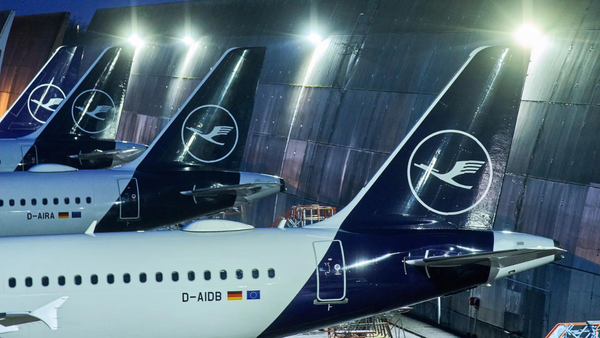
Carsten Spohr, chief executive of Germany's Lufthansa, said this month the airline must think about deferring some of its 34 orders as it reviews its capacity needs.
Cathay Pacific, with 21 on order, last month said it will have to lay off 600 people due to intense competition.
And 235 of the 340 orders in Boeing's books are from the three Gulf carriers: Emirates of Dubai with 150, Etihad of Abu Dhabi with 25 and Qatar Airways with 60.
All three have been hit severely by the fall in the price of oil, which slashes the spending of Middle East travelers and also cuts the influx of business people lured by the region's economic boom.
Cheaper oil also makes it much less expensive for airlines to load up with fuel and overfly the Middle East, flying direct between Europe and Asia on the newer ultra-long-range jets.
Last year, Emirates profit fell 83 percent and its traffic this year has been further hit by the laptop ban on U.S.-bound flights from Dubai.
Etihad is in crisis after making failed bets on distressed European airlines.
And now Qatar Airways flights are severely constricted as Qatar's neighbors aggressively blockade the country in the latest geopolitical conflict.