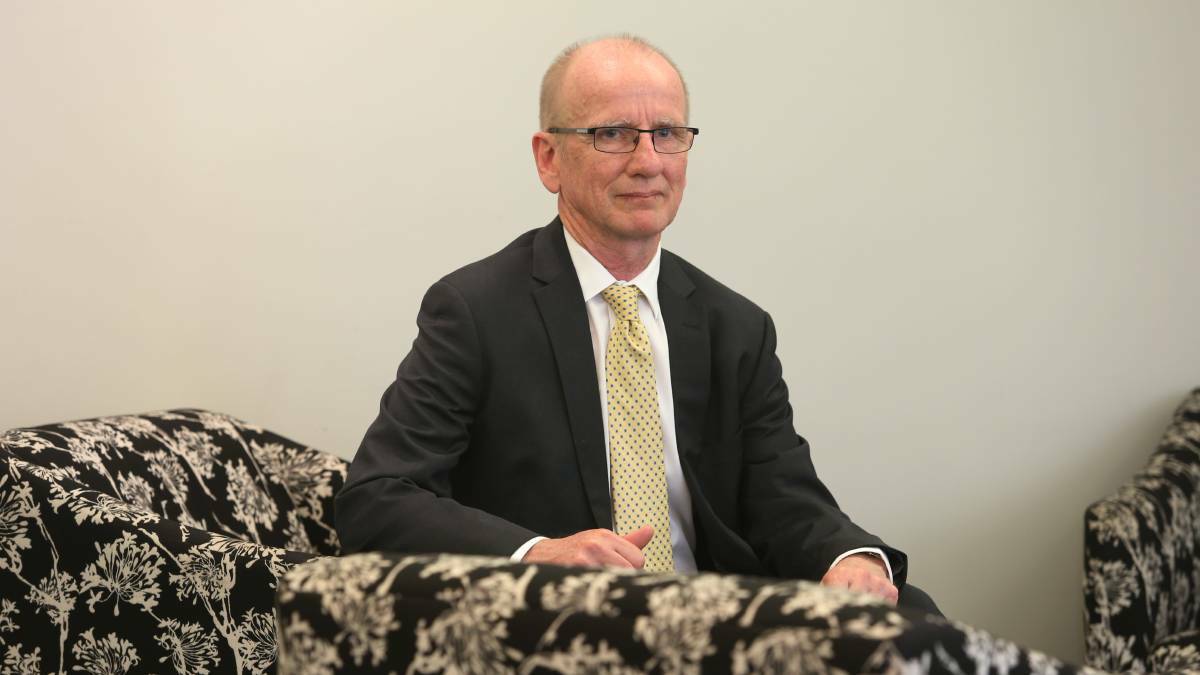
PARENTS may notice behavioural changes in their children during lockdown including acting out, becoming clingy or withdrawing - but there are ways to help, says NSW's chief psychiatrist.
Speaking at Premier Gladys Berejiklian's Friday press conference, Dr Murray Wright addressed families, particularly those with primary school-aged children.
"We all know that right now across the state thousands upon thousands of families are juggling the competing challenges of working remotely, trying to keep the household afloat and in many cases, home schooling," he said.
"It goes without saying that children are every bit feeling the restrictions that we're all working under as much as us adults, but children will all express stress differently and they will very often express it indirectly.
"Some children will act out, some will become clingy and very dependent, others will withdraw.
"I think it's reasonable, if there's any kind of change in behaviour in your school-aged children at this time, to assume that it's actually a statement of distress and take the opportunity to find out what's causing that distress.
"Quite often, the things which are upsetting to our children are actually things they've overheard, misunderstood or misinterpreted."
Dr Wright said it was important to have non-judgmental conversations with children to validate their distress and acknowledge the things they're missing out on, or have lost, due to restrictions.
"It's important to be validating, to be optimistic, to be reassuring and to be encouraging of what's going to happen for the future," he said.
"These things are really difficult to do when you're juggling all the other things that we're juggling every day and the conversations shouldn't be on the run.
"It's probably a good idea to have a regular conversation as a family, perhaps over a family meal, to discuss these things when you're less likely to be distracted by other things.
"So it's not just talking, it's listening and giving a really good opportunity for the family to discuss these things... [this] helps manage and contain any distress within the family and it also helps people feel connected and supported as a family."
Dr Wright said children picked up on their surrounding emotional environment and reacted easily to strong emotions.
"It's yet another reminder for us to be very deliberate and very mindful about how and when we express our reactions to the things that are happening to all of us."
He recommended families use a hub of tips and resources called ChatStarter, which was developed by the National Mental Health Commission.
"Finally, you are the most important resource for your children," he said.
"These things that I'm talking about are challenging and they're difficult and they have to happen day in and day out. It's really important to look after your own health and if some of the things which I'm talking about prove challenging and difficult to sustain over time, talk to your friends and talk to your family about it, but above all if you need to, look for advice because it's out there, it's available online, by phone, or in person."