The parents of an 18-year-old student with Down Syndrome -- who was denied admission by Mahidol University's College of Music -- have submitted petitions to the Education Ministry, the Council of University Presidents of Thailand, and the Mahidol University Council, demanding their son be admitted without discrimination.
Jarungkiat Kiratichaipan, father of Natawut Kiratichaipan, claimed that his son is more than qualified to study at the renowned music school based on his test scores and musical ability.
Mr Jarungkiat drew attention to a special order created by Mahidol University which states that students who study in its pre-college programme and graduate with a 2.7 GPA or higher shall be automatically admitted to its bachelor's degree programmes.
"My son graduated from the university's pre-college programme with more than a 2.7 GPA," he added.

He went on to add that his son can play four instruments -- drums, violin, piano and the marimba. In the past, Mr Natawut has also had the honour to perform in a concert starring the popular singer Peck Palitchoke.
"Although my son struggles to communicate with people sometimes, when it comes to music, he is gifted. He is actually able to process and understand music just as good if not better than his peers," Mr Jarungkiat said.
Mr Jarungkiat said that Section 8 of the Education Provision for Persons with Disabilities Act says that education outlets of any affiliation shall create an individual education plan in accordance with the special needs of people with disabilities and that they shall provide a proper teaching environment, technology services, media, and other assistance as required.
"Under Section 8 of the Education Act, my son has the right to study at his dream college. Mahidol University cannot reject him. That's discrimination," he said.
Mr Jarungkiat said he has talked to executives of the college but they insist they would not allow his son to study on their campus. As a result, he has been forced to file petitions to the Education Ministry, the Council of University Presidents of Thailand, and Mahidol University Council seeking justice.
"I'll petition the Supreme Administrative Court to consider this case as well," he added.
Narong Prangcharoen, dean of Mahidol University's College of Music, told the Bangkok Post that his college had not rejected Mr Natawut and is willing to help him just like it did during his pre-college programme.
Mr Narong said when Mr Natawut was in the pre-college programme, the college designed an individual education programme (IEP) for him and provided special education teachers to look after him because the law says schools must provide such students with basic education services despite their unique needs.
"However, the situation is different at the bachelor's degree level because there are many standards set by the Office of Higher Education Commission (Ohec) to guarantee the quality of graduates. If Mr Natawut wants to study at that level, he must study the same subjects as other students, which would be difficult for him," Mr Narong said.
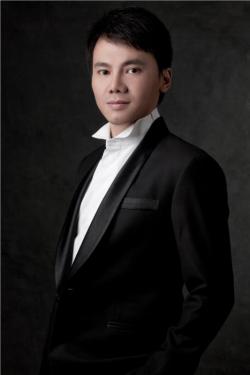
The college has tried to find a solution for Mr Natawut by giving him the chance to study in short courses. This way, he can pick the subjects he wants to study and receive certificates, however, Mr Natawut's parents are not happy about it.
"The parents want us to create an IEP for Mr Natawut but we cannot do that as it is against Ohec regulations. Our college has room for Mr Natawut, but he has to choose between studying in short courses or in a normal programme," Mr Narong said.
He insisted Mahidol University's College of Music does not discriminate against students with special needs. He says that the university has students with mild autism in several of its other programmes.
Siripan Sriwanyong, head of Srinakharinwirot University's Department of Special Education, said the law is the problem. Thai laws give access only to basic education for children with special needs.
He said another problem in providing adequate services to special needs students is the lack of qualified special education teachers.
Thailand has just 350 special education teachers despite soaring demand for such specialists, he said.
"In my opinion, special needs children should have the right to study what they want if their conditions are not severe. For example, if they are not aggressive and able to eat and use the bathroom by themselves, they should not be barred from education," he said.