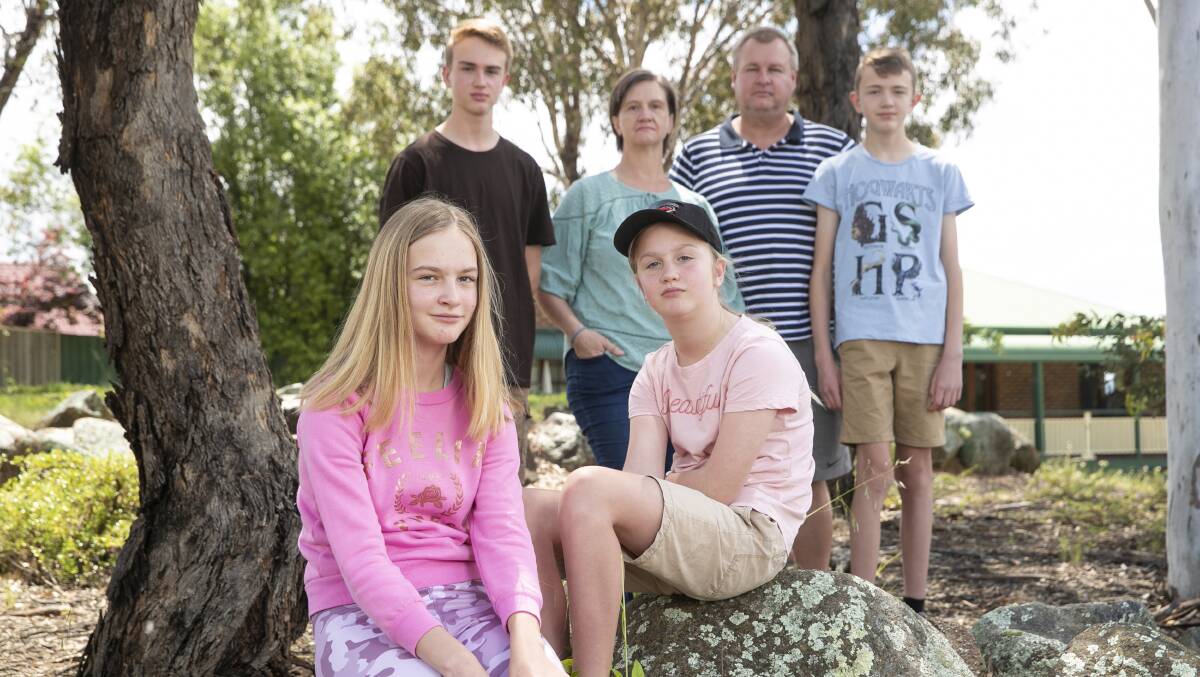
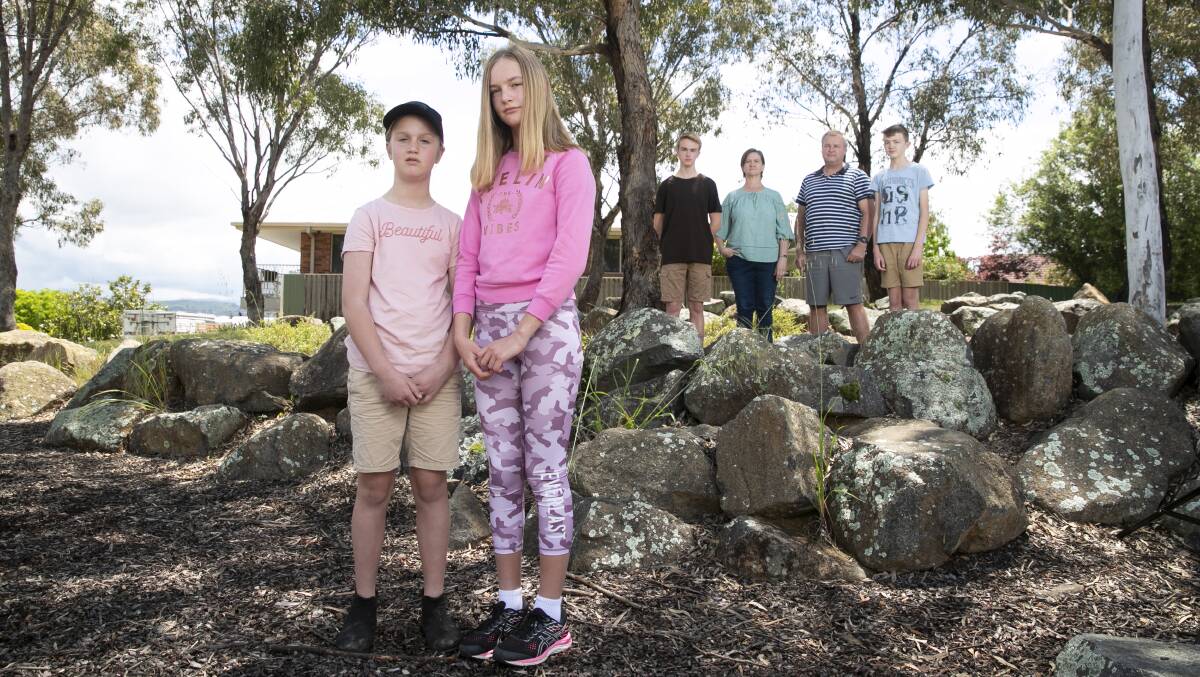
There are six people in the Roodt family, but father Eugene believes only four are sufficiently protected against COVID-19 to safely travel interstate and overseas.
Parents Eugene and Hannelie, along with 15-year-old Daniel and 12-year-old Jacob are double-dosed. Younger children Megan, 11, and Isabel, 9, are still waiting on the Therapeutic Goods Administration to approve a vaccine for under-12s.
The family are hoping to spend part of the Christmas break in the sun and sand of Queensland.
But with relatively low vaccination rates in that state, Mr Roodt would prefer all the children be vaccinated first. As of Saturday, only 66 per cent of Queensland's population over 12 were double dosed, compared to the ACT's 94.4 per cent.
MORE COVID NEWS
- How to get your international vaccination passport
- How schools will deal with a COVID-19 exposure
- Govt secures 'breakthrough' COVID treatments as restrictions ease
"You don't know who's been where and what they've got as far as COVID goes," Mr Roodt said.
The Pfizer vaccine is approved for 12- to 15-year-olds. The TGA is anticipated to approve the vaccine for 5- to 11-year-olds by the end of the year.
On Friday, the chief medical officer Paul Kelly advised national cabinet on "the emerging scientific evidence of the benefits of vaccinating [the younger cohort]."
"A vaccination program for children aged 5-11 years will be implemented, if supported by upcoming regulatory decisions from the TGA and advice from ATAGI," a meeting statement from the meeting said.
Mr Roodt said it might not be worth taking the family to Queensland if two younger kids weren't jabbed yet.
"It's going to impact the way we think about what we want to do all the day. Do we really want our kids to walk around with a mask? Or do we not go there for that reason? There's a few things to consider," he said.
He also wanted to ensure the children were protected for a planned family trip to Spain and the United Kingdom next year.
OTHER COVID NEWS
- Needle phobia device a design winner
- 'Normality' is only a short time away: top diseases expert
- Here's how to prove you've been double vaccinated
Australians have already boarded planes to places like London and Los Angeles, with heartwarming scenes of reuniting families shown across the media.
However, many Canberra parents are also weighing up whether the chance of catching COVID-19 overseas is worth it before booking tickets.
As of Saturday, over 80 per cent of Australians 16 and over had two doses, with 66.3 per cent of the whole population inoculated.
As of November 5, 34,029 people were recorded as being infected with COVID-19 in the United Kingdom. On October 31, 164 people with the virus died in the UK. This is despite the country being the 36th most vaccinated in the world, just behind number 37 Australia, according to reporting by Bloomberg.
This does not includes Overseas British Territories, Turks & Caicos, Gibraltar, Bermuda and the Cayman Islands, which all beat the ACT and Australia in the vaccine stakes.
If the ACT were a country, it would be the 11th most vaccinated in the world. Of over 16s, 94.4 per cent were double dosed on Saturday.
Mr Roodt, who is also a teacher, said Canberra's high vaccination rates made him feel comfortable having his children back at school.
"We're very aware of the possibility that you get one kid with [COVID], and it's gonna spread quickly. But I think at least with high vaccination rates in the ACT, we've got a fairly high rate of protection," he said.
"I can understand why some parents are reluctant [to let children go back to school but] I think the mental impacts for my kids would have been a lot worse were they at home much longer."
MORE COVID READS: