Some adults struggle to share the spotlight, but one would think they’d at least spare a newborn baby from their jealousy. Unfortunately, that wasn’t the case in an online story shared by a frustrated mother.
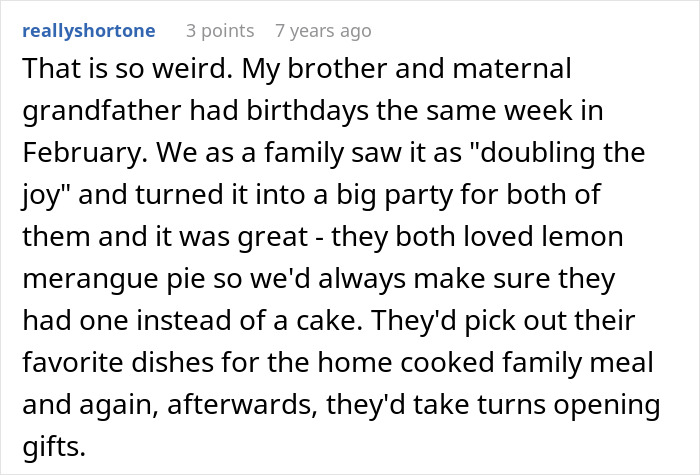
She said her in-laws tried to convince her to reschedule a medically necessary C-section for her second child. Why, you may ask? The date happened to overlap with her sister-in-law’s birthday.
The couple refused, and when their son’s first birthday rolled around, the mother-in-law made the ongoing family feud even worse.
The unbelievable details of this story show just how far family entitlement can go — and how one couple ultimately chose to handle it.
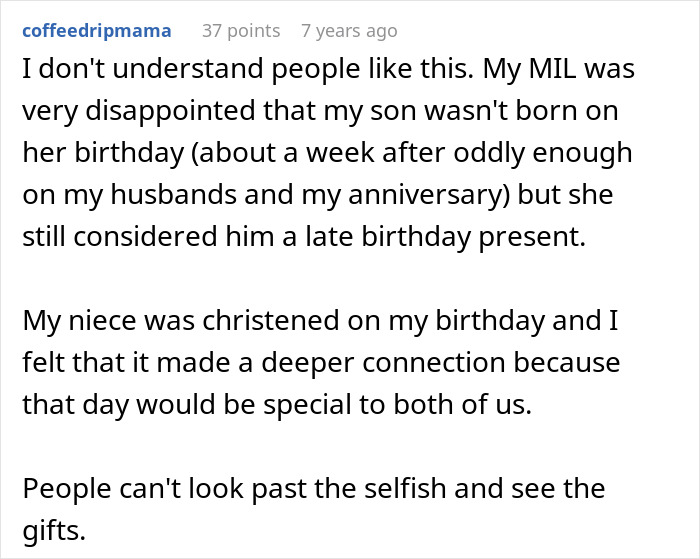
A woman said her sister-in-law started throwing tantrums because she didn’t want to share her birthday

Fausto García-Menéndez / Unsplash (not the actual photo)
The mother-in-law even pushed the couple to reschedule their baby’s delivery date






Rahel Daniel / Unsplash (not the actual photo)



The woman thanked people in the comments for their advice


Image credits: Anonymous
Parents actually do have a favorite child, and it can create tricky dynamics
We want to think that parents love all of their children equally, but could it be true that they have a favorite?
According to an ongoing project that began data collection in 2001, they actually do. The study published in the Journal of Marriage and Family found that parental favoritism persists well into adulthood and is also one of the single largest drivers of severe sibling conflict.
About two-thirds to three-quarters of mothers reported having a preferred child, and these preferences tend to remain stable over many years.
This family dynamic has been identified and studied across many different cultures. One study found that it occurs in around 65% of families. A majority of children also report perceiving favoritism even when their parents deny it exists.
“One of the biggest predictors of who remained the favorite was mother’s perception of similarity between herself and her child. Mothers were likely to continue to prefer children who they perceived were similar to them in their beliefs and values, as well as to prefer children who had cared for them before,” said Megan Gilligan, an assistant professor in human development and family studies at Iowa State University.
Gender similarity also plays a role in long-term biases. This aligns with past research showing that mother-daughter bonds are usually the strongest, closest, and most supportive parent-child relationships.
Birth order is another major factor. Studies show that youngest children often hold a unique kind of power, remaining “the baby” of the family long after they have outgrown the role.
But when such connections sour into toxic favoritism, no sibling escapes unharmed. Experts believe it can have psychological consequences for all of the adult children, regardless of which sibling is the chosen one. The bitter feelings also destroy sibling cooperation just when aging parents need support the most.
In short, this habit only creates a crisis that hurts the whole family.
The golden child’s crown is heavy, but their siblings are also bearing the load
Children who feel less favored often feel undervalued and unfairly treated.
Studies show that they feel more inadequate about themselves and have a less positive relationship with the parent.
A study published in The Journals of Gerontology found that adult children who recalled their mothers treating them less favorably during childhood reported significantly higher levels of depressive symptoms in adulthood.
The perception of unfair treatment creates an internal narrative that they are “less than.” This, in turn, compromises the children’s ability to form healthy or secure attachments with peers and future romantic partners.
Meanwhile, the favored sibling often walks away feeling special, and eventually develops a strong sense of entitlement.
“Often, entitlement grows from a lack of limitations, where the parent repeatedly gives in to demands or excuses for bad behavior,” says Jeffrey Bernstein, Ph.D., a child, adolescent, and family psychologist.
“Enabling can foster a sense of entitlement and a lack of accountability. Adult children may come to expect that problems will be solved for them, leading to a lack of motivation to take responsibility for their actions or decisions.”
When parents consistently grant special privileges, withhold discipline, or give one child the benefit of the doubt during conflicts, the child internalizes the belief that they are inherently more valuable. In adulthood, this manifests as an expectation that the rest of the world (and family) should revolve around their personal schedule, milestones, and emotional needs.
Being the golden child isn’t as glamorous as it looks, though.
Research shows that maternal favoritism can actually trigger higher rates of depression in preferred children. This happens because being the clear favorite creates deep friction with siblings — and carrying that lifelong resentment takes a major toll on mental well-being.
It may also lead to an unequal burden later in life. When a parent requires care from family, they often turn to the child they feel is the favored one.
While parental favoritism and adult entitlement lay the groundwork for these toxic dynamics, the turning point often comes down to boundaries.
When an entitled sibling acts out and a parent backs them up, the non-favored child is forced to choose. They can either continue participating in a one-sided family hierarchy or quietly step away.
In many cases, setting firm boundaries, or even choosing distance, becomes the only way for young parents to protect their own growing family from generational drama.
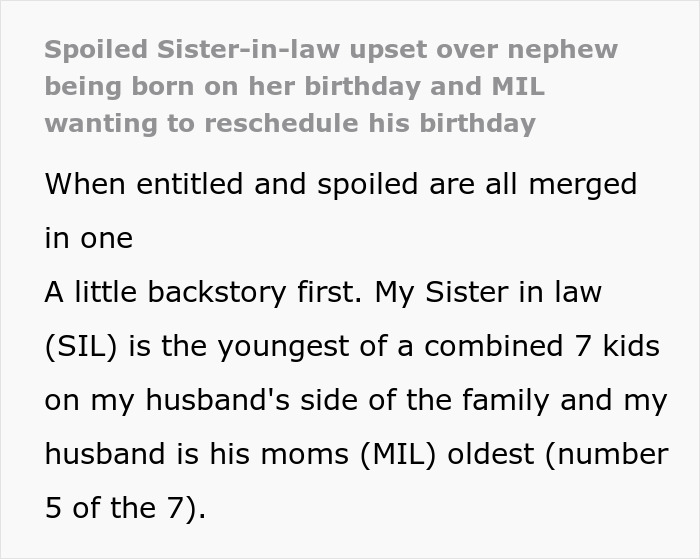
The woman gave some more info in response to the comments





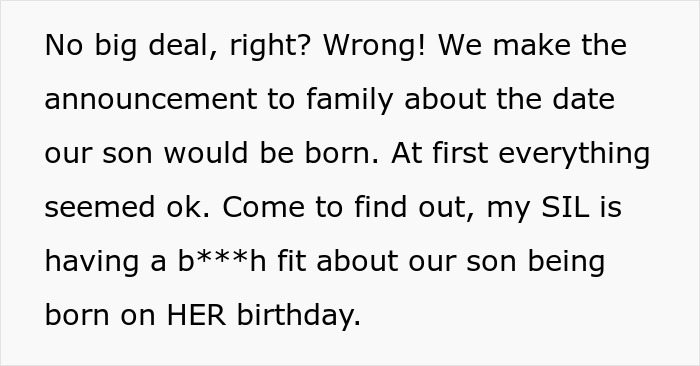
Here’s how the internet reacted to the whole family drama