If you’re a parent, you probably know you’ll have to fork over a lot of money for your kids’ Christmas presents. Last year, researchers found that parents spent an average of $461 per child for Christmas. If you add other children from extended family, that might add up to a pretty big sum!
This parent still went out of their way to buy their nephew an expensive gaming console, the same one their son already had. However, when the little menace broke his cousin’s console and made him cry, the parent took away his present and gave it to their son. After their sister and family shunned them, they asked for unbiased opinions online: was the parent wrong to replace the son’s console with the nephew’s Christmas gift?
A parent bought their nephew a gaming console for Christmas, the same one their son already had

Image credits: Tima Miroshnichenko / Pexels (not the actual photo)
But when he smashed their son’s console, the parent took his away from under the Christmas tree and regifted it to their son
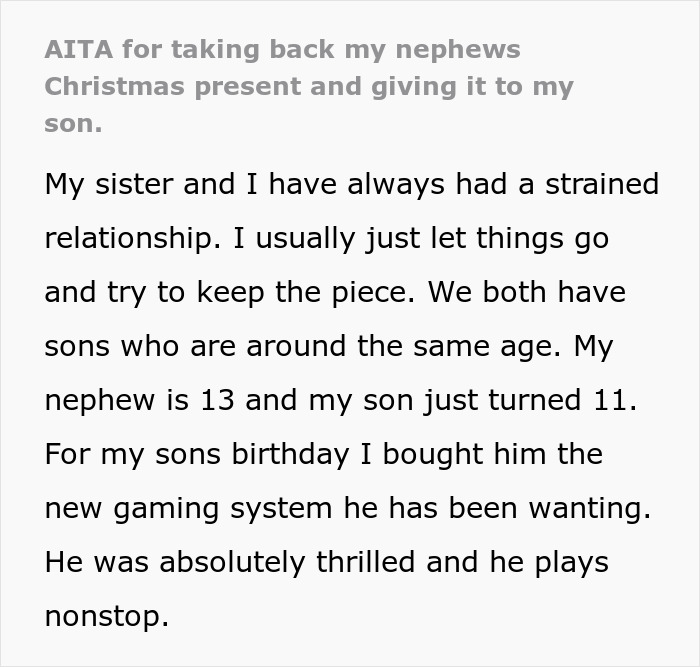
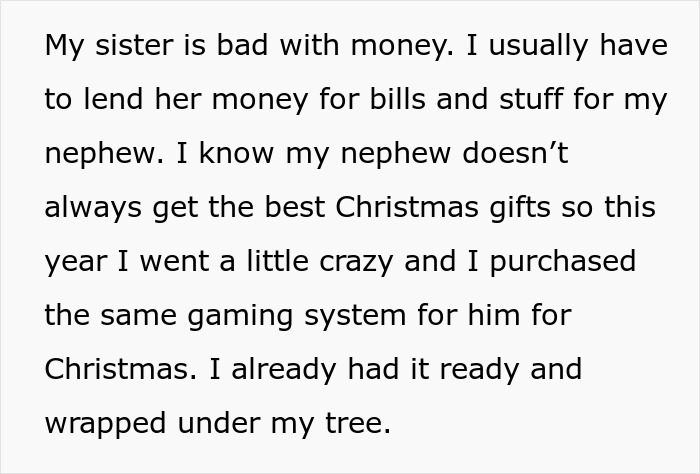
Image credits: Yan Krukau / Pexels (not the actual photo)

Image credits: Meruyert Gonullu / Pexels (not the actual photo)

Image credits: Timur Weber / Pexels (not the actual photo)
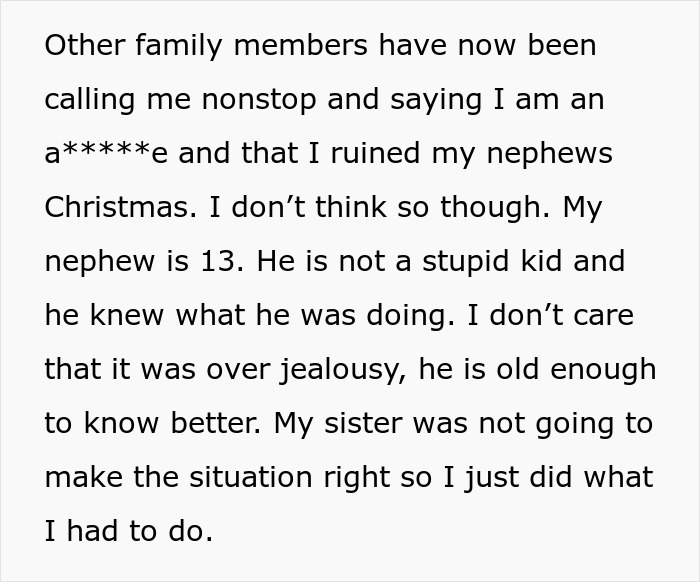
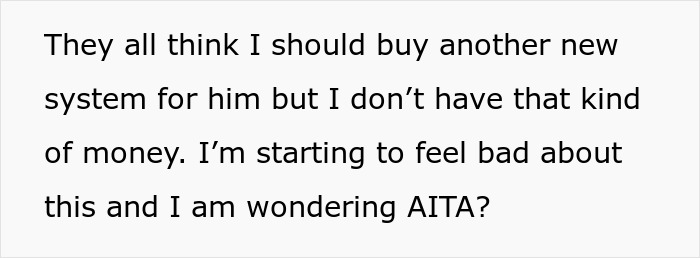
Image credits: Sunny-Day-6884

Image credits: Kindel Media / Pexels (not the actual photo)
Parents need to set firm boundaries around children’s destructive behavior
Breaking furniture and belongings is part of being a kid. However, it should only be acceptable when it’s accidental. Truly, who hasn’t knocked over a vase at grandma’s house or let a figurine slip through their fingers as a kid?
In this story, it seems that the destructive behavior was on purpose. Toddlers and small children might engage in destructive behavior because they just can’t deal with their big feelings. But a 13-year-old is almost a teenager and knows well that actions come with consequences. By that age, a kid knows that breaking something that belongs to another kid will hurt them and make them cry.
Experts say that there are different reasons behind kids acting in destructive ways. However, the most common one is that they use lashing out and destroying things as a coping mechanism. Kim Abraham, LMSW, and Marney Studaker-Cordner, LMSW, write that children destroy things to cope with frustrations and extreme feelings. “It makes them feel better, if only for a while.”
The two experts also note that even if it seems harmless, parents should not tolerate or enable destructive behavior. This is their advice for how to approach the conversation about a child’s destructive behavior:
- Set clear boundaries. Let your child know that destroying things, whether they belong to you or a stranger, is not acceptable. Set clear expectations about what the consequences will be if they engage in this kind of behavior.
- Teach them to redirect their frustrations. When the child is calm, talk to them about how they can release their negative emotions and physical energy. Abraham and Studaker-Cordner give an example of a mom who taught her daughter to jump on a trampoline to release pent-up energy. Stress balls can be another tool for redirection.
- Hold the child accountable. In this particular story, the mother should agree to reimburse the other parent for the broken console. The child can “work off” the debt by doing chores and helping the parents around the house in other ways.
Children’s behavioral consultant Scott Ervin recommends not looking at the issue too deeply. Analyzing the child’s psyche might not yield the wanted results. “Instead,” Ervin writes, “you can spend your time teaching your kid that destroying stuff doesn’t get her anything good: it won’t get her attention and it won’t get her control over the actions and emotions of an adult. In addition, you will teach her that destroying property will make her life harder and worse (just like in real life).”
“She is kind of known for this kind of thing,” the parent wrote about their sister
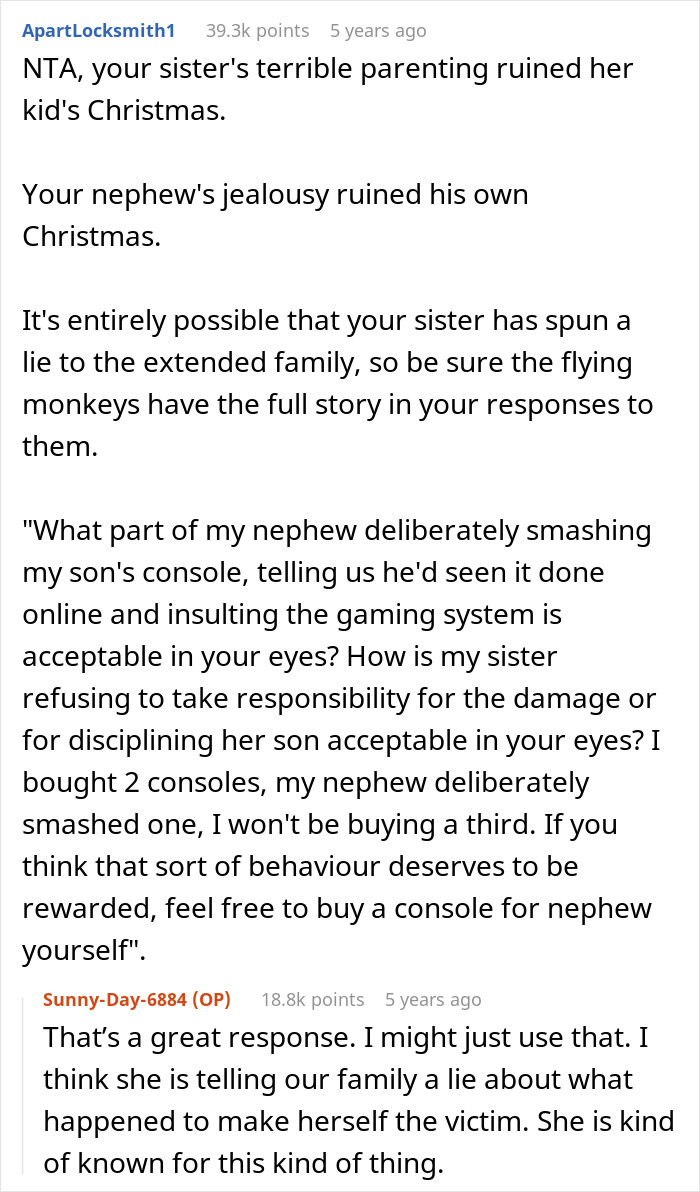
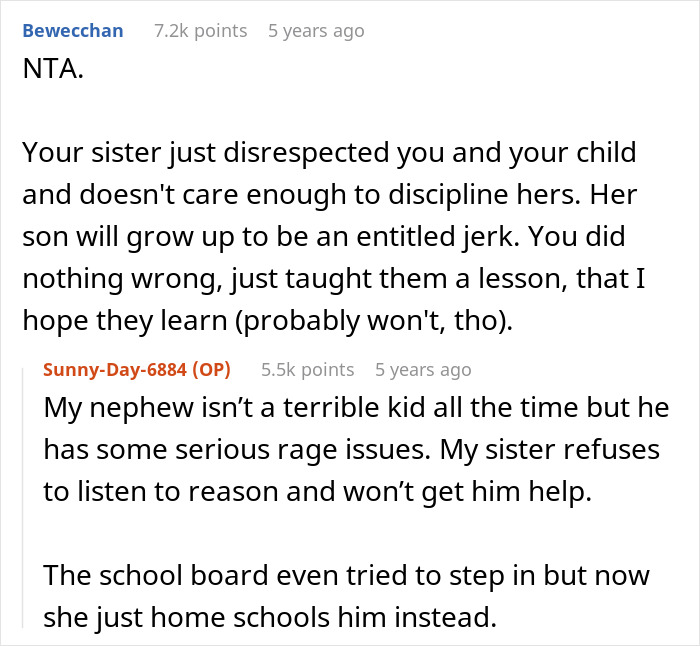
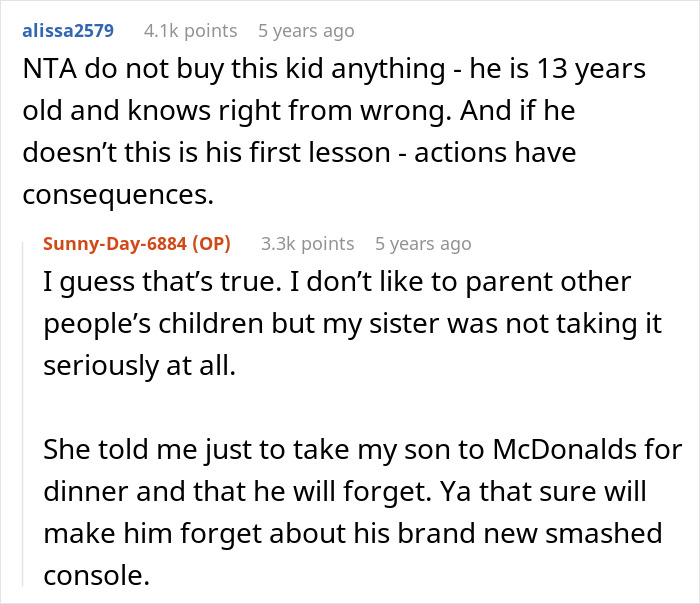
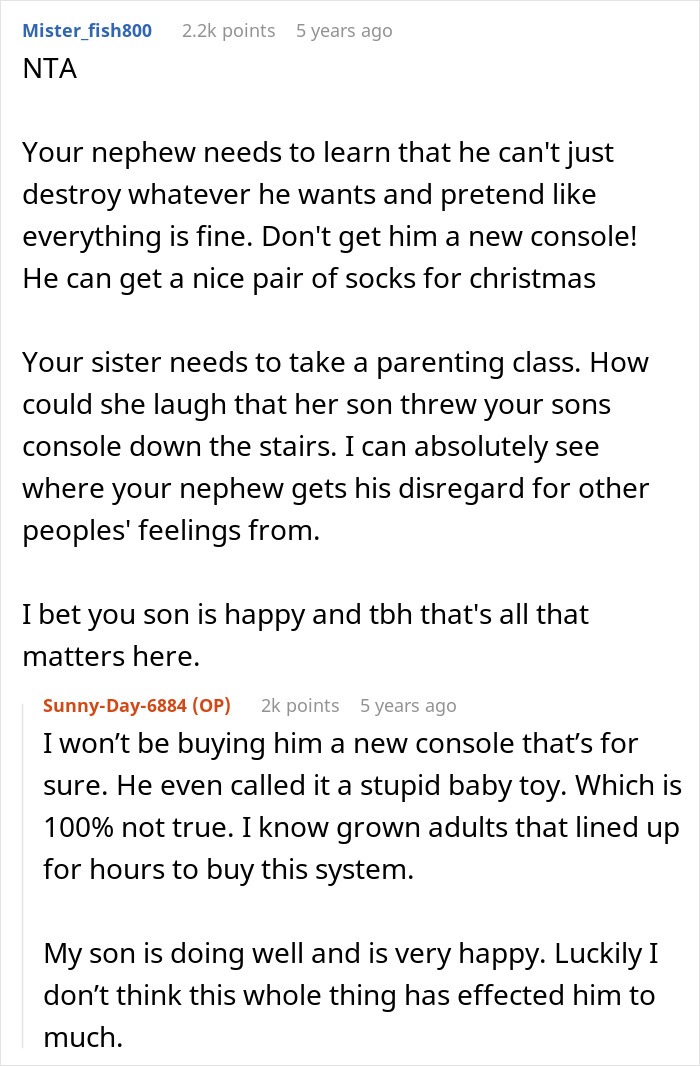
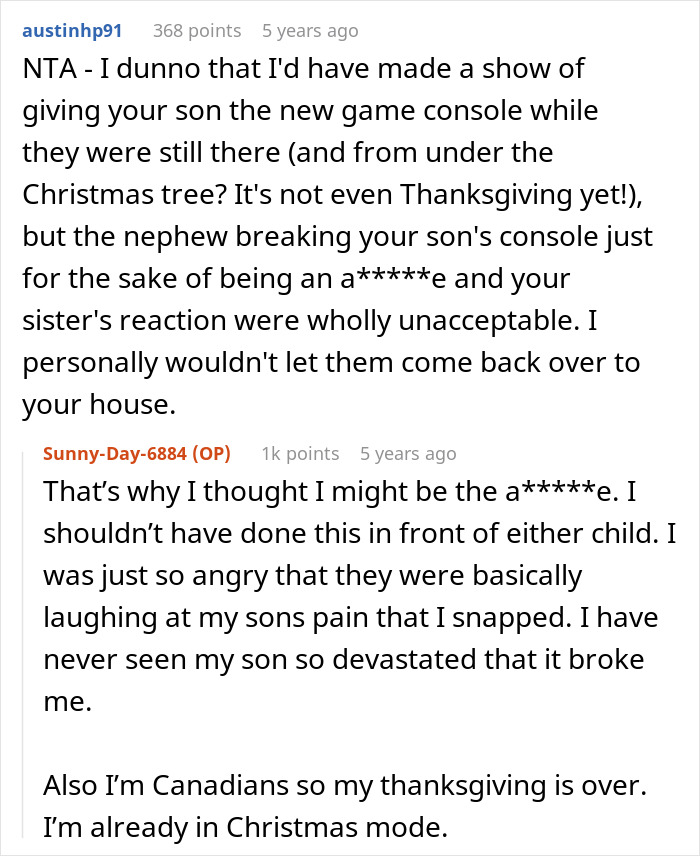
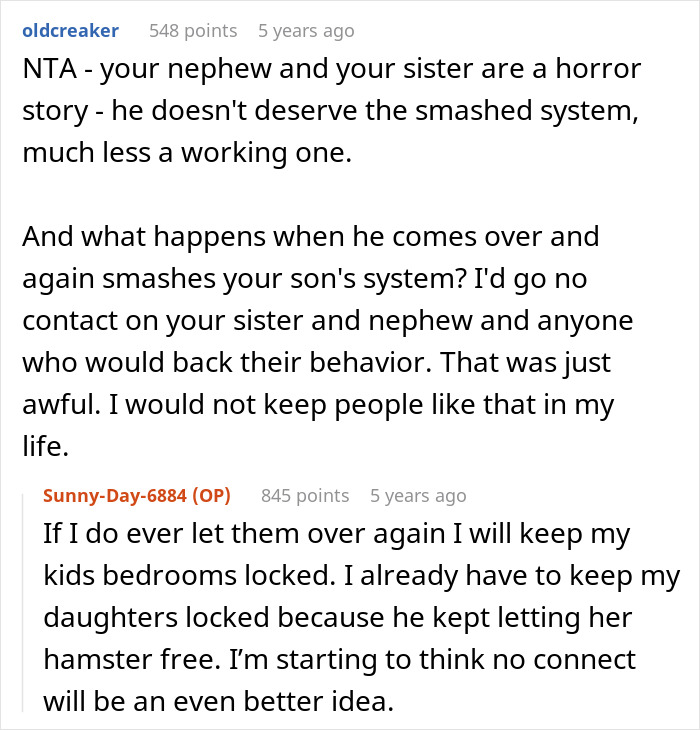

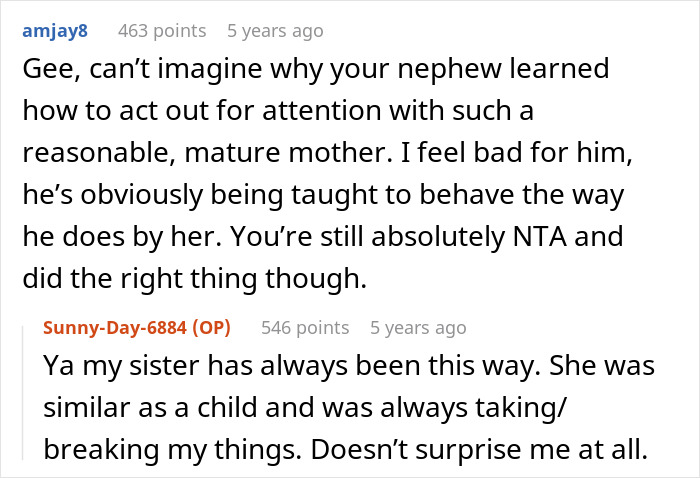
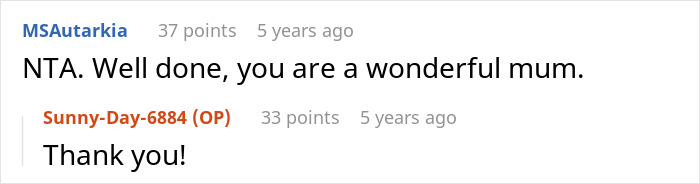
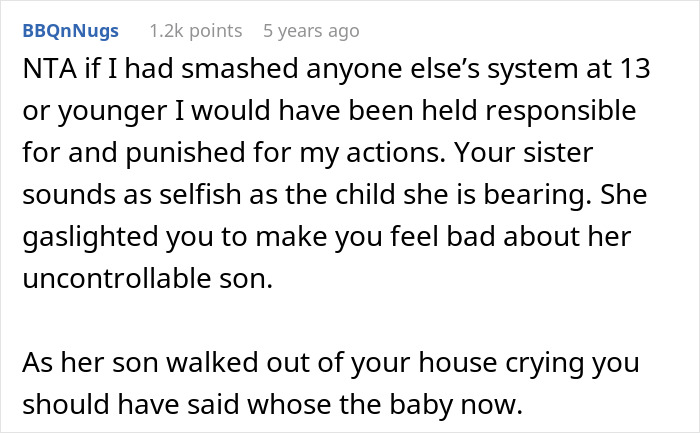
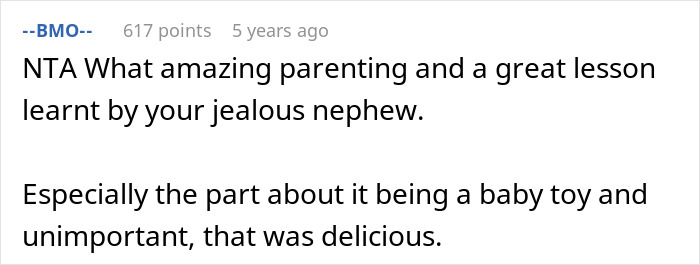
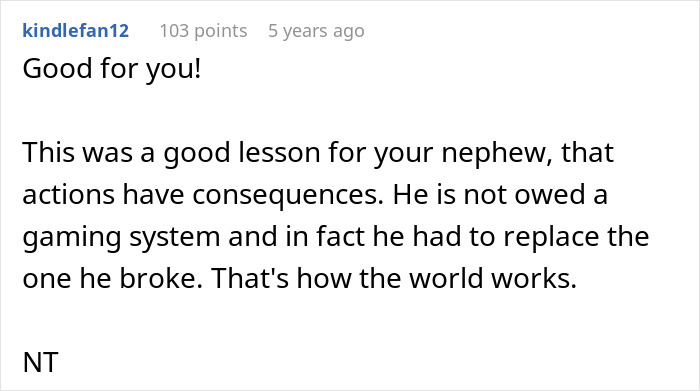
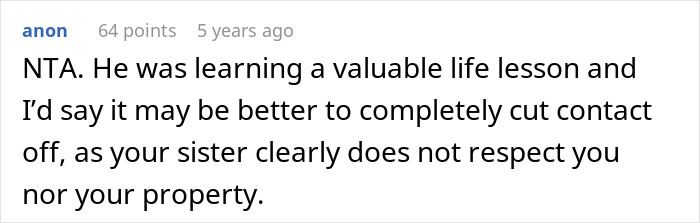
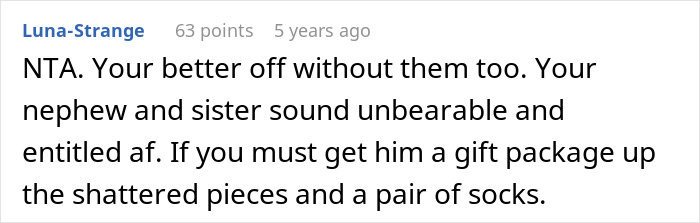
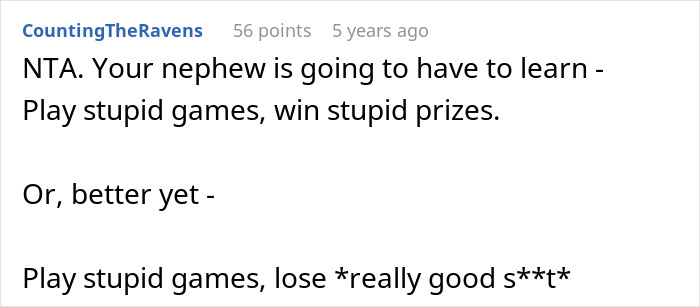
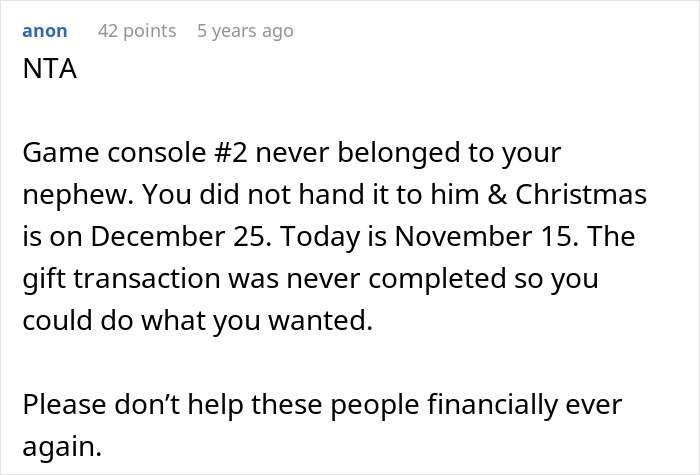
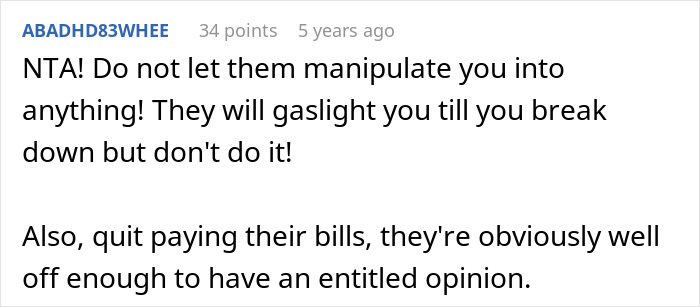
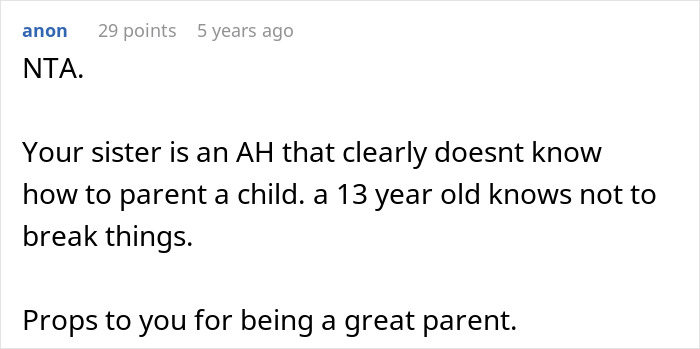
Commenters sided with the parent, pointing out how the sister and the nephew were both acting unreasonably