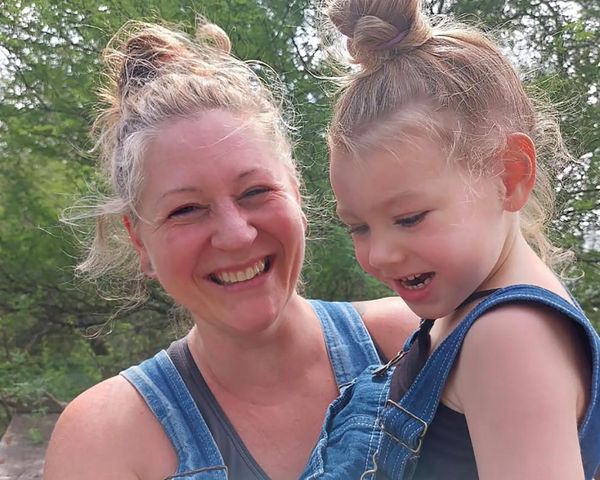
A student paramedic claims her ambulance managed to reach only one patient in a 14 hour shift - due to a lack of hospital beds.
Faye Shepherd regularly tweets her anger at her crew in Truro, Cornwall, being stuck in queues of twenty or more ambulances outside hospital.
Posting at 7:51am today she said: "During last night’s 14.5hr shift, we saw ONE patient.
''That’s not because there’s no demand, but because we were stuck at hospital for the entire duration, waiting for bed space.
"Meanwhile, people are dying waiting for ambulances. What part of this is sustainable Sajid Javid?"
Faye, who lists herself as Ambulance ECA/ Student Paramedic at South Western Ambulance Service, made her comments as the NHS faces unprecedented pressure ahead of the deep winter months.

Alarming data shows that there are almost half as many fewer beds free now than during the peak of the pandemic in January.
While Covid hospitalisations have dropped significantly - from around 4,000 daily admissions at the beginning of the year to around 1,000 eleven months on - other, non-Covid related pressures have soared.
The build up in demand has left health chiefs feelings deeply concerned.
A survey of 451 NHS leaders in England finds the health service already at “tipping point”, according to NHS Confederation.
Now 88% of the leaders think the demands on their organisation are unsustainable, and 87% believe a lack of staffing in the NHS as a whole is putting patient safety and care at risk.
Matthew Taylor, the chief executive of the NHS Confederation, told the Guardian: “Almost every healthcare leader we’ve spoken to is warning that the NHS is under unsustainable pressure, and they are worried the situation will worsen, as we head into deep midwinter, unless action is taken.
"They are also sounding alarm bells over risks to patient safety if their services become overwhelmed, on top of a severe workforce crisis."
Faye is another health worker determined to sound the alarm.
''Currently 23rd in the queue, out of 25 ambulance crews waiting to enter the emergency department," she tweeted midway through October.
''There’s a palpable sense of concern amongst staff, hearing general broadcast after general broadcast with few remaining resources available to send.
''It’s not even winter. Help.''
A spokesperson from South Western Ambulance Service NHS Foundation Trust said it was experiencing the "highest-ever level of sustained demand on our service" and that response times are affected as a result.
"We are losing many more hours compared with recent years which causes our ambulances to queue outside hospitals and unable to respond to other patients and has an inevitable impact on the service we can provide," they said.
"This is a health system problem which therefore demands a system solution.
"It is an absolute priority for us and our NHS partners to reduce these delays, so we can be there for our patients, while prioritising those who are most seriously injured and ill.
"Patients who need urgent medical help or advice are encouraged to visit or to call 111, which is free and available 24/7. This will ensure they get the right care, and the ambulance service can focus on those most in need.
"For on-going or non-urgent medical concerns or if they need medicines, people should contact their local GP surgery or a local pharmacy."