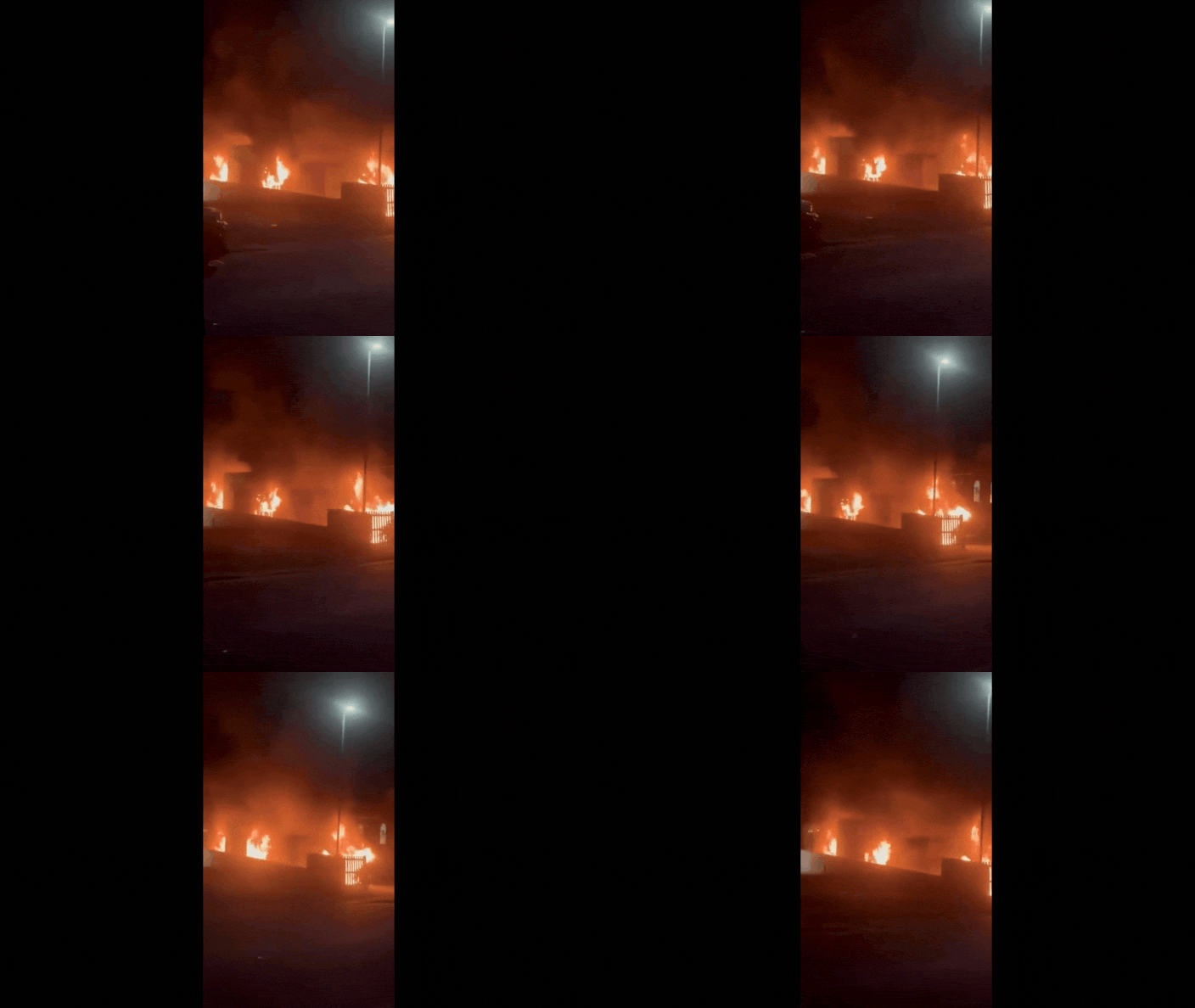
Papua New Guinea’s parliament descended into chaos on Tuesday as prime minister Peter O’Neill showed no signs of stepping down, despite his promise to resign on Sunday.
Parliament resumed for the first time in three weeks, after a tense period in PNG politics during which a number of high-profile ministers defected from the government to join the opposition bloc, which is pushing to remove O’Neill and replace him with one of their own MPs.
On Tuesday, opposition MPs sought to remove the speaker of the house, an O’Neill appointee, through a vote, but the speaker refused to allow the motion, saying it was unconstitutional and would establish a dangerous precedent.
Temperatures were high during the debate. At one point several MPs needed to be physically restrained by their colleagues and the speaker adjourned debate after just an hour, saying parliament would resume at 10am on Wednesday, an announcement that led to a furious response from opposition MPs.
O’Neill, who announced at a press conference on Sunday he would resign from the top job and hand power to former prime minister Sir Julius Chan, addressed parliament on Tuesday, telling opposition MPs not to “create a circus in this honourable house”. He did not address the issue of his resignation.
Though his dramatic announcement on Sunday caused headlines and prompted Australia’s prime minister, Scott Morrison, to vow to continue work with the new prime minister of PNG in the same way he has enjoyed working with with O’Neill, O’Neill did not actually officially resign.
A prime ministerial resignation requires a visit to the country’sgovernor general and an announcement on the floor of parliament vacating the position, which would prompt a vote by MPs to replace him.
O’Neill said on Sunday he intended to visit the governor general in “coming days”.
Bryan Kramer, an opposition MP said he didn’t believe O’Neill was really stepping down as prime minister “until we see him make an announcement on the floor of parliament on Tuesday”.
The opposition has said that if O’Neill does not officially resign, they will table a vote of no confidence in the prime minister. They say this will be announced on Thursday, and then voted on a week later.
Doubts about O’Neill’s intentions were raised on Monday afternoon when he issued a statement saying he had initiated supreme court proceedings regarding the legality of a vote of no confidence.
“The lodgement of a motion of no confidence is a serious constitutional process,” said O’Neill in a statement. “This is being treated disrespectfully as a negotiating tool in a numbers game and the position of prime minister should not be able to be offered as a bribe to cross the floor of parliament.”
If O’Neill were to either step down or be removed, the opposition bloc of MPs say they have the numbers to install one of their own as prime minister. On Tuesday they elected Patrick Pruaitch, a former treasurer of PNG, as their candidate for the top job. The opposition claims to have the support of 68 out of the 111 MPs.
“It’s a very fluid situation,” said Jonathan Pryke, director of the Lowy Institute’s Pacific Islands program on Monday.
Pryke said that while the opposition had a majority at present, O’Neill’s decision to announce a respected figure as his successor was an attempt to draw MPs back to his bloc, and that the fact things were “messy” in the opposition camp, which has already had two different leaders, meant things could play out in a variety of ways.
“It’s anyone’s guess as to who is going to win out, it is not clear cut by any means,” said Pryke.