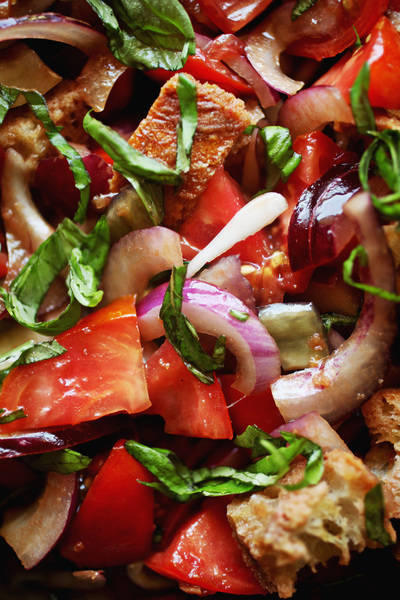
File this under "everything old is new again" _ panzanella, the Italian bread salad, is a harmonious marriage between old and new. Leftover stale bread addedto vibrant summer produce leads to a winning seasonal dish.
The "old" of panzanella is further linked to the Italian tradition of using up leftovers. With all due respect to the more recent _ and vitally necessary _ emphasis on reducing food waste around the world, Italians have been making do with leftovers for centuries. Day-old risotto becomes arancini (fried rice balls), last night's spaghetti transforms into a breakfast pasta frittata and squishy grapes find new life as high-gravity grappa.
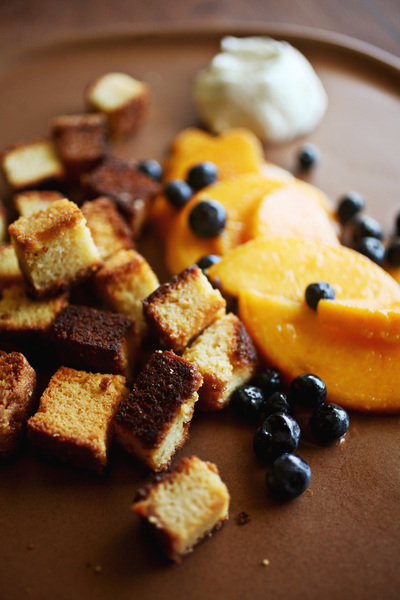
Bread is especially well-suited to Italian leftover reincarnation. Besides, bread and other baked goods are in particular need of creative recycling because uneaten bread is a major component of food waste.
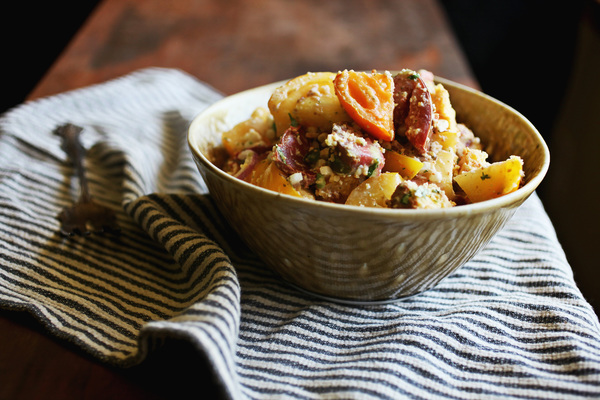
In his book "American Wasteland" (Da Capo Press, 2010), Durham, N.C., blogger, journalist and food waste expert Jonathan Bloom reported that supermarkets waste a lot of bread: "Bread and baked goods are by far the most commonly wasted foods at supermarkets." All the more reason to find reuses for this daily staple, and the Italians are on it. For example, old loaves show up in Italian soups like ribollita (bread, bean and vegetable soup) and pappa al pomodoro (bread and tomato soup), and milk-soaked bread or bread crumbs are used in meatballs.
Appreciation for the particular charms of panzanella is so old it was documented in ancient Old World literature. Italian author Giovanni Boccaccio mentioned "pan lavato," or washed bread, in his 14th-century opus "The Decameron." Florentine Renaissance poet and painter Agnolo di Cosimo, otherwise known as Bronzino, waxed poetic about the salad in the 16th century:
"He who wishes to fly above the stars / dip his bread and eat to bursting / a salad of chopped onion / with purslane and cucumbers / wins every other pleasure of this life / consider if I were to add some basil / and rocket."
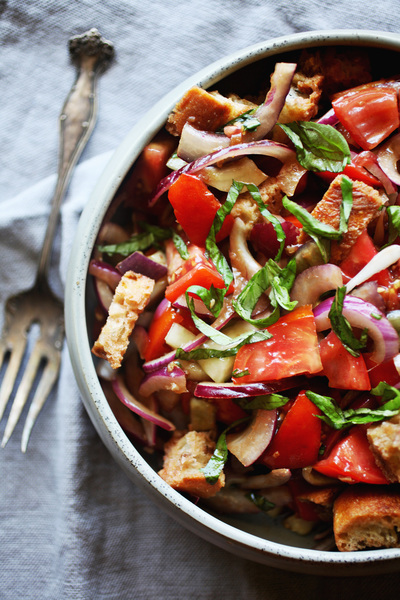
Yet, for all its romantic associations, panzanella has quite humble origins. In her book "The Classic Italian Cookbook," doyenne of authentic Italian cuisine Marcella Hazan brought the rustic salad down to earth: "This salad was originally the poor man's dinner in parts of Tuscany and Rome."
So what's "new" about panzanella? A lot! The salad has undergone a bit of a renaissance since the Renaissance. You'll notice that Bronzino's recipe does not include a single tomato because tomatoes were not introduced to Italy until the 1500s. However, today's panzanella recipes often contain that New World ingredient.
Also, early panzanellas were not made with the cubed, toasted bread popular in recipes today. They were made with saltless Tuscan country bread that was soaked in water, squeezed and added to the salad to give it additional heft. (This method of reviving stale bread was apparently popular with ancient Italian mariners, who liked to dip their dried-out chunks in sea water before eating.) The wet-bread method is not as popular today, perhaps in part because it's not easy to find the authentic Tuscan bread that works better when soaked. While Hazan acknowledges the authenticity of the wet-bread technique in her book, she said, "I much prefer this version, however decadent it may be, in which the waterlogged bread is replaced by crisp squares of bread fried in olive oil."
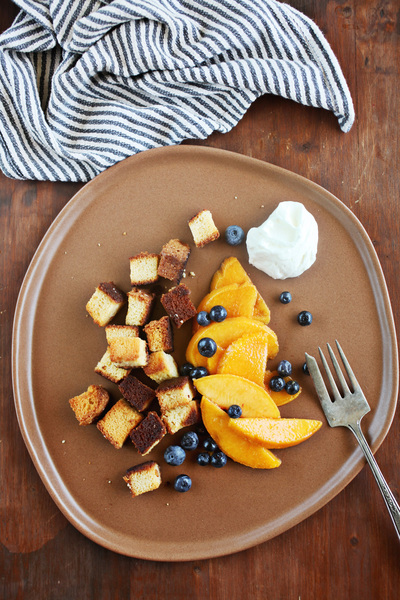
Really, every dish of panzanella has new elements because it incorporates the freshest produce available. If you're lucky to have your own garden, your salad will have fresh-from-the-soil cucumbers, just-picked tomatoes and scissor-snipped basil. If the farmer's market is your source for produce, your panzanella ingredients are likely to be very recently harvested from the farm. The latest and greatest from the vegetable patch or vine (or fruit orchard) are just the things to extend the life of your mature bread in panzanella form.
One last note from an experienced panzanella cook: A lot of recipes recommend that the longer the salad sits, the better it gets. However, you don't want the salad to sit so long that the bread gets soggy. It should still have some structure to it when it's time to eat. And most panzanellas are best served the day they're made. However, if you find yourself with last night's tomato panzanella in your fridge, you can experiment with making gazpacho out of the leftovers by whirring an extra tomato or two with the salad in a food processor.
Yet another way to make the old new again _ it would make an Italian grandmother proud.