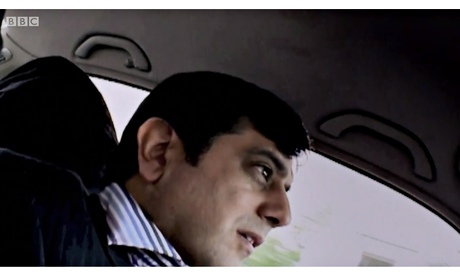
The BBC’s venerable current affairs series Panorama – of which, by way of a declaration of interest, I was once editor – has been very much in the news. First, for its expose of Mazher Mahmood, the “Fake Sheikh”. This high-profile investigation – and especially the evident commitment of the BBC hierarchy to getting it on air in the face of legal challenges and pressure from the police and attorney general – will have done much to steady the nerves of the ever-jumpy Panorama team, recently widely reported to be worried about the commitment of BBC News director James Harding and their new editor Ceri Thomas to investigative reporting.
But Panorama has also been talked about for other reasons which, while less dramatic, point to developments that will almost certainly prove much more significant to the long-term future health of the programme and indeed the whole of the BBC than the Fake Sheikh expose. And that was the revelation that Panorama’s in-house production team might be moved, along with most of the rest of BBC in-house production, into a new commercial subsidiary.
This proposal comes straight from director general Tony Hall’s core strategy for the imminent charter and licence fee renewal debate – “compete or compare”. In Westminster “efficiency” and the level of the licence fee are major concerns and Hall and his top team, including former culture secretary James Purnell, know they must confront it. The big idea in a nutshell is that since everything the BBC does should be done as efficiently as possible and demonstrably so, it should all be opened up to the rigours of full open-market competition (“compete”); or, if for strategic or other reasons that can’t or shouldn’t be done, subject to appropriate market benchmarking (“compare”).
And top of the list for “compete or compare” – because billions are spent on it — are the BBC’s arrangements for programme supply and in particular its in-house production capability. In-house production’s share of BBC commissioning is currently protected by a system of quotas – 25% for qualifying independents, 50% for in-house and the remaining 25% set aside as the so-called “window of creative competition” – or WoCC — for all-comers to pitch for. So to convince the powers that be that the BBC can demonstrate best value for licence payers, Hall announced his intention to drop all the quotas – thus rendering all of programme supply contestable by external producers. Some areas he said would be exempt – like news and perhaps events – but otherwise the BBC’s commissioners would be free to buy from whoever and wherever they could get best creative value. A bit like John Birt’s “producer choice” initiative – which decimated the BBC’s in-house resource base, produced howls of pain from those affected but saved hundreds of million of pounds in the process, and, in time, led to a bumper licence fee settlement – but for commissioners.
So far so good, unless you happen to be an in-house producer, that is. Because experience in many areas suggested that, with no quota to force their hands, commissioners would opt to buy far more from independent suppliers. In-house producers felt they were at a significant disadvantage trying to sell to BBC commissioners compared to their indie rivals, because whereas the indies could take ideas to other broadcasters the BBC in-house producers couldn’t. Hence they felt hemmed in and taken for granted. So Hall offered them a sweetener. They would lose their 50% guarantee but be allowed to compete in the rest of the market – potentially selling programmes to other broadcasters. Hall’s pitch was a promise to level the playing field all round.
But to say this is complicated seriously understates the case. Playing the market requires the BBC’s “Newco”, as it’s called in-house, to be free of licence fee subsidy – otherwise any commission for a non-BBC UK broadcaster would surely fall foul of European state aid rules. And any programme guarantees given to BBC producers transferring in would be challenged by hard-pressed indies as constituting unfair competition.
Many insiders believe few of these details had been even thought of, let alone worked out, before Hall made his announcement in July. And while some divisions, such as drama and natural history, are apparently keen to get on with Newco, others are definitely not, seeing only the thin end of a “privatisation” wedge. Which in turn has set off a huge outbreak of traditional BBC politicking by those desperate to avoid “compete” in favour of “compare” – to stay in rather than be put out, as they see it.
But Hall and his strategists know that any sign of failure to fulfil the promise to expose BBC production to full-on market competition will be seized on as evidence of inefficiency by the BBC’s enemies (and some of its friends) as the new charter and licence fee are negotiated. Which is why one fears for Panorama, where an in-house team – developing talent and journalistic skills, run by an editor who manages and controls the whole shooting match (as well as commissioning independent contributions) – is key to its purposes as the BBC’s flagship current affairs programme. Separating production from commissioning (inevitable if the team moves into Newco) would fundamentally change the nature of the beast – and most likely not for the better. Meanwhile, the danger is that all the strategists can see is £5m of production to be opened up to competition.