Throughout the pandemic, there has been hoarding on toilet rolls, hand sanitizer, pasta and booze, with people clearing the shelves in UK supermarkets, amid fears essential items become unavailable.
In the early days of the pandemic, supermarkets including Tesco, Asda and Waitrose implemented rationing in response to customers panic-buying and stockpiling.
On 3 March, chief scientific adviser Sir Patrick Vallance joined Boris Johnson to address the nation over the coronavirus outbreak. Mr Vallance said members of the public should not resort to “panic-buying”.
“I think the advice is that there is absolutely no reason to be doing any panic buying of any sort or going out and keeping large supplies of things,”
With the recent news that some food items could be in short supply due to chaos at UK borders, the public has to once again resist the temptation to buy more items than they need, especially those that could potentially be in shorter supply in the coming days.
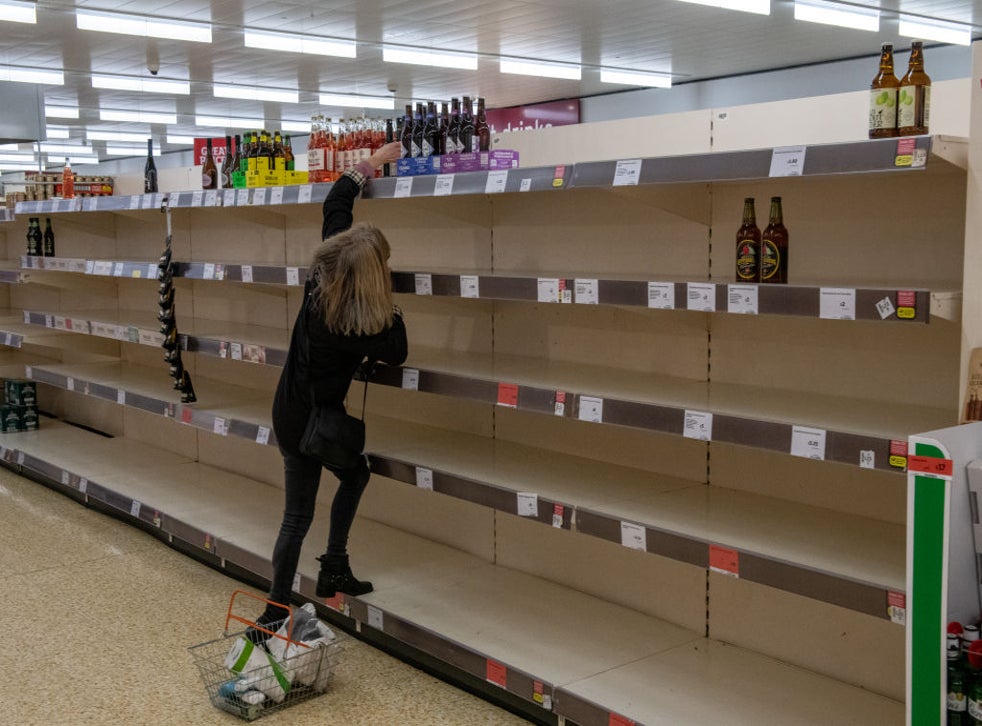
Sainsbury’s has warned that its stocks of cauliflower, broccoli, lettuce leaves and citrus fruits could run low thanks to a 48-hour ban on lorries crossing the Channel to France, after a "new variant" of coronavirus was announced by the UK government last week.
Consumer psychologist Kate Nightingale, founder of Style Psychology, says our impulse to buy what we don't need is driven by loss aversion or FOMO (fear of missing out).
"It’s the idea that you can lose something you don't actually have," she tells The Independent. "The potential of pain of loss is sometimes too great to not act upon."
Consultant psychiatrist Dr Andrew Iles, of Priory’s Oxford Wellbeing Centre, says “But panic buying is generally unnecessary in this country and unhelpful to everyone."
Why have we seen an increase in panic buying?
This desire to buy more is heightened when we are emotional, tired, stressed, under the influence of alcohol or when we’re sleep-deprived. "Unfortunately, all of us have experienced at least one of these states very often this year," says Nightingale.
Dr. Iles agrees: “There is the potential to ‘trip’ into a panic where all rational thinking and reasoning is overpowered. For some people, shopping is the medicine to fear and a temporary comfort from stress, anxiety – and even loneliness."
Many of us have felt we have less control our own lives due to the pandemic, shopping restrictions, and uncertainties such as Brexit. All of these things "create very fertile circumstances for impulse and panic buying", says Nightingale.
Although we are all experiencing similar things during the pandemic, Covid-19 has made most of us feel increasingly isolated from each other, and panic buying is a symptom of this. Psychotherapist Kimcha Rajkumar believes the fear that plays a big part in stockpiling only serves to isolate us further from the rest of society. "Fear of there not being enough makes us disconnect from a sense of belonging to a wider community and just think about ourselves and those closest to us," she says.
"We all have been frightened, to varying degrees, for a very long time," says Rajkumar. "This latest situation, borders closing to the UK, is coming on the back of nine months of unfamiliar, unpredictable experience that has no clear path out. Our sense of being under threat has been unremitting and now borders are closing. The rational calm part of ourselves is not as readily to hand as it might have been before."
How can we curb the urge to fill up our trollies?
Deep down we know we don't need 15 packets of broccoli – more than we could possibly eat, before it rots. Rajkumar says it's more important than ever to resist the urge to act as individuals.
"We need to remind ourselves that we are connected," she says. "There is an invisible network of people working together to make things like postal deliveries, electricity, rubbish collection happen. We are part of this web.
"Take a moment, sit quietly and think of everyone who lives on your street, your tower block, the school your kids go to, etc. Think about the people who can't afford to stockpile things and try to find the gracious, generous, calmer part of ourselves and act from there."
Exercise and meditation are both practical and effective ways to curb the urge to panic purchase. "Both are scientifically proven to reduce impulse buying and increase overall sense of control over our lives. So, we are in a better place we might think," says Nightingale.
If the recent news about port delays and speculation about food shortages is making you tempted to stockpile "distract yourself", says Nightingale. "Do something else. Be with your family or pets," and try meditation "or at least breathing deeply. It reduces your arousal (a state if intense readiness) and allows your conscious mind to have a voice rather than you following your subconscious urges”.
What if you have already stockpiled?
If you've been unable to resist the urge to panic buy, and know you're not going to consume everything you've bought in time, don't let perishables go off, or medicines go out of date, instead connect with your community. Ask neighbours if they need anything, "give some of your extra shopping to an elderly neighbour, a single parent, a homeless person or a foodbank", says Rajkumar.