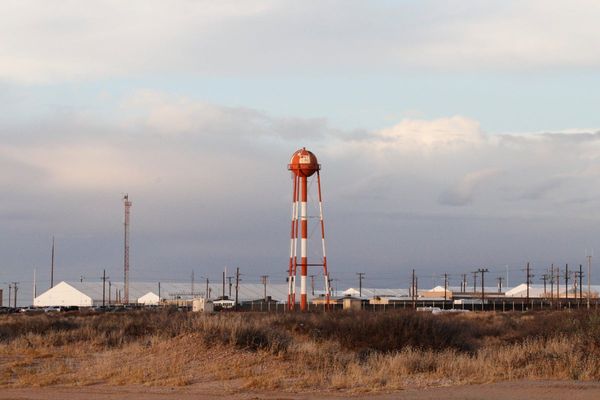
The south bank of Pangong Tso — one of the two locations from where Indian and Chinese troops disengaged in February has become a “no-man’s land” for the local cattle grazers of Chushul in Eastern Ladakh, the area’s councillor said.
LAC talks: China says de-escalation trend ‘positive’, silent on remaining issues
The Ministry of Defence in a communication to Konchok Stanzin, councillor from Chushul, has said that “Due to the present operational situation in Ladakh, grazers have been asked to restrict their cattle movements.”
Mr. Stanzin told The Hindu that in April 2020, the areas around the foothills of Helmet Top, Black Top and Gurung Hill were accessible to the grazers but are out of bounds this time.
Crucial for cattle
“There are around 180 households here and of them, around 60 depend on livestock rearing for a living. The animals need to be taken to these locations for winter grazing as this is also the breeding season. If they do not get good quality fodder, the livestock could die,” Mr. Stanzin said.
He said he had raised the issue with the Ministry of Defence in January.
On April 2, he received a reply from Maj. Gen. K. Narayanan, Joint Secretary (Army and TA) in Delhi, which said, “Non-delineation of LAC [Line of Actual Control] on ground leads to incorrect interpretation of alignment by civilians, which may result in own grazers inadvertently crossing over to the Chinese side. Moreover, due to the present operational situation in Ladakh, grazers have been asked to restrict their cattle movements.”
The disengagement at Pangong Tso (lake) where Indian and Chinese troops were in an eyeball-to-eyeball confrontation at north and south banks since June and August last year respectively, was announced by Defence Minister Rajnath Singh in parliament on February 11. The process completed on February19 after a consensus was arrived at only for one of the friction points — the north and south bank of Pangong after the 10th round of Corps Commander level talks.
Also read | Chinese build-up at LAC clearly visible, says Ladakh councillor
Shrinking space
“This area is not frequented by the Chinese grazers much; the Army should not set a precedent by not allowing the Indian grazers at these locations. Before you know, this might become a permanent arrangement, much to our disadvantage,” Mr. Stanzin pointed out.
The 11th round of talks were held at Chushul on April 9. The focus of the talks was to work out a phased disengagement plan for the other friction areas in Eastern Ladakh — Gogra, Hot Springs, Depsang and Demchok.
Statements issued separately by India and China suggest that no concrete agreement has been reached to disengage from the other friction areas.
As reported, since April 2020, Chinese troops blocked Indian troops from at least 10 patrolling points (PPs) from Depsang plains in the north to Pangong Tso (lake) in the south in Eastern Ladakh. In all, there are more than 65 PPs from the base of Karakoram to Chumar.