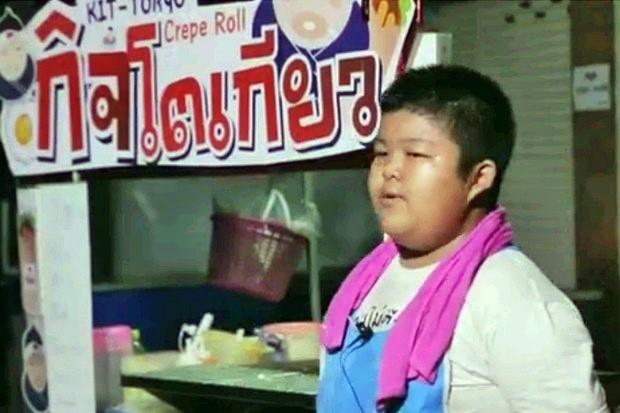
Few netizens or avid news followers could currently say they do not know of Kit Tokyo, a young Thai-style pancake vendor who became an overnight media sensation.
The 14-year-old who helps his parents sell pancakes after school has become a hero since his story was covered by the media.
On a television show last week, Kit said he sells pancakes at Nonthaburi pier because he wants to help his parents who are always overworked.

Sirinya Wattanasukchai is a columnist, Bangkok Post.
To win a washing machine prize on the show, the boy demonstrated the pancake-making skills he learnt from his father when he was in Grade 1.
The clip went viral, garnering more than two million views.
Three days later, his pancake vending cart was reviewed by a local food website, drawing hundreds of positive comments.
Since then, his story has appeared on many websites, including mainstream ones.
Many of his customers shared their experiences on their social media accounts and said how tasty his pancakes are, while even more promised to become his customers.
The young boy is being praised highly for his diligence and determination to help his parents.
The story reminded me of a tear-jerking television show that aired in 2015, portraying a poor family living in the middle of nowhere in Rayong as an example of happiness.
Living in a shabby shelter on public land next to a lake, the family of three -- two very old parents and an adult son with disabilities -- owned an old motorcycle which they could hardly afford to fuel.
None of the family members had a healthcare card or received financial support because they couldn't afford a trip to register themselves as living in poverty.
Like the Kit Tokyo case, the family remained positive and enjoyed their "private pool villa in a vast field".
Their positive attitude is admirable.
I also appreciate how people have tried to help the pancake boy by sharing his story and buying more from him, although that may mean his working hours will be made even longer.
But I wonder why the two families, among millions of others, are left out in the cold by the government, and why none of the media outlets, including mainstream ones, ever questioned if the two families deserve this.
Selling pancakes may have equipped the boy with extra skills to become a successful vendor in the future, but if the boy had a choice, would he really want to spend at least four hours after school helping his poor parents instead of playing with his friends, reading cartoons or learning how to play a musical instrument?
Kit is still fortunate enough to be able to manage his time between school and work. But do we really want the next generation, at least those from several million underprivileged families, many of whom can't manage to stay in school, to grow up struggling to make ends meet, rather than educating themselves first?
Of course, they are free to choose their way later on -- either to go to college or vocational school -- but not at Grade 1.
A brief discussion with my friend living with her family in Germany has enlightened me about how Germans have achieved a higher standard of living.
Once a baby is born, he or she is entitled to social benefits provided by both the local and central governments.
The benefits include financial support, health and education.
For example, parents will receive monthly financial support from the government, with the amount dependent on the parents' income and the number of children in the family.
Children also receive free healthcare until they turn 18 and free education through to the tertiary level.
There are many other benefits such as social housing for poor families, and paid leave for parents to take care of a sick child.
She said the registration process can be complicated and time consuming, but considering the benefits, it's worth the effort.
As we are having a general election next month, I can only hope the political parties that plan to make Thailand a welfare state will keep their promises after winning in the polls.
By then, I hope we won't have to see so many young heroes or the underprivileged continue struggling to make ends meet like the pancake boy.