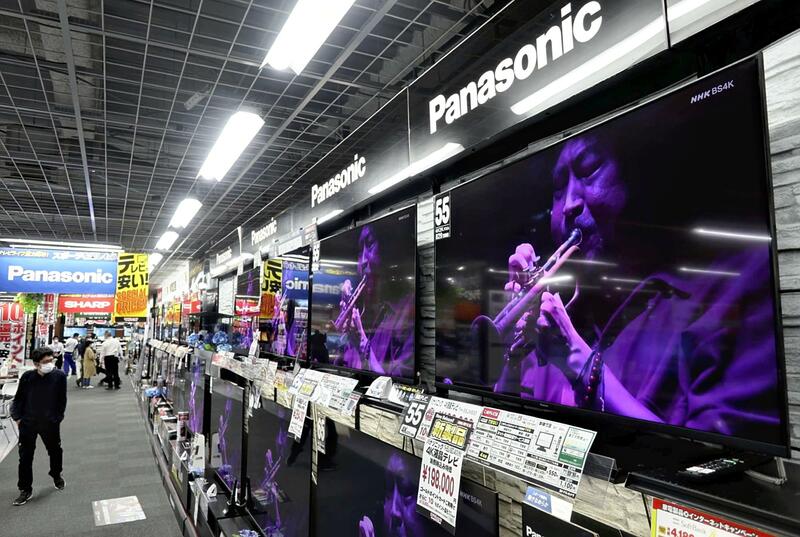
Panasonic Corp. is making the final arrangements for a business tie-up with Chinese consumer appliance firm TCL Electronics, The Yomiuri Shimbun has learned. Panasonic aims to reach an agreement with TCL by the end of May to start commissioning the production of small and midsize TVs by as early as fiscal 2021.
Panasonic is planning to streamline its operations drastically, with other Japanese electronics makers also shrinking their TV businesses due to severe competition with overseas rivals. By fiscal 2024, Panasonic's in-house production is expected to be reduced by up to 40%.
The company has not released detailed figures but Panasonic's television operations are thought to be in the red.
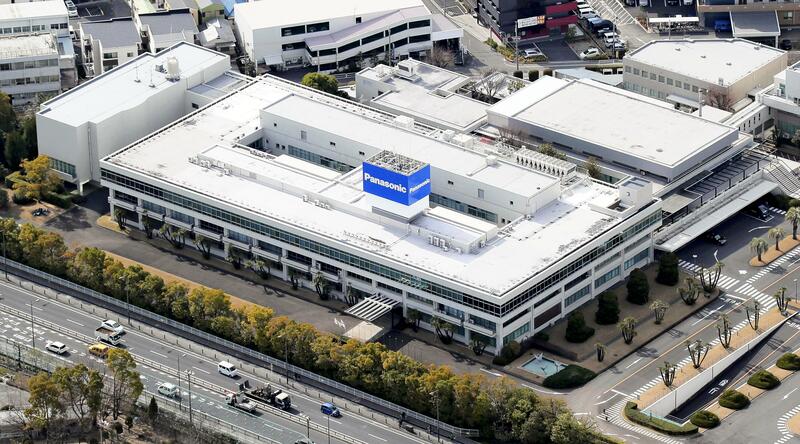
Panasonic plans to cut costs by outsourcing the manufacturing of its Viera brand among others to TCL, while continuing to produce some midsize and high-end products, such as large LCD and OLED TVs.
Panasonic annually sells about six million TVs worldwide. Through the tie-up with TCL, it expects to reduce its annual in-house production to about 3.5 million units, which is 30 to 40% less than the current level.
The company also plans to review production at seven plants around the world, including in Malaysia and the Czech Republic. It will end production in India and Vietnam by the end of fiscal 2021. The plant in Utsunomiya, which is the only TV production base in Japan, will be used to manufacture other products, although some OLED TV models will continue to be made there. It will be the first major restructuring of the company's TV business since it pulled out of TV production in China and North America in fiscal 2015.
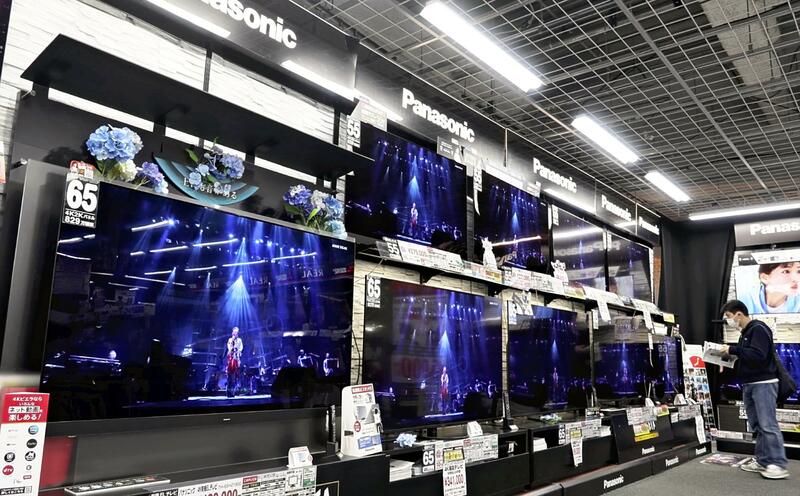
Appliance maker TCL operates in more than 160 countries and regions, and had the world's third-largest share of TV shipments in 2020. It established a Japanese unit in 2015 to sell TVs.
-- Shift to high-end models
Many of Japan's major electronics makers have scaled back or pulled out of their TV businesses. Hitachi Ltd. stopped domestic production in 2012 and domestic sales of its TVs in 2018. Toshiba Corp. sold its TV business to China's Hisense Inc. in 2018. Sony Corp. focuses its production and sales operations on high-end models.
Panasonic sells TVs in Japan, Europe, Southeast Asia and South America using LCDs and other panel parts procured from LG Electronics Inc. of South Korea.
TV sales have been sluggish in overseas markets. According to British research firm Omdia, Panasonic ranked 12th worldwide in TV shipments with a 1.8% market share. This is a significant drop from fourth place in 2010 when it had a 7.9% market share.
Panasonic's TV business was a leading segment of the company, with 20.23 million units sold worldwide at its peak in fiscal 2010. However, its plasma TV business, in which it had invested about 600 billion yen, collapsed due to the rise of LCD TVs, and since 2011 the entire group has suffered massive net losses for two consecutive fiscal years, causing instability in its management.
President Kazuhiro Tsuga has expressed an intention to proceed with structural reforms of Panasonic's TV business, calling it a "structural deficit business." As the company continues to have a share of domestic television sales, Tsuga thinks there is a benefit in maintaining its TV business.
Through the tie-up with TCL, Panasonic will try to mitigate the risk of continuing to manufacture unprofitable small and midsize on its own. At the same time, the company aims to achieve stable profitability by offering a wide range of models.
TCL is believed to have assessed that the collaboration would help boost the company's production efficiency. The challenge is whether the two companies will be able to realize the benefits of the tie-up as soon as possible.
Read more from The Japan News at https://japannews.yomiuri.co.jp/