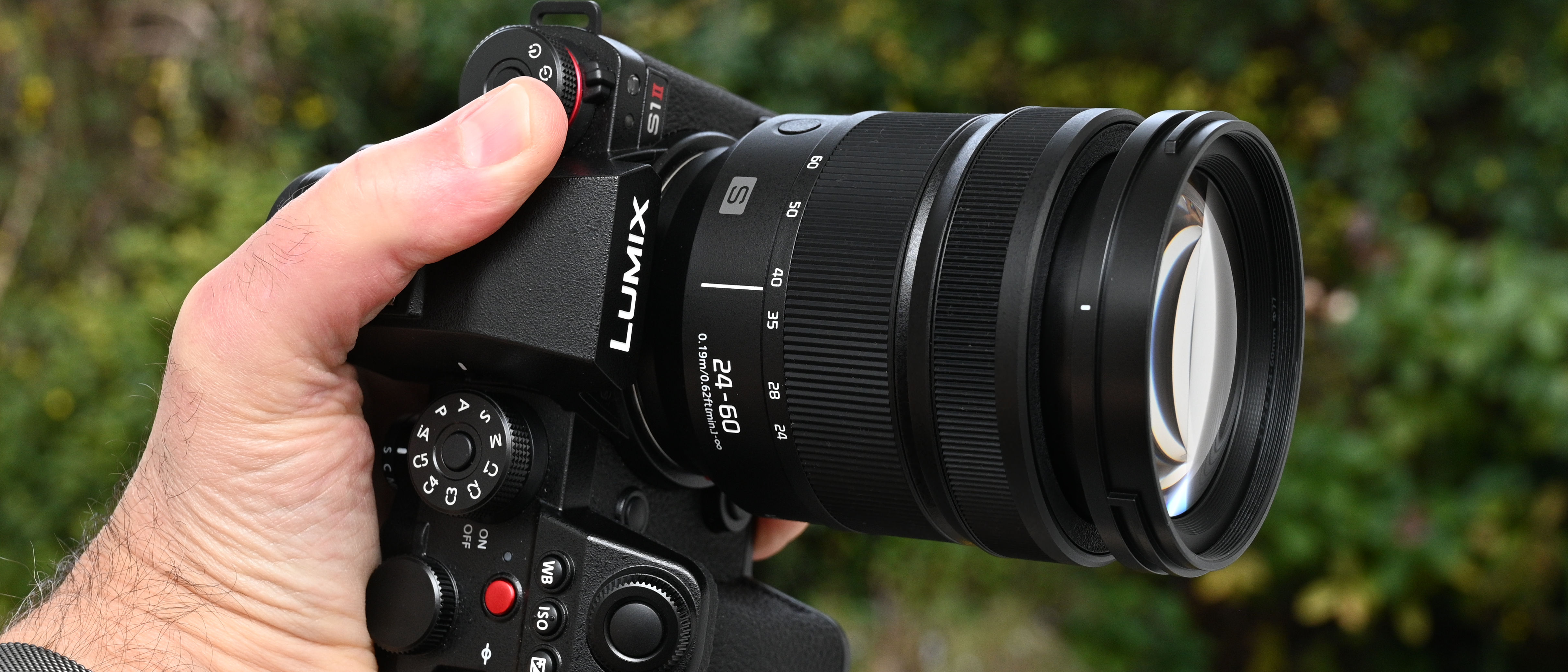
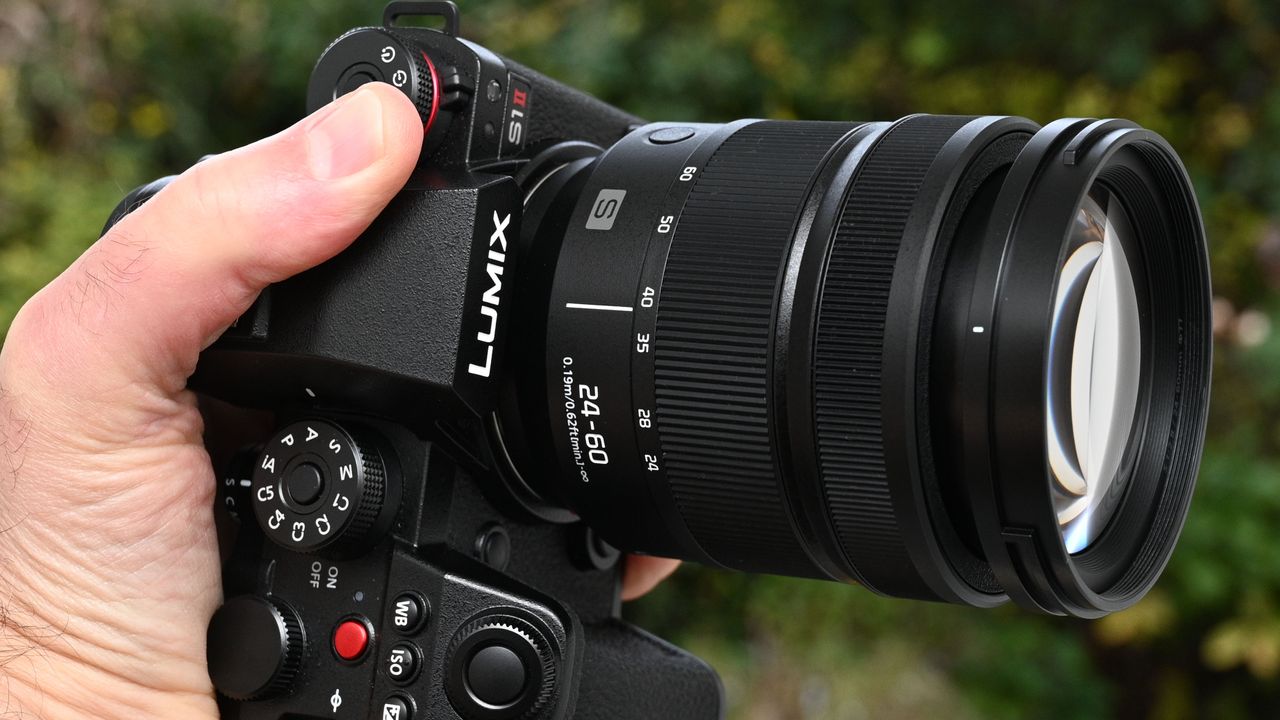
There’s more than one way to skin a cat. It’s a nasty little phrase but apparently people have been using it for about 400 years, and it applies to standard zoom lenses for L-mount cameras. They’re anything but ‘standardized’, and you’re spoilt for choice when deciding which one to buy.
Budget options tend to have a variable aperture rating that’s often disappointingly narrow at the long end of the zoom range. Pro-grade versions tend to have a constant f/2.8 aperture rating, or even faster in some cases. Then there’s a notable disparity in actual zoom ranges, with sizeable differences in everything from the amount of wide-angle coverage to the maximum telephoto reach.
Panasonic itself has launched four different S-system standard zooms for its full-frame cameras over the years, including the Lumix S Pro 24-70mm f/2.8, Lumix S 24-105mm f/4 Macro OIS, Lumix S 20-60mm f/3.5-5.6 (one of my little pleasures) and now this Lumix S 24-60mm f/2.8. Long story short, it shaves 10mm off the telephoto reach of the 24-70mm zoom but maintains the same wide-angle coverage and constant f/2.8 aperture rating, aiming to be one of the best standard zooms and best lenses for L-mount cameras. Let’s dive in.
Panasonic Lumix S 24-60mm f/2.8: Specifications
Mount options |
L-mount |
Lens construction |
14 elements in 12 groups |
Angle of view |
84-40 degrees |
Diaphragm blades |
9 |
Minimum aperture |
f/22 |
Minimum focus distance |
0.19m (W) 0.33m (T) |
Maximum magnification |
0.3x |
Filter size |
77mm |
Dimensions |
84x100mm / 3.3x3.9" |
Weight |
544g / 1.2lb |
Panasonic Lumix S 24-60mm f/2.8: Price
Panasonic isn’t the only party in town. Sigma is also part of the L-Mount Alliance, making its own cameras and lenses that go into competition with Panasonic as well as Leica. That gives you even more choice when choosing an L-mount standard zoom, so let’s see how the main contenders stack up in terms of price. With its variable aperture rating, it’s no surprise that the Panasonic Lumix S 20-60mm f/3.5-5.6 is the least expensive, at $648 / £619 / AU$1,079. The ‘alternative trinity’ Sigma 28-70mm f/2.8 DG DN Contemporary isn’t much pricier at $989 / £779 / AU$1,389. This Panasonic Lumix S 24-60mm f/2.8 takes the next ring up the price ladder at $1,048 / £899 / AU$1,899.
Costlier options include the Panasonic Lumix S 24-105mm f/4 Macro OIS at $1,398 / £1,099 / AU$1,699 and Panasonic Lumix S Pro 24-70mm f/2.8 at $2,148 / £1,499 / AU$2,899. Then there’s the fabulous Sigma 24-70mm f/2.8 DG DN II Art at $1,319 / £1,179 / AU$2,450, the super-fast Sigma 28-45mm f/1.8 DG DN Art at $1,489 / £1,299 / AU$2,900 and the extended Sigma 28-105mm f/2.8 DG DN Art at $1,649 / £1,399 / AU$3,200. Overall, the Panasonic 24-60mm looks reasonably priced, although for further comparison, there’s also a similar LK Samyang / Rokinon AF 24-60mm f/2.8 FE for Sony cameras, at a more budget-conscious $899 / £635 / AU$1,209.
Panasonic Lumix S 24-60mm f/2.8: Design & Handling
Panasonic S-system camera bodies started out with a reputation of being bulky and heavy for mirrorless models, but various versions have slimmed down over the years. The same goes for constant f/2.8 alternative trinity zooms, which are generally more compact and shed quite a bit of weight. For a standard zoom that I’m going to be using for everyday, walkabout and travel photography, less is more as far as I’m concerned.
I don’t want to be lugging around heavyweight camera kit if I don’t really need to. Sure enough, this 24-60mm f/2.8 lens is refreshingly compact and lightweight, at 84x100mm / 3.3x3.9" and just 544g / 1.2lb, compared with the Panasonic 24-70mm f/2.8 which comes in at 91x140mm / 3.6x5.5" and 935g / 2.1lb. That makes the 20-60mm lens little more than two-thirds the length and half the weight.
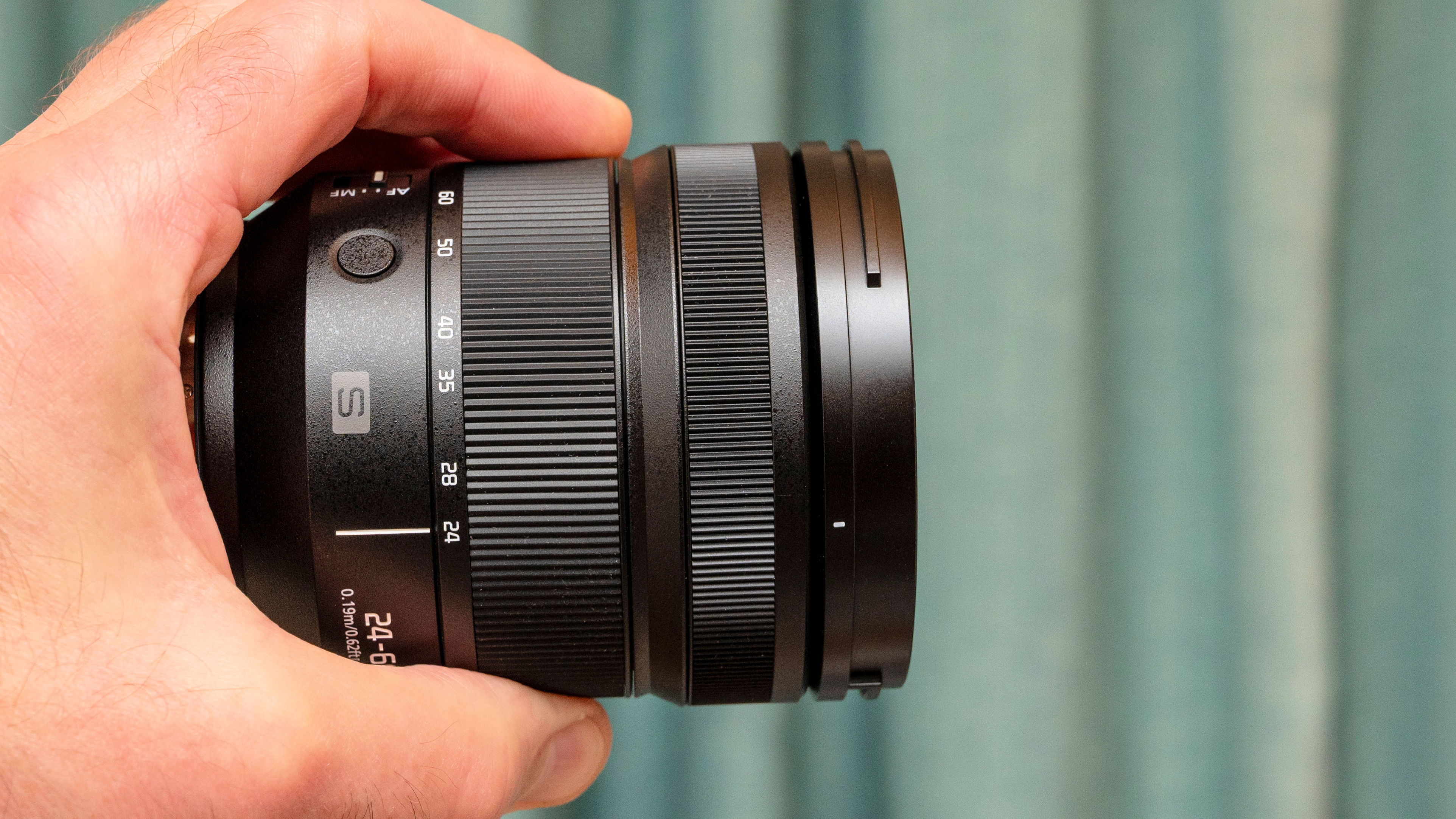
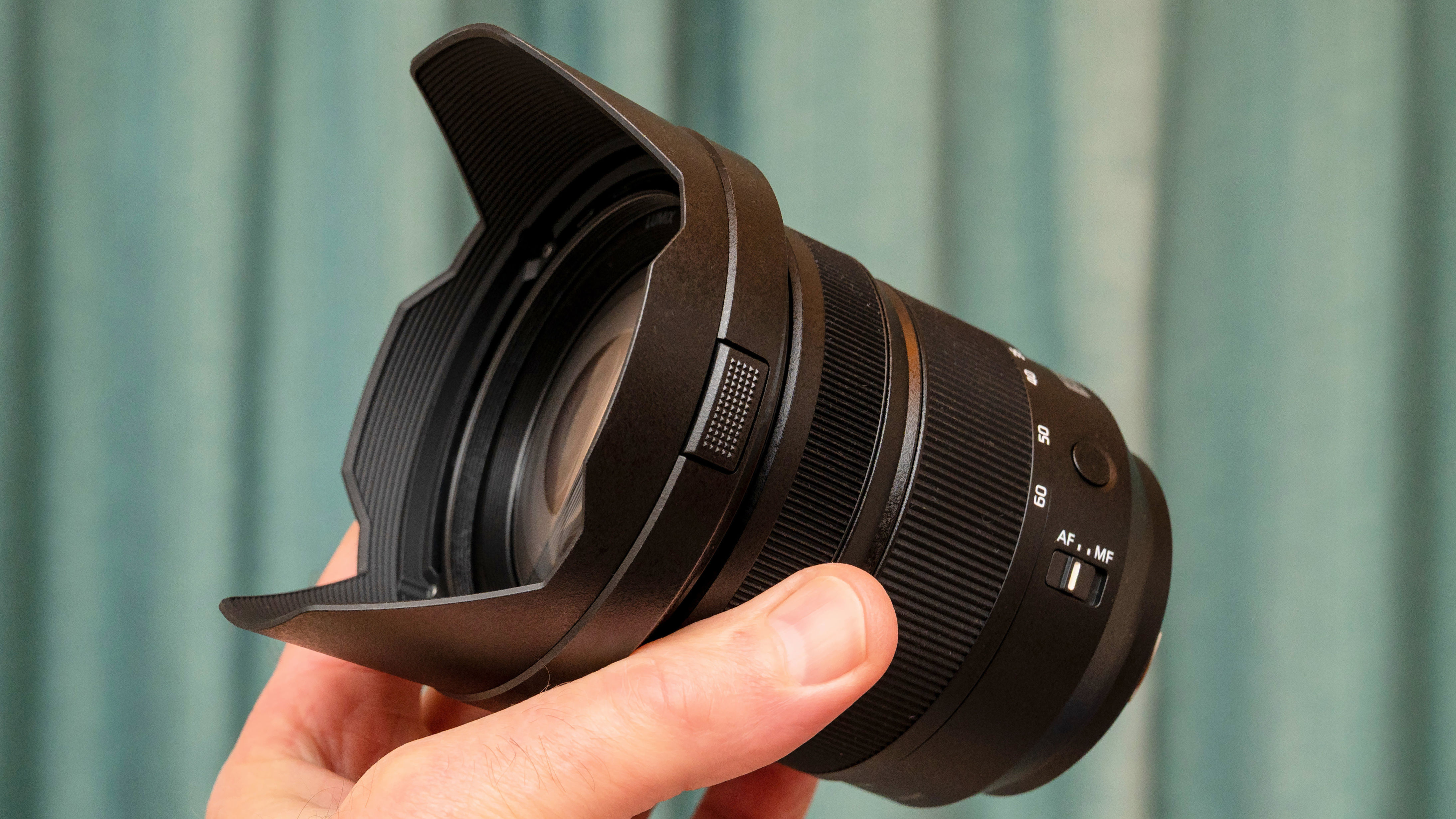
To design and build an f/2.8 standard zoom this small, something has to give. Sure enough, the lens does physically extend as you stretch through the zoom range from 24mm to 60mm but then again, most ‘full-sized’ standard zooms do this as well. The total amount of extension works out to a single inch, as demonstrated by comparing the images above and below.
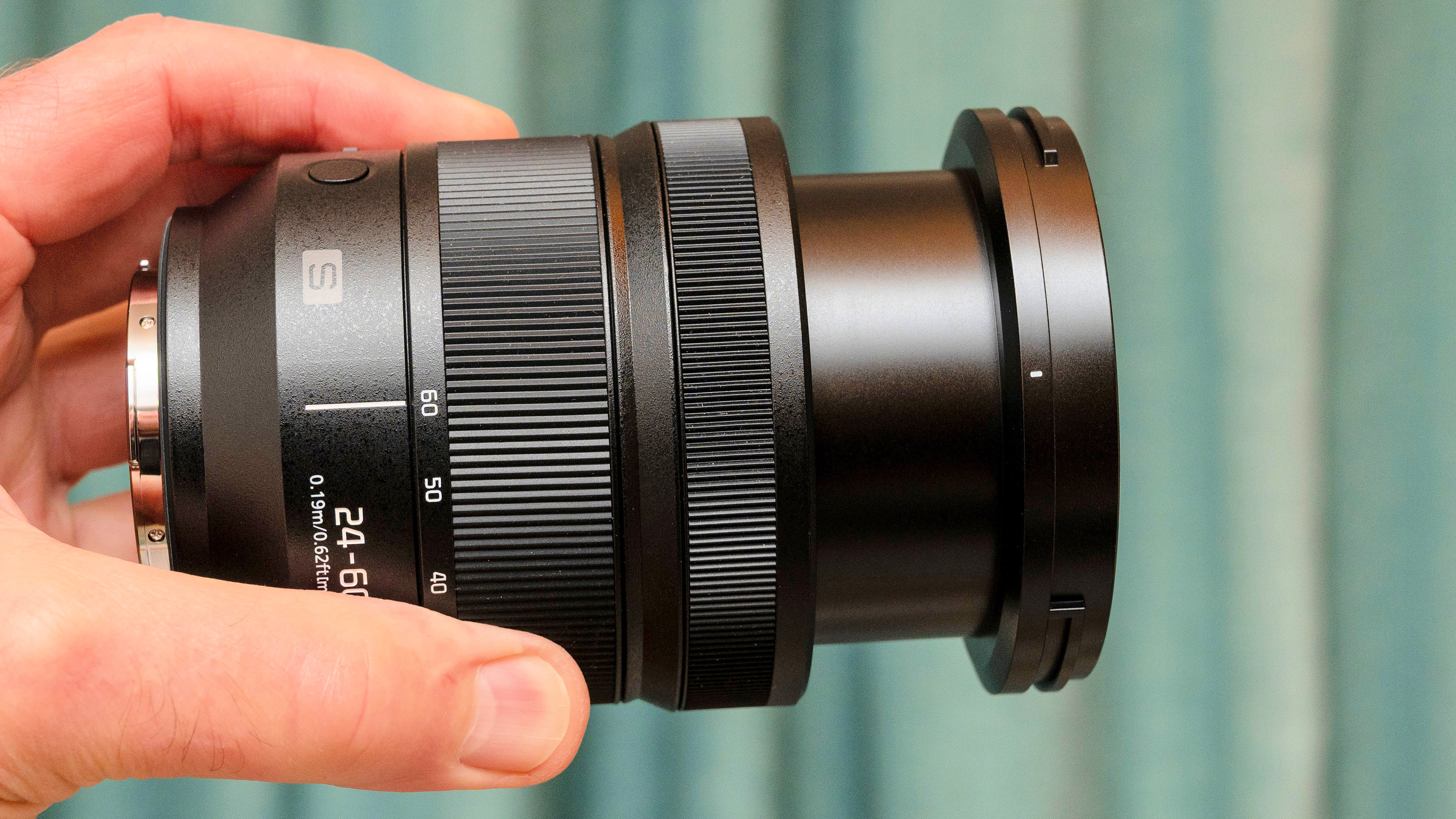
Good lenses aren’t purely about the quality of the glass, but optical design always plays a pivotal role. Despite its compact nature, the Panasonic packs no less than 14 elements arranged in 12 groups. Of these, there are three aspherical elements, two ED (Extra-low Dispersion) elements and one UED (Ultra ED) element. Aspherical elements help with downsizing and weight loss, as well as potentially enhancing image quality, while ED elements aim to improve clarity and color rendition as well as reducing color fringing.

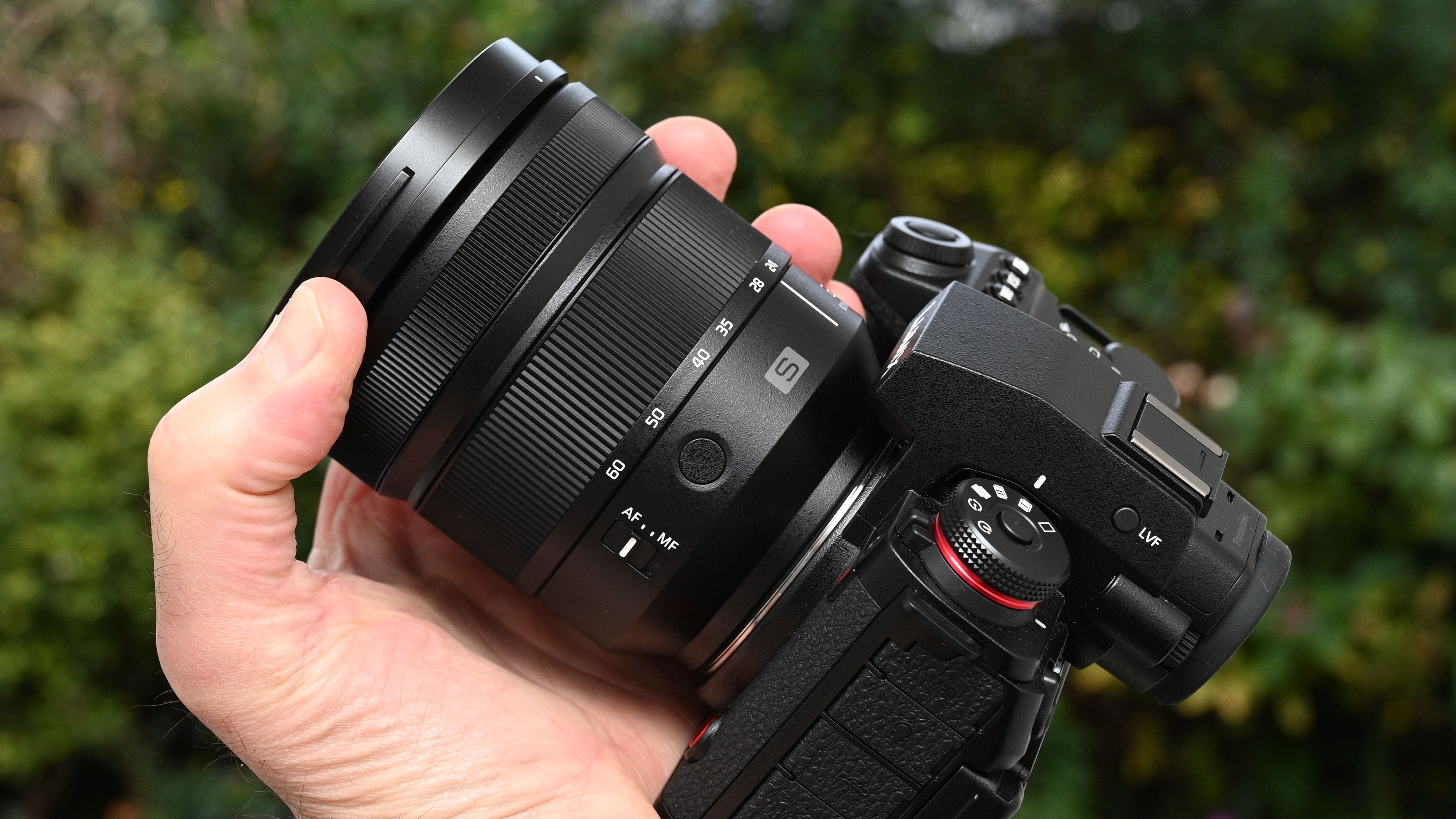
As for the mechanics of the lens, the manual focus ring is positioned at the front and is a multi-function attraction. When in autofocus mode, you can assign this control ring to other options like aperture adjustment, exposure compensation, shutter speed or ‘Crop Zoom’, where supported by the host camera body. Stepless aperture control is top of my list, at least when shooting video rather than stills.
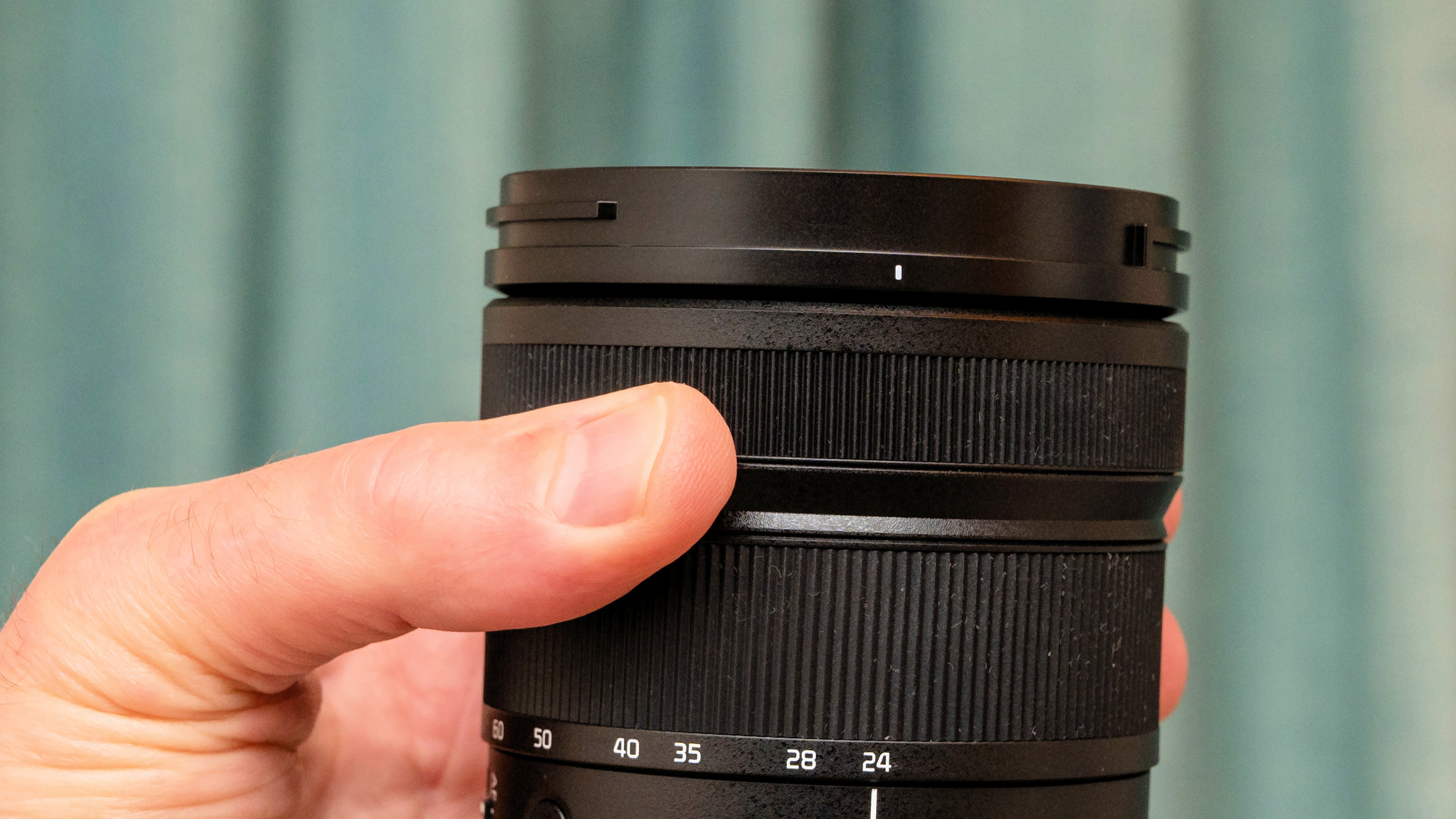
Just behind the focus ring is the zoom ring, with the usual markings at various focal lengths throughout the zoom range. As I’ve mentioned, some of Panasonic’s cameras feature a Crop Zoom option, which enables you to stretch the maximum effective focal range with a resultant crop of the image size. In most cases, you can extend the effective telephoto reach to as much as 187mm, and the Lumix S1R II takes things even further to 252mm. It just depends how many megapixels you’re willing to bin off along the way.
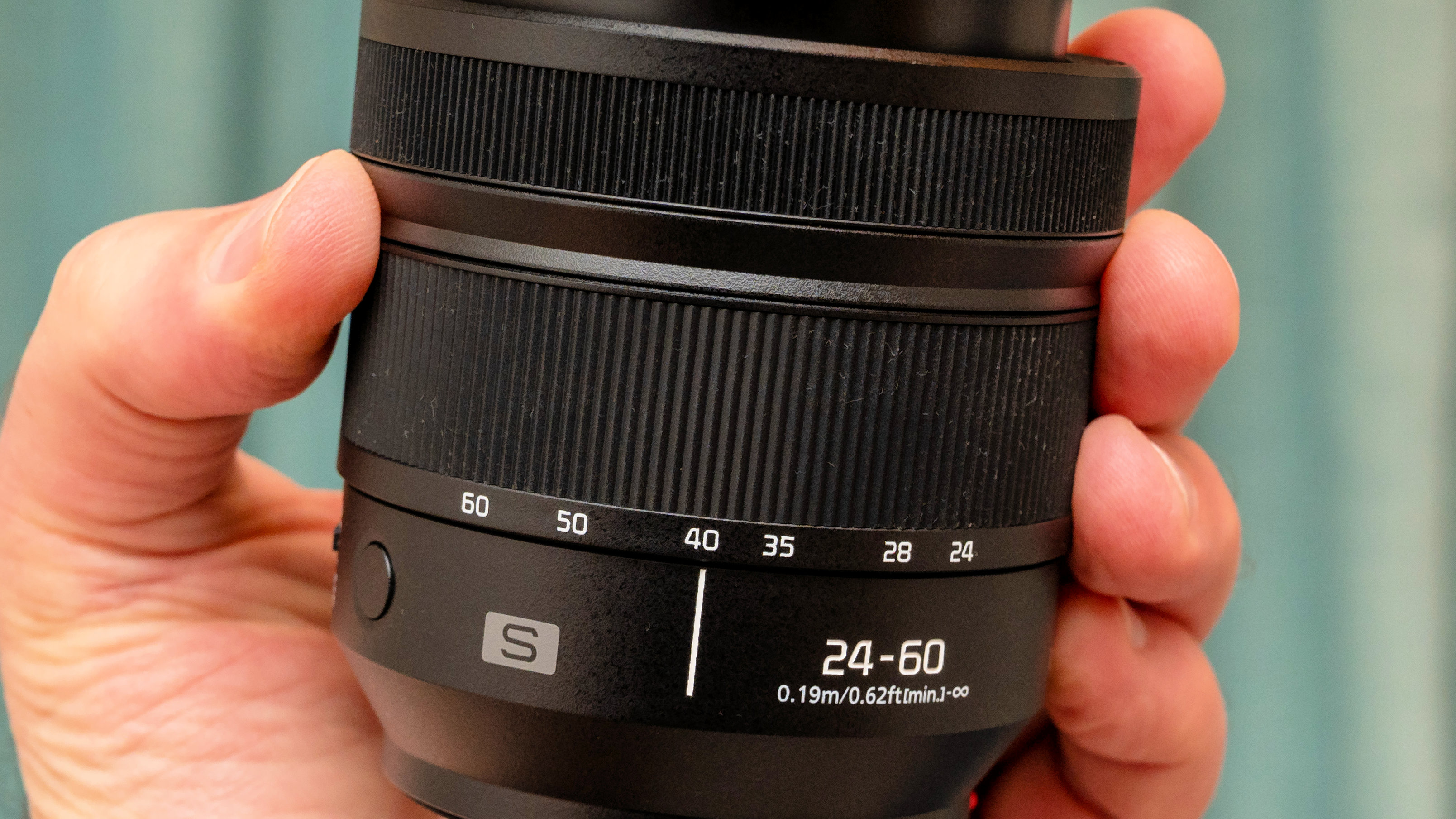
Moving further back, there’s a customizable function button. Again, you can set this to various options, one of which is ‘Hybrid Zoom’, where you can extend the maximum telephoto reach using just the zoom ring, while still leaving the shortest focal length available. It’s a neat trick and I’m also pleased to see an AF/MF focus mode switch on the barrel, making it quick and easy to swap between focus modes.
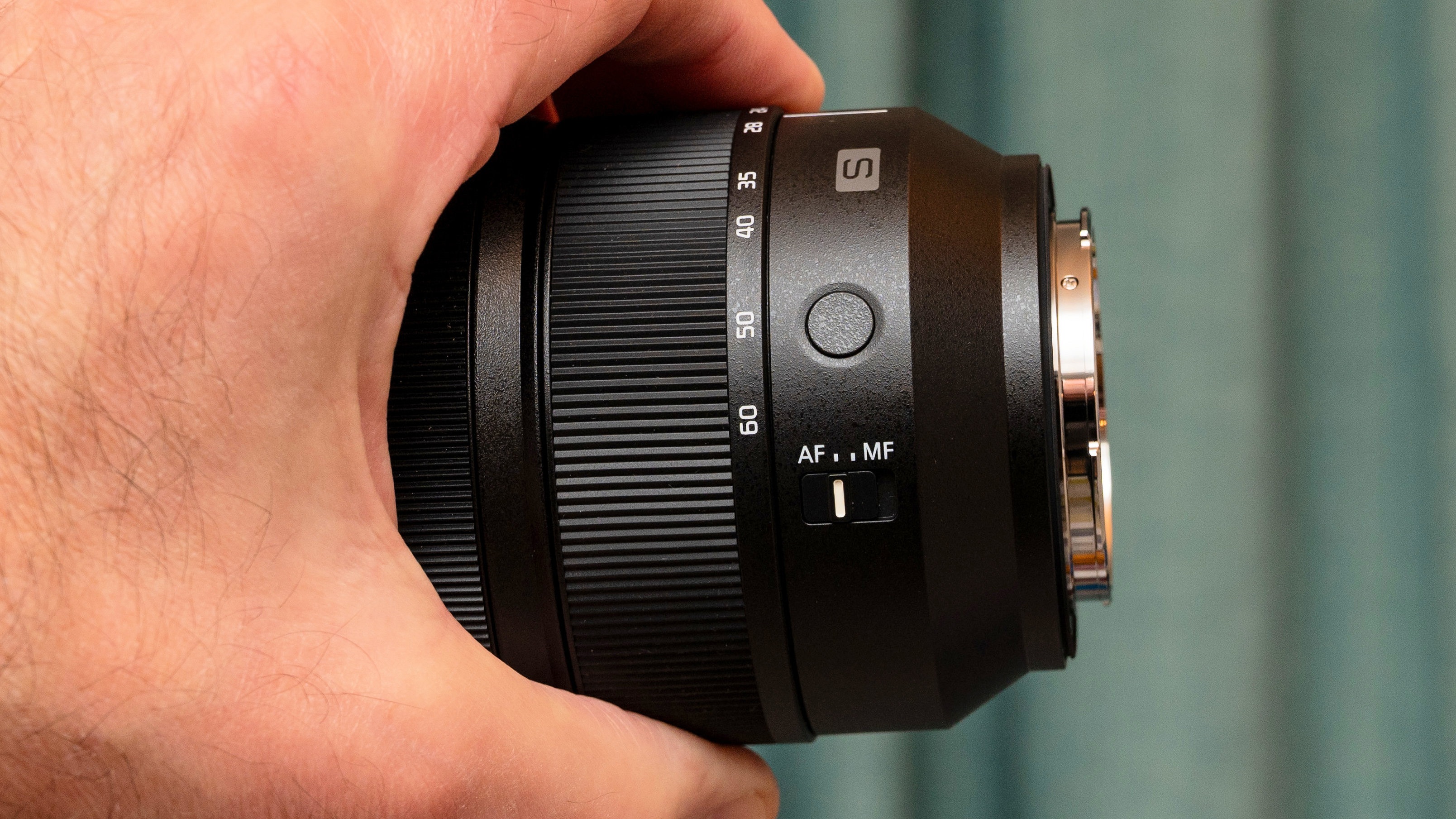
Autofocus itself is super-quick and virtually silent, which is usually the case with modern lenses for mirrorless cameras. However, Panasonic has gone the extra mile by incorporating a newly designed Dual Phase Linear Motor, which aims for really rapid, high-precision performance. Both autofocus and manual focus modes can get you really close, with a minimum focus distance of just 0.19m at the wide-angle end and 0.33m at the telephoto end of the zoom range. The resulting maximum magnification doesn’t quite stretch into macro territory, but is a generous 0.3x nevertheless.
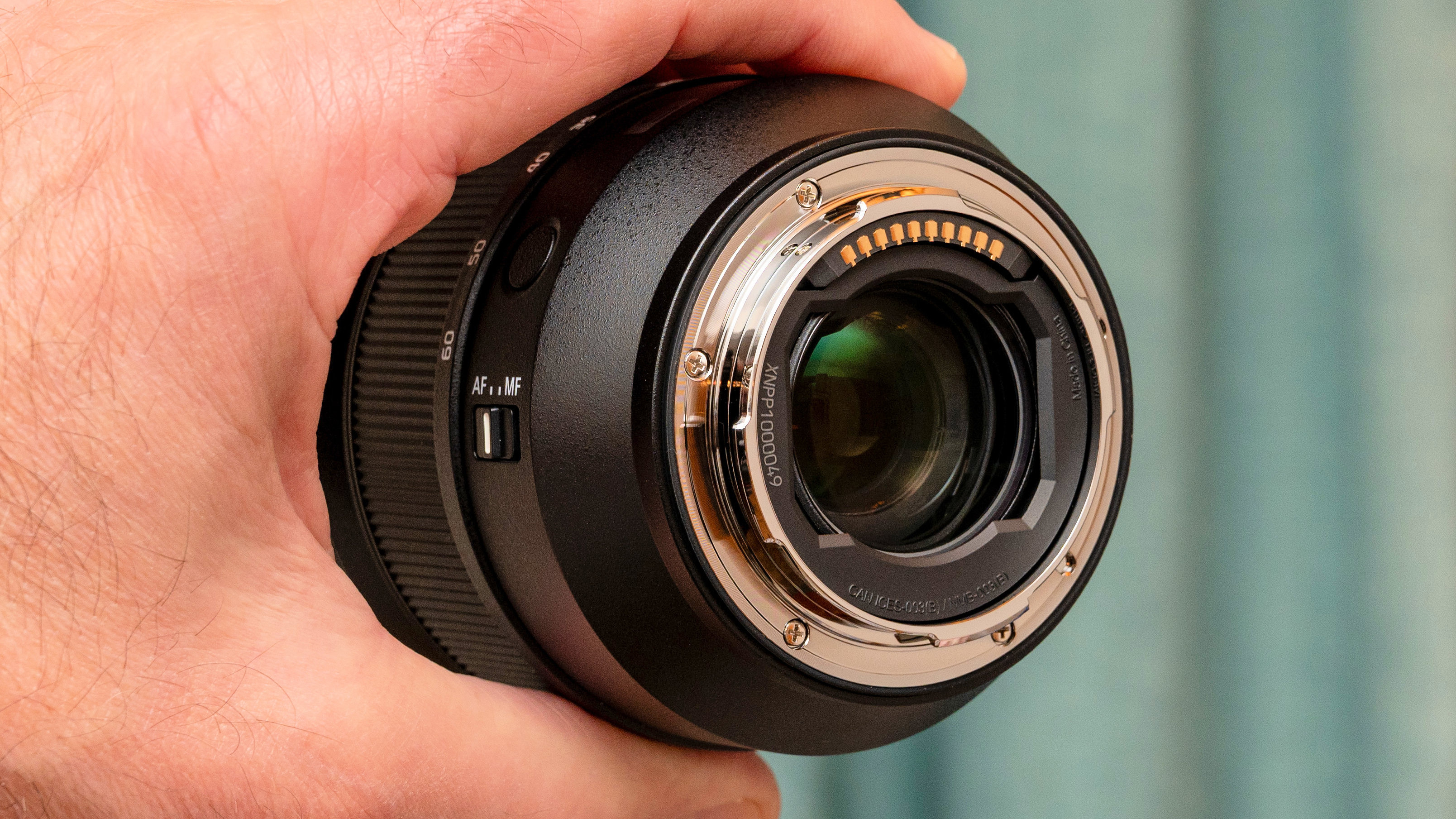
Typical of Panasonic lenses large and small, build quality is very good indeed. This one features the usual dust, splash and freeze-resistant construction, as well as a fluorine coating on the front element. The control rings, switch and function button all have a high-quality feel to them, as does the lens in its entirety. As I’d expect, it’s supplied complete with a petal-shaped hood, which helps to reduce ghosting and flare, as well as giving physical protection to the front element.
Panasonic Lumix S 24-60mm f/2.8: Performance
A key performance factor of this lens is its constant f/2.8 aperture. After all, the Panasonic Lumix S 20-60mm f/3.5-5.6 gives even more wide-angle potential and the same (limited) amount of telephoto reach, but is two whole f/stops slower at the long end of its zoom range. Performance bonuses of the f/2.8 lens include the availability of a tighter depth of field for isolating subjects within scenes by blurring the background, and quicker shutter speeds to freeze action under low lighting, without the need to bump up your camera’s ISO setting too far.

Ticking a couple of boxes on my performance wish list, the lens maintains high levels of center-sharpness throughout the zoom range, even when shooting wide-open at f/2.8, although edge/corner-sharpness is more of a mixed bag. Just as important from my perspective, there's pleasantly smooth bokeh in defocused areas.

When it comes to unwanted aberrations, distortion and lateral chromatic aberration are effectively removed with the help of automatic in-camera corrections. Again, that’s very typical of modern lenses designed for mirrorless cameras, especially among lenses that are designed with an eye on compactness and a lightweight build. I also found that resistance to ghosting and flare was good.

As advertised, autofocus is really rapid and proved consistently accurate in my tests. It’s also virtually silent in operation, and the same goes for manual focusing which also relies on the ‘Dual Phase Linear Motor’ to shift optical elements around. All in all, performance is highly impressive.

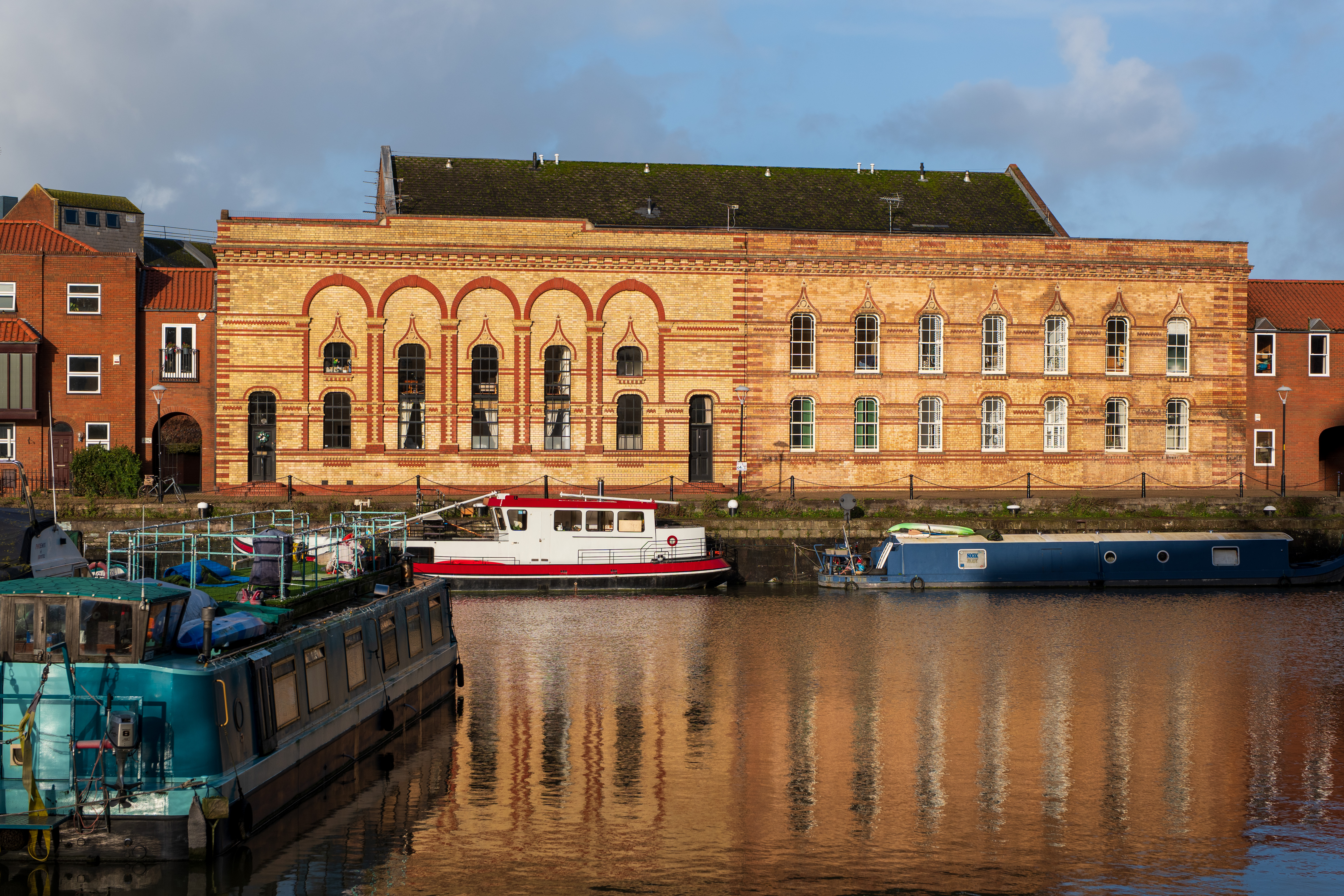
The outright zoom range isn’t overly generous but the shot above demonstrates the wide-angle perspective on offer at 24mm, the shortest available focal length. The shot below was taken at 60mm, the maximum focal length of the lens, so the pair together give a good feel for the overall zoom range.
Panasonic Lumix S 24-60mm f/2.8: Sample Images
The following gallery of example shots were taken in and around the ‘Underfall Yard’, a historic boat yard in the English city of Bristol. The weather was sunny and rainy at the same time – look out for rainbows!









Panasonic Lumix S 24-60mm f/2.8: Lab Results
We run a range of lab tests under controlled conditions, using the Imatest Master testing suite. Photos of test charts are taken across the range of apertures and zooms (where available), then analyzed for sharpness, distortion and chromatic aberrations.
We use Imatest SFR (spatial frequency response) charts and analysis software to plot lens resolution at the center of the image frame, corners and mid-point distances, across the range of aperture settings and, with zoom lenses, at four different focal lengths. The tests also measure distortion and color fringing (chromatic aberration).
Sharpness:
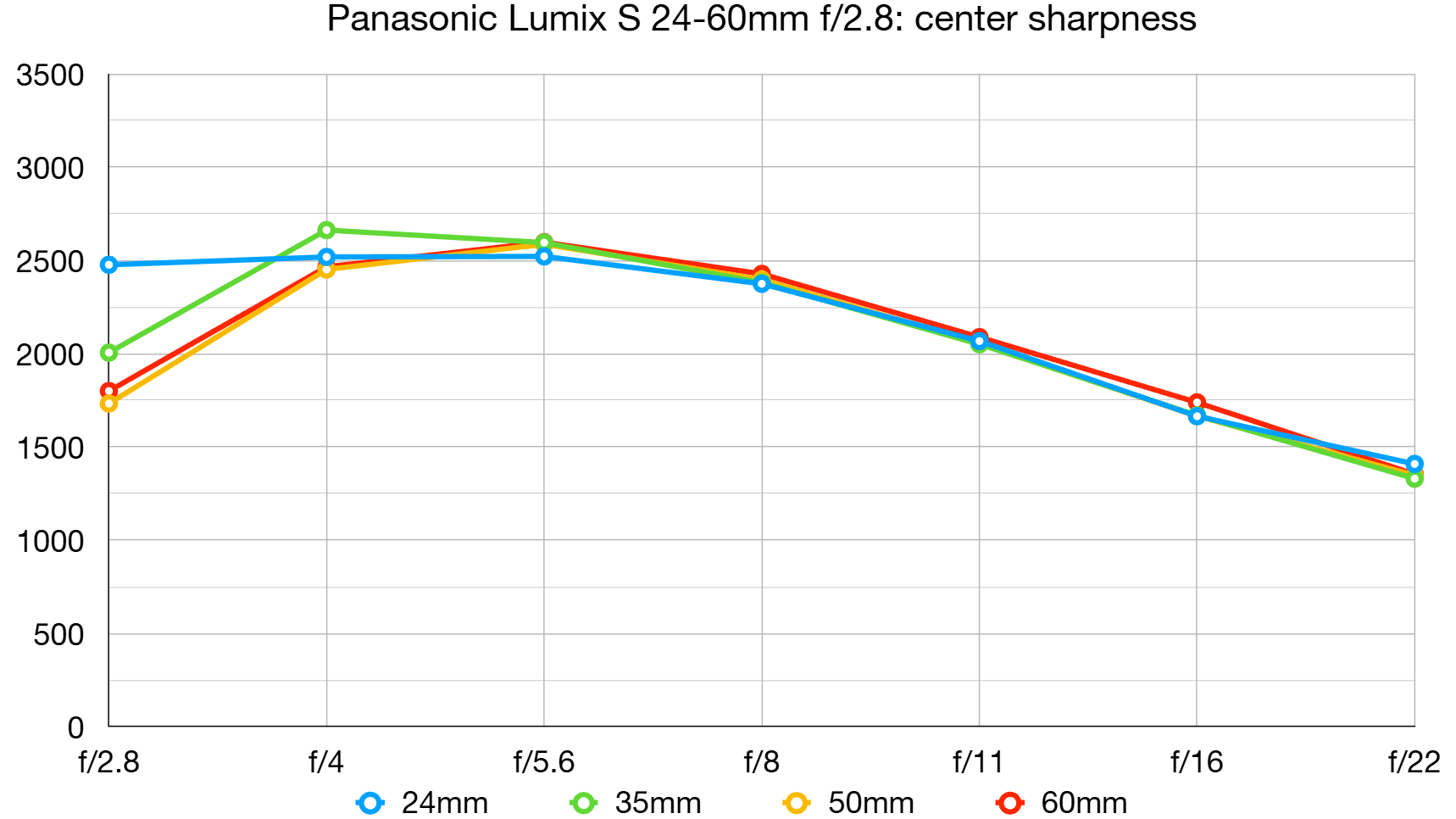
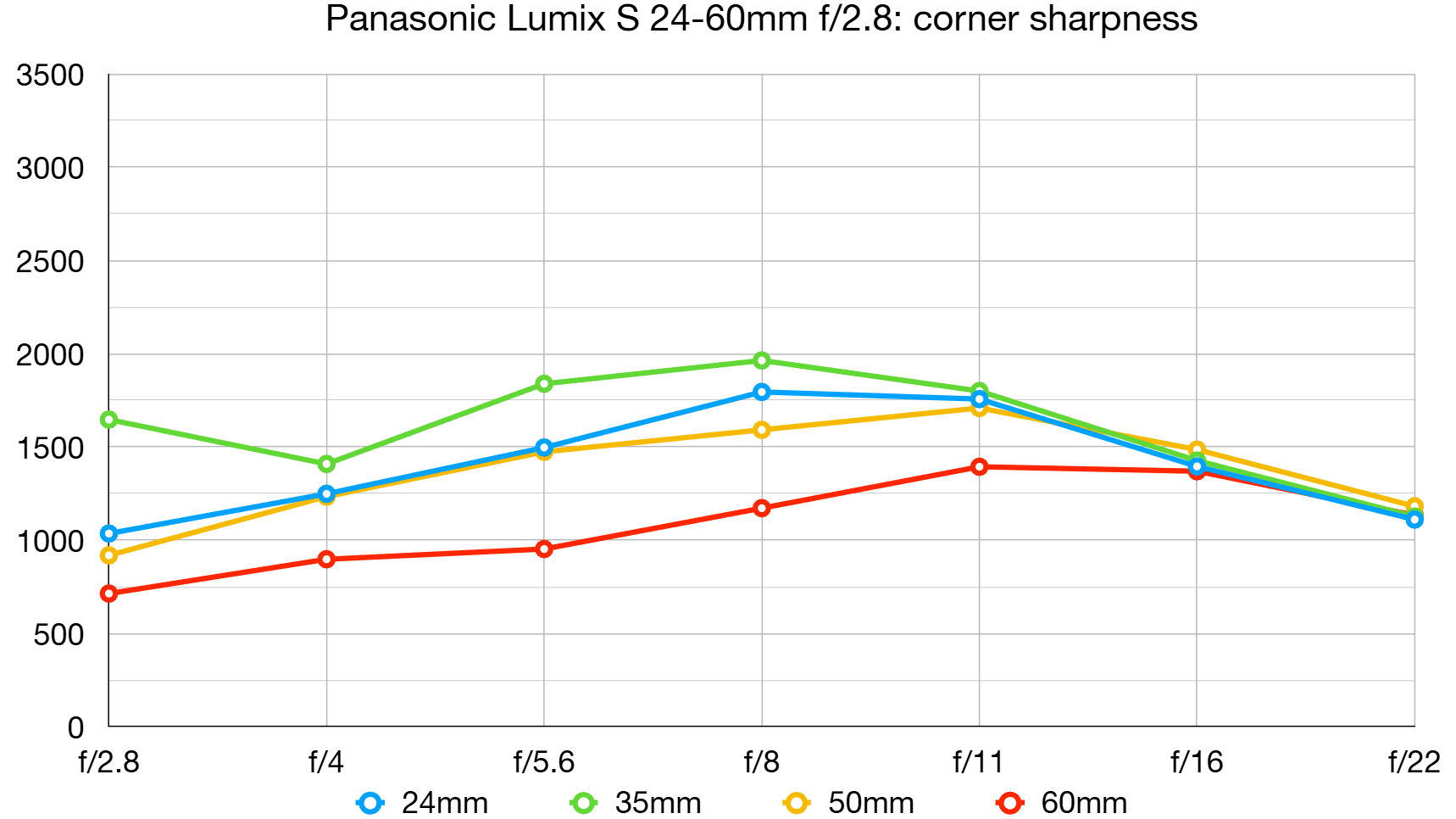
Center sharpness is remarkably good at f/4 through to f/11. Wide open at f/2.8 it's slightly less impressive between 35mm and 60mm, but not distractingly so. Corner sharpness is very much a mixed bag though. It's decent enough at 35mm, but mediocre at 24mm and 50mm, especially at larger apertures. Zoom in to 60mm and corners sharpness is downright poor unless you stop down to f/11.
Fringing:
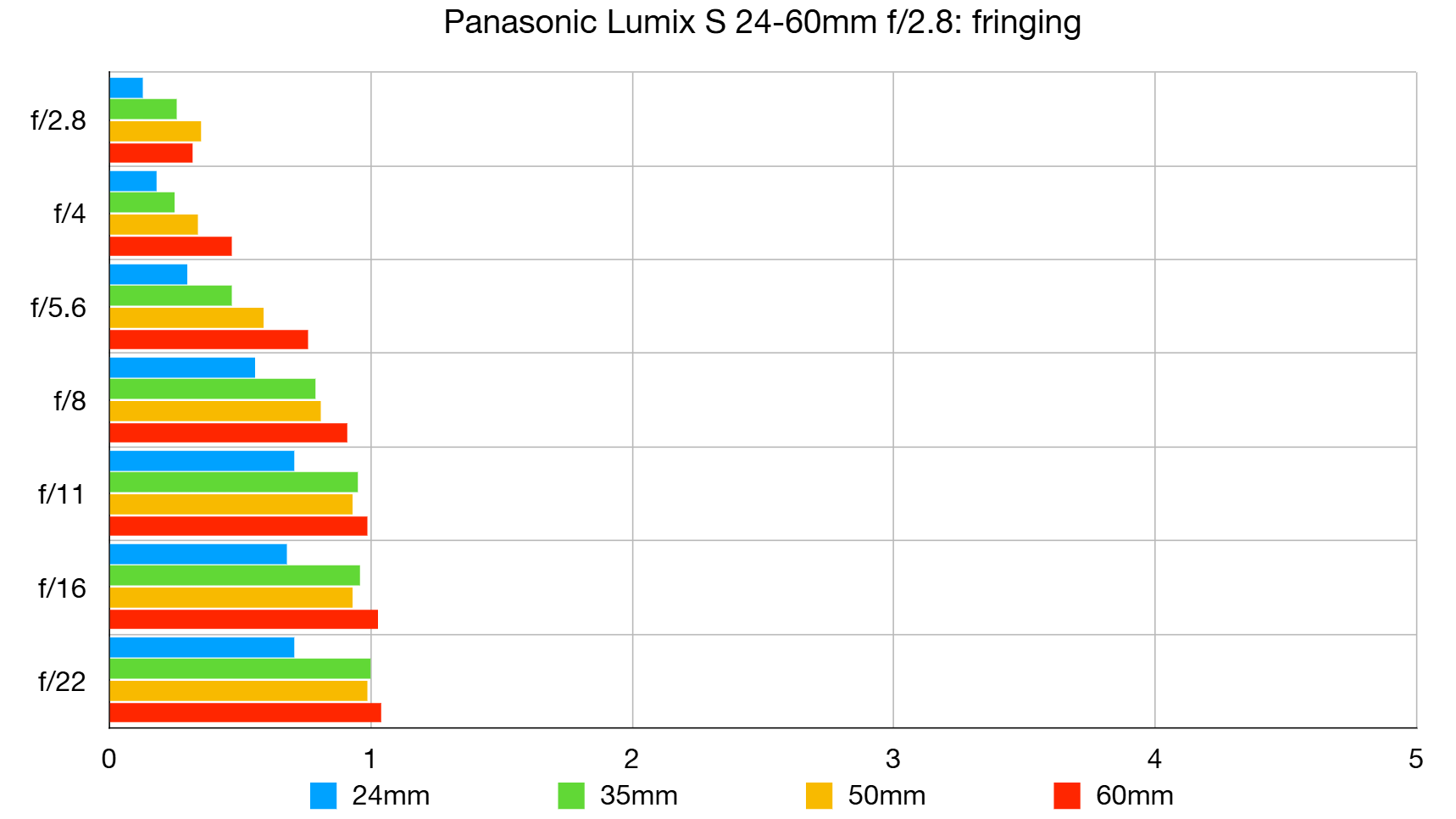
Aberrations are well controlled at larger apertures, just becoming borderline-visible at f/11.
Distortion:
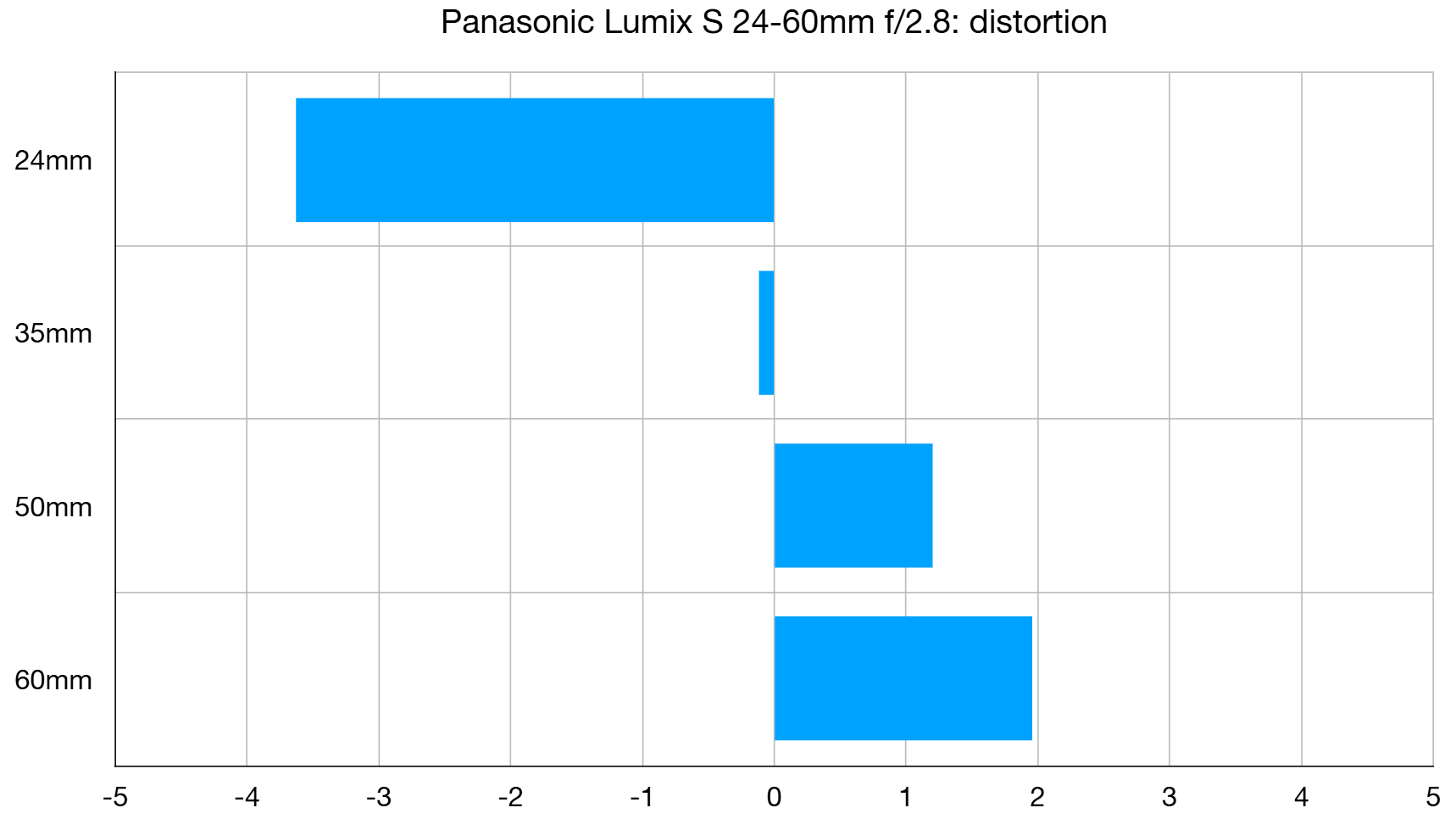
As we've come to expect from modern lenses designed for mirrorless cameras, firmware-based optical distortion correction is heavily relied upon. Without it, the true degree of distortion is revealed. In the case of the Panasonic 24-60mm, there's significant barrel distortion at 24mm, transitioning quickly to moderate pincushion distortion by 50mm.
Panasonic Lumix S 24-60mm f/2.8: Verdict
Just exactly how many ways are there to skin a cat? No, let’s not go there. Let’s just say that standard zooms for L-mount camera are many and varied, so it pays to choose wisely. This Panasonic Lumix S 24-60mm f/2.8 ranks very highly on my list. Sure, its telephoto reach is almost non-existent but Crop Zoom and Hybrid Zoom functions in compatible Panasonic cameras go some way to righting that wrong. Either way, I’m personally more intent on retaining good wide-angle coverage in an alternative f/2.8 ‘trinity’ standard zoom, which is often lost along the way. The lens obliges in this respect, and it’s also refreshingly compact, lightweight and affordable. It’s also strongly built with good weather-resistance, has high-end handling and impressive all-round performance. All in all, I think Panasonic has come up trumps with this one.
|
Features ★★★★★ |
Attractive features include the constant f/2.8 aperture, advanced autofocus system, customizable control ring and function button. |
|
Design ★★★★★ |
Build quality feels typically solid for a Panasonic lens and although it’s refreshingly compact and lightweight, it’s weather-sealed. |
|
Performance ★★★★☆ |
Typical of ‘compact’ lenses for mirrorless cameras, it relies on automatic in-camera corrections but to very good effect. |
|
Value ★★★★☆ |
It’s a bit pricier than some competitors but very good value, all things considered. |