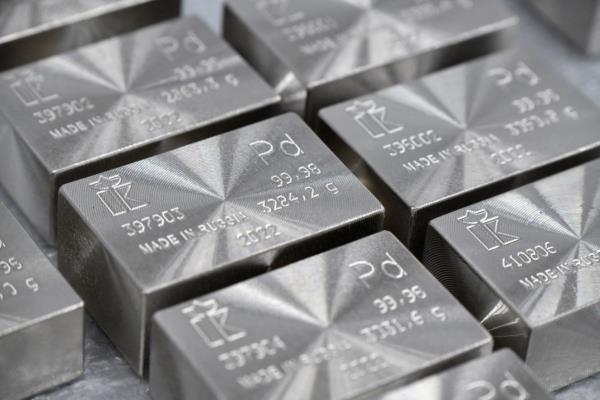
In recent years, palladium has become a crucial element in various industries, including fuel cells, aerospace equipment, electronics, dental fillings, and jewelry. However, its most significant impact is felt in the automotive sector, particularly in the manufacture of autocatalysts that reduce harmful emissions from internal combustion engines. The auto industry has historically accounted for around 80% of global palladium demand.
But a significant shift is currently underway. In 2022-23, equipment manufacturers in the industry faced rising palladium prices, leading them to seek alternatives. Platinum emerged as a viable substitute, resulting in a profound change in the precious metals market—an unprecedented occurrence in over five years.
Last week, palladium prices dipped below platinum for the first time since April 2018. At 8:03 am EST on Thursday, February 8, 2024, palladium traded at $869.6 per troy ounce, a 2.8% decrease, while platinum traded at $874.5 per troy ounce. While this development may grab headlines, signs of this shift had already been apparent.
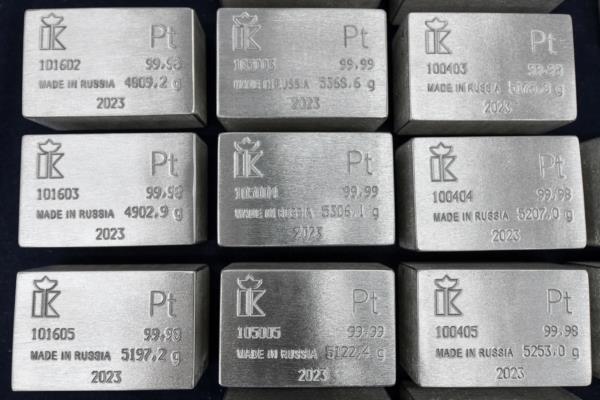

According to the World Platinum Investment Council (WPIC), approximately 620,000 ounces of palladium were replaced with platinum in 2023, up from 385,000 ounces in the previous year. As a result, global palladium prices dropped by nearly 40% in 2023. The WPIC projects an even higher substitution of 700,000 ounces in 2024. Notably, this is a remarkable process considering that the substitution of platinum for palladium (or vice versa) in the auto industry is not a swift one.
On paper, platinum and palladium can effectively be interchanged in gasoline autocatalysts. However, in practice, the substitution process is slow. In 2022, it was believed that only larger automakers were making the switch for newer vehicle models. But the increasing levels of substitution observed in 2023 indicate a broader industry-wide shift.
Furthermore, the growing market share of electric vehicles, which do not require emissions treatment systems as they run on batteries, has added uncertainty to the palladium market. With platinum currently being more expensive than palladium and also finding wider usage in the jewelry market, the automotive industry finds itself in a medium-term dilemma. The previous five years of palladium price increases from 2018 to 2022 seem to be a thing of the past.
If market projections regarding palladium substitution in established auto manufacturing processes, likely driven by lower-priced platinum, hold true, it is expected that palladium supply will be in surplus by 2025. This expectation is reinforced by the major producers in the leading mining hubs, namely South Africa, Russia, Canada, and the United States, who show little intention of reducing production. The only exception is Russia's primary miner, Nornickel, which foresees a decrease in output.
The scenario could become even more complex with the existence of above-ground palladium stocks. Independent research consultancy Metals Focus estimated these stocks to be around 11.6 million ounces in 2023. As the price gap between palladium and platinum shifts, the substitution between the metals is likely to decline. Ultimately, while palladium may experience a rebound in usage volumes in 2025, it may not necessarily translate into higher prices.
The changing dynamics of the palladium market have captivated industry observers. As the automotive sector navigates this transition and evaluates the long-term implications, the future of palladium remains uncertain. Only time will reveal whether palladium can regain its previous prominence or if platinum will continue to assert its dominance.




.jpg?w=600)