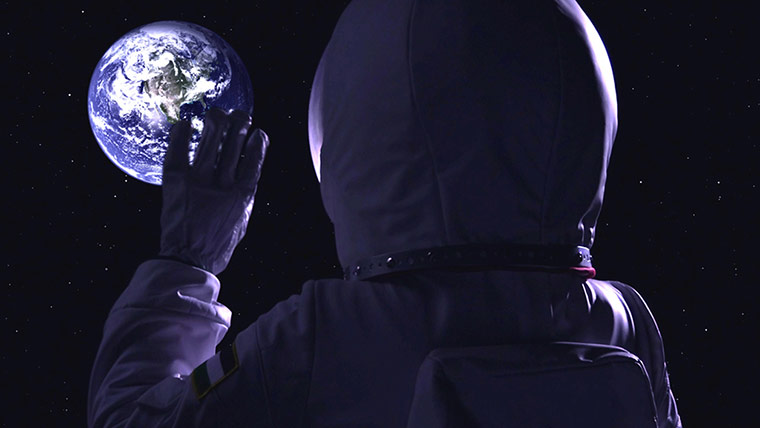
We start our journey in outer space, with Larissa Sansour's pastiche of Stanley Kubrick's 2011: A Space Odyssey, which has an Orientalist soundtrack. Here, Sansour can be found 'claiming' the moon for Palestine, in a bold and poignant act that sees the artist reimagining a new Palestinian identity Photograph: Courtesy and copyright the artist

Sansour has three works in the show. Alongside her Space Exodus, an array of Palistinauts will make their UK premiere. Sansour's tiny sculptures are funny baby appropriations of astronauts – minute adventurers with elfin pointed shoes Photograph: Courtesy and copyright the artist
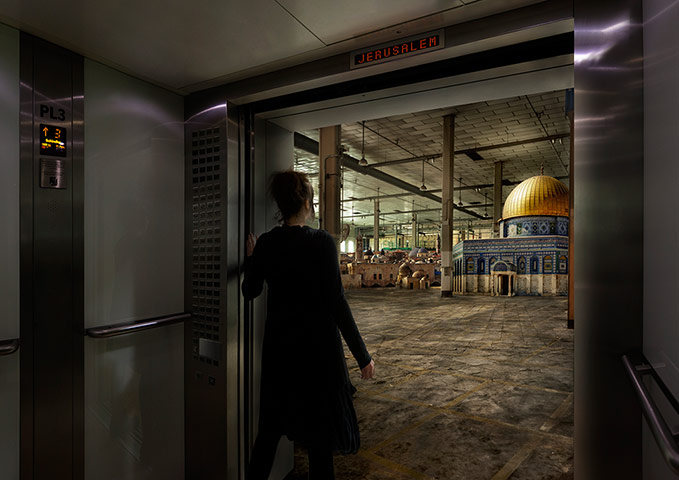
The Nation Estate is a sci-fi photo series conceived in the wake of the Palestinian bid for nationhood at the UN. In Sansour's imagined world, Palestinians finally have their state in the shape of a single skyscraper housing the entire population: the Nation Estate. Each city has its own floor; Jerusalem on the third floor, Ramallah on the fourth, Bethlehem on the fifth. Intercity trips are no longer hampered by soldiers and checkpoints, but conveniently made by elevator Photograph: Courtesy and copyright the artist
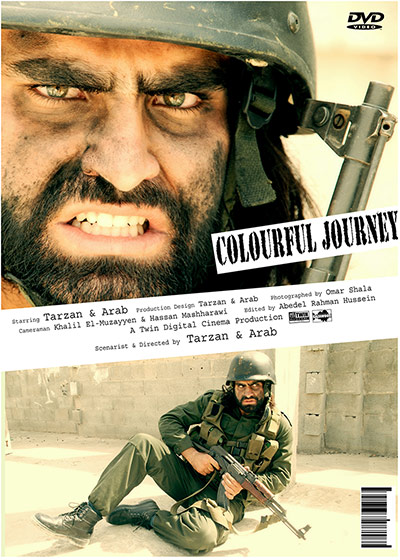
One of a series of large-scale flypostered prints of imaginary movies created by the young Gaza-based twins. The film titles the brothers have chosen are all ironic, and each one is named after a randomly computer-generated moniker of an Israeli Defence Force (IDF) military campaign. The installation at Cornerhouse invents a mythical cinema for the body of work – a cinema that the brothers may never have access to in their native Gaza Photograph: Courtesy and copyright the artists
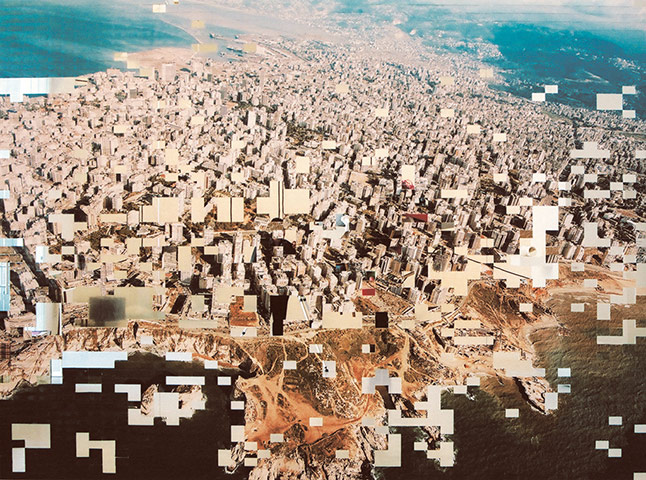
Renowned artist film-makers Hadjithomas and Joreige return to the gallery with a new version of their epic interactive work, Circle of Confusion, first done in 2001. They invite visitors to remove and scatter 3,000 fragments of an aerial photograph that compromises their native city of Beirut. Underneath, a large-scale mirror is revealed, reflecting the viewer into the crevices of the disappearing cityscape Photograph: Courtesy and copyright the artists
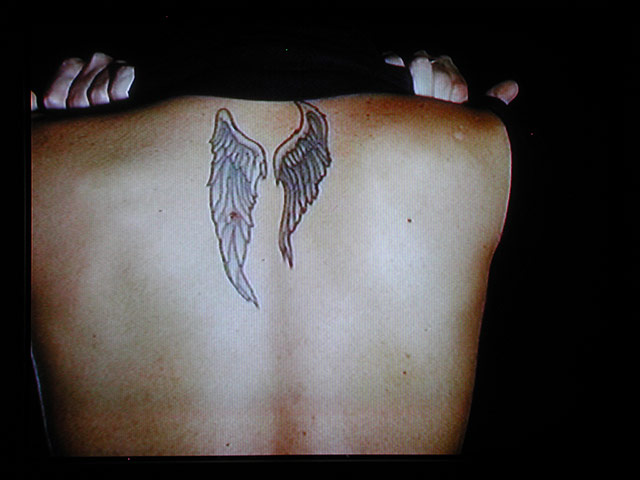
Zaatari has recently become one of the foremost artists still living in the Arab region. The show returns to two early works by the artist which reimagine Arab masculinity, where conflicted male romance binds and separates – in two tales that aim to resolve issues of sexual identity, separation and longing Photograph: Courtesy and copyright the artist
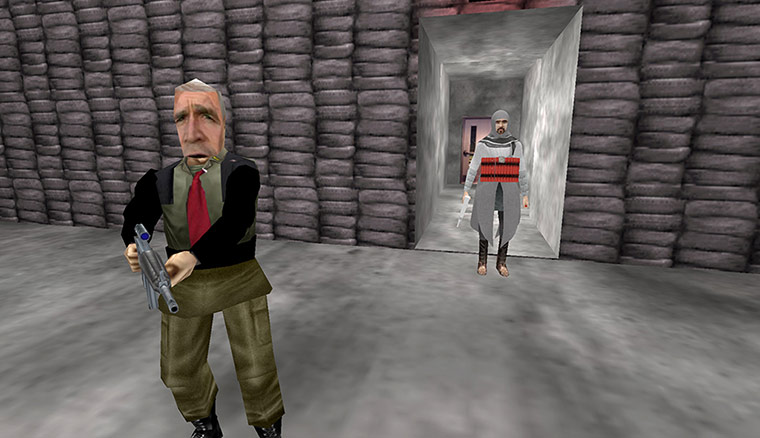
The origin of the work came from a widely distributed military computer game called The Quest for Saddam, where players fought stereotypical foes in an attempt to murder Saddam Hussein. Al-Qaida soon created a new version, adding a 'skin' to turn the game into a hunt for George Bush. Bilal hacked the al-Qaida version to put a spin on the conflict. In his appropriation, the artist casts himself as a converted suicide bomber, who joins al-Qaida after learning his brother has been murdered by US forces Photograph: Courtesy and copyright the artist
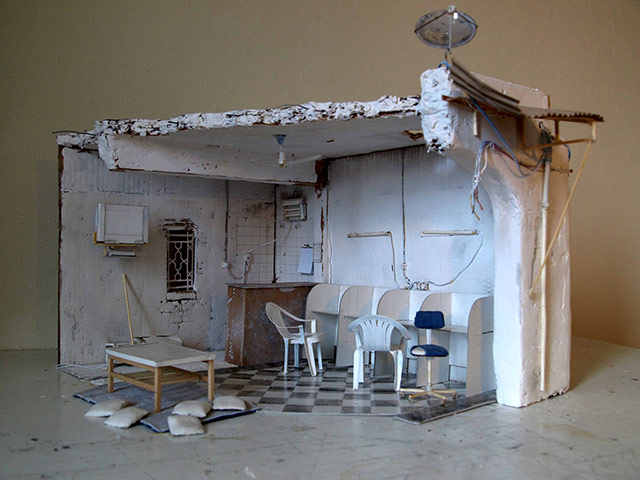
Bilal's interactive video game can be played in this specially commissioned set within the Cornerhouse that resembles an old-school style internet cafe. The work shows how media is put into the world to be 'tampered' with, reauthored and represented Photograph: Kev Thornton
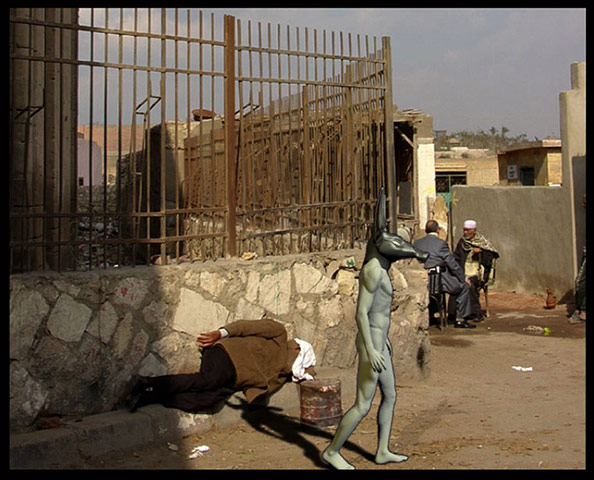
In Of Presidents and Superheroes, Egyptian artist Hafez trades in his traditional canvas paintings in favour of subversive video mashing. Hafez takes tumultuous news footage and intersperses it with an odd animated Anubis figure, which offers a historical juxtaposition to the media's current violent appropriation of Egyptian culture Photograph: Courtesy and copyright the artist
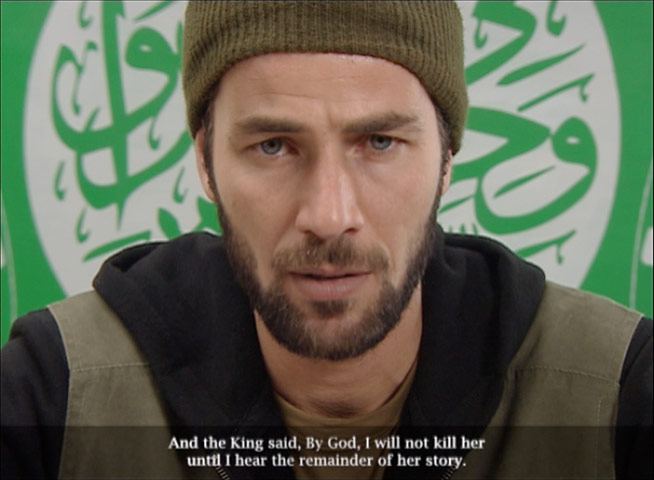
Here, one of the world's most adventurous video artists pokes fun at the modality of the suicide bomber video. He correlates that mode of address with the folklore of Scheherazade from One Thousand and One Nights Photograph: Courtesy and copyright the artist