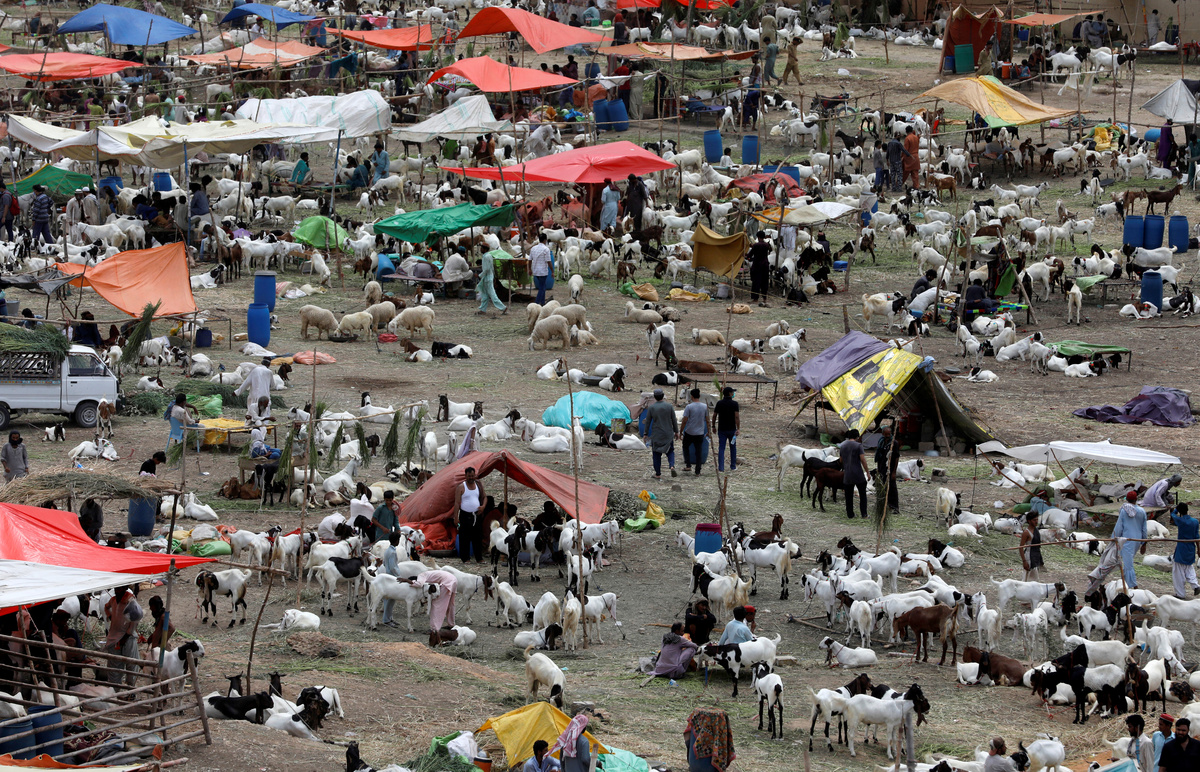
Pakistani authorities are encouraging people to buy sacrificial animals online or at least wear masks when visiting cattle markets, fearing preparations for the Muslim festival of Eid al-Adha could reverse a decline in COVID-19 infection numbers.
Government social-distancing restrictions this year including half-day closing have seen a drop in customers at the normally bustling markets which, like in other Muslim countries, are set up in urban centres ahead of one of Islam's most important festivals.
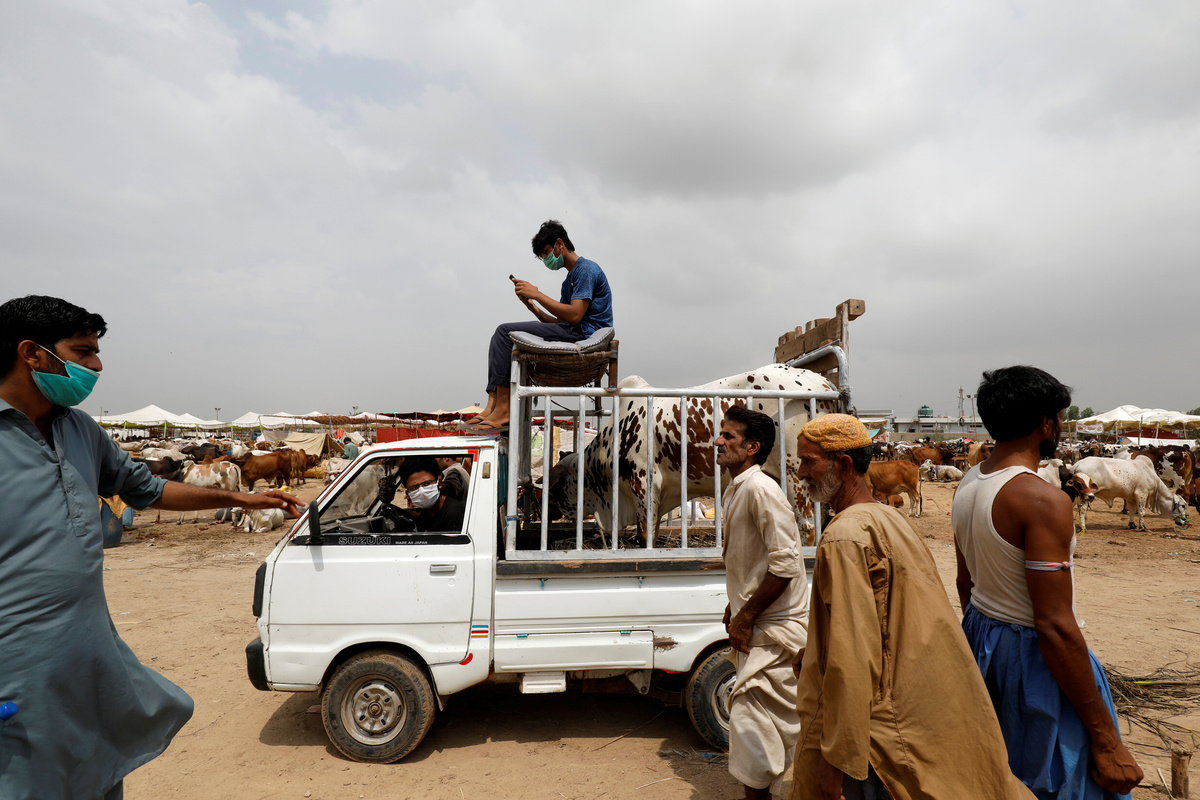
The main cattle market of Karachi, Pakistan's largest city, was less busy on Sunday than in preceding years with just six days before festivities, Reuters witnesses said. Trader Allah Ditta, who travelled hundreds of miles to sell his stock, told Reuters his customers had almost halved.
Most visitors flouted a requirement to wear masks, and many were accompanied by children who this year are barred.
"I don't understand this coronavirus. I have not seen anyone dying of it," said trader Muhammad Akram. "Look around you: No one is wearing a mask."
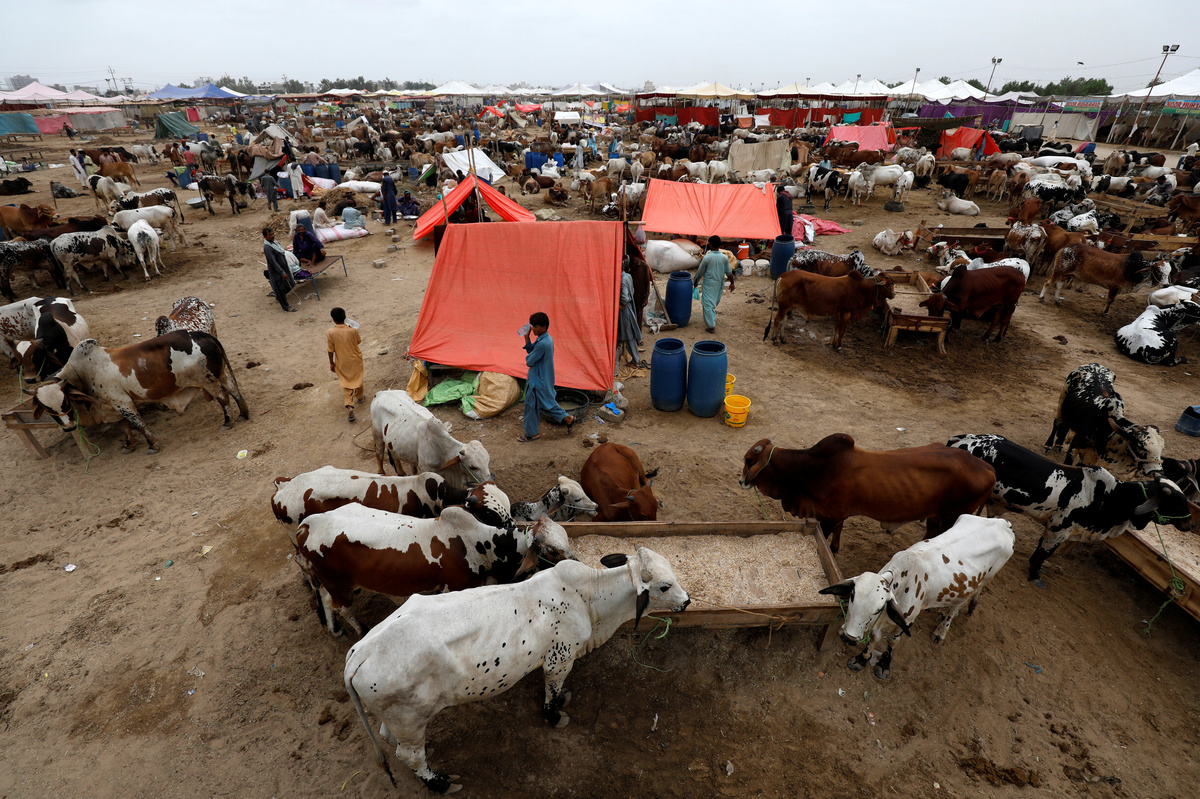
Pakistan has reported over 270,000 COVID-19 cases with almost 6,000 deaths. Daily cases of new infection numbered just under 1,200 on Sunday versus a peak last month nearing 7,000 around another festival, Eid al-Fitr.
"In the last four weeks there has been significant slowdown in the pandemic's spread, with an 80% decline in deaths," State Minister of Health Zafar Mirza said on Sunday - three weeks after he himself tested positive for COVID-19.
"Last Eid, since gatherings increased, people travelled, and this interaction caused cases to spike," Mizra said. "People should take it very seriously and act responsibly. There is a chance that cases might go up again, like Spain."
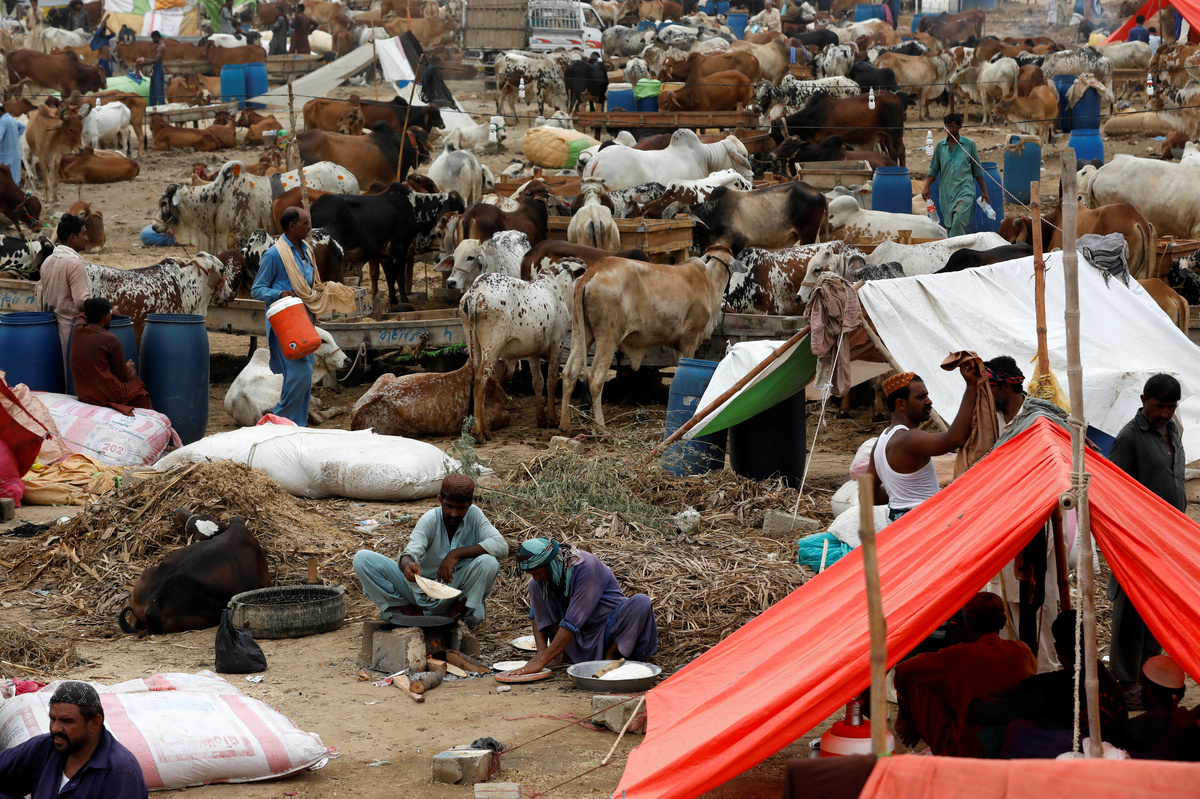
While market visitors have fallen, more people are paying charities to slaughter cattle on their behalf and deliver their cut to them or donate it to the needy.
Shakil Dehelvi, joint secretary-general of Alamgir Welfare Trust, said the charity had received its target booking number twice as quickly as last year.
(Reporting by Syed Raza Hassan; Editing by Christopher Cushing)