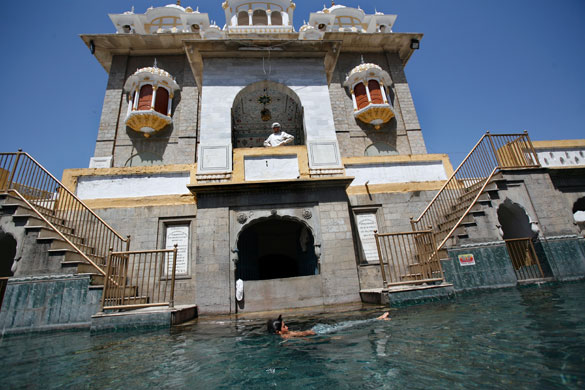
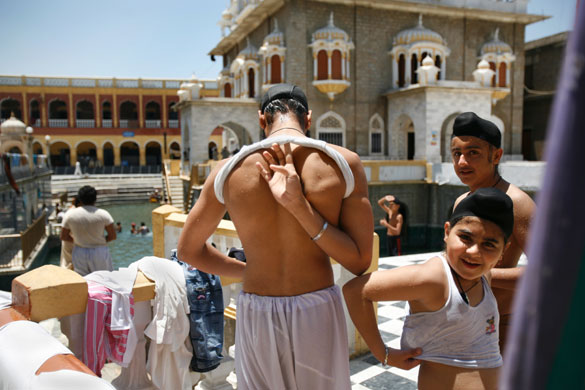
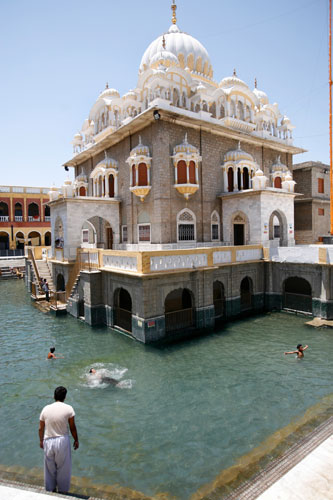
Children of Sikh families displaced by fighting swim in the waters outside the Gurdwara Panja Sahib, a holy site revered by Sikhs, at Hasan Abdal in Pakistan's Punjab provincePhotograph: Declan WalshSikhs beside the waters of the Gurdwara Panja Sahib. An estimated 3,000 families have taken refuge around the holy sitePhotograph: Declan WalshSome have also come from Orakzai tribal agency, in the federally administered tribal areas of PakistanPhotograph: Declan Walsh
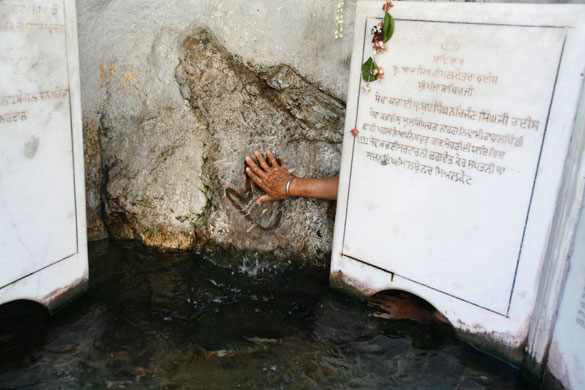
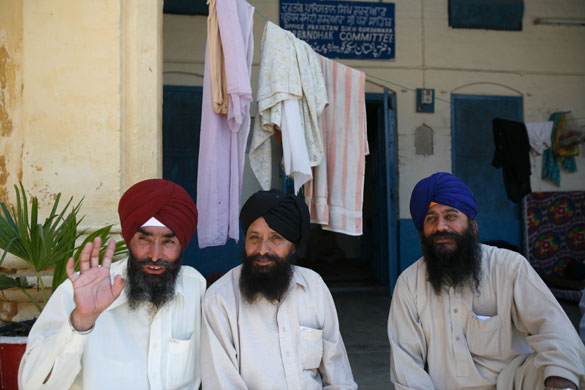
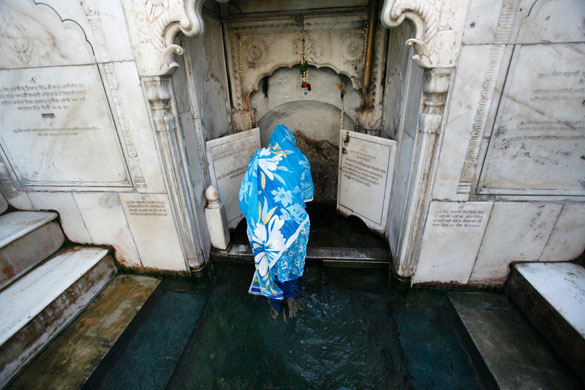
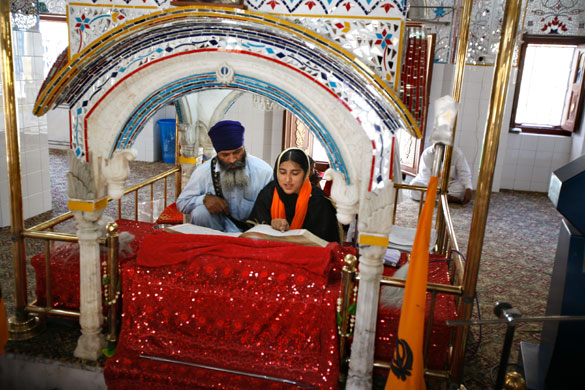
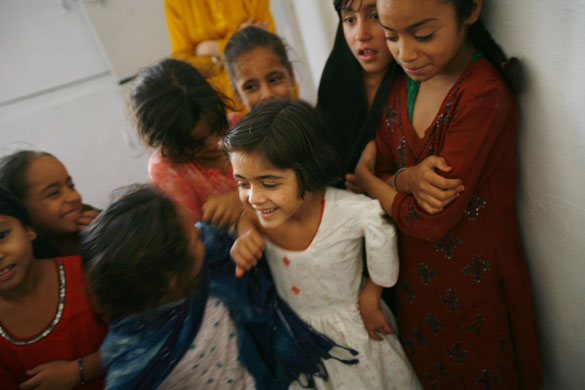
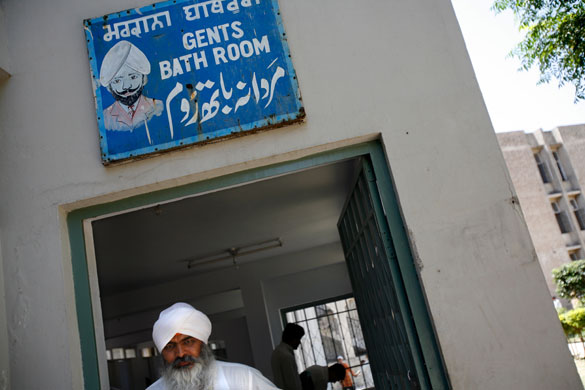
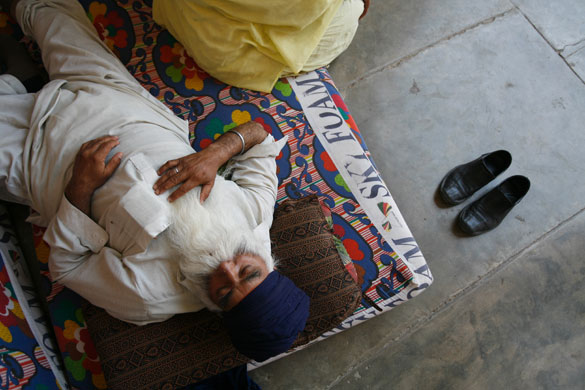
A Sikh refugee touches a stone said to contain the imprint of the founder of Sikhism, Guru Nanak, at the holy sitePhotograph: Declan WalshThree Pakistani Sikhs from Orakzai tribal agency in Pakistan's federally administered tribal areas. They have taken refuge at the Gurdwara Panja Sahib after the Taliban in Orakzai forced them to pay jiziya, a centuries-old Islamic tax on non-Muslims. Darsha Singh, right, said they had to pay 6.5 million rupees (£50,000) after the Taliban kidnapped one of their peoplePhotograph: Declan WalshFighting that forced the Sikhs to flee was concentrated on Pakistan's Swat and Buner districts, where sharia law was briefly declared under what was meant to be a peace deal between the government and TalibanPhotograph: Declan WalshPakistani Sikhs at the Gurdwara Panja Sahib. The situation in Swat escalated to the point that the Pakistani government sent in its troopsPhotograph: Declan WalshA makeshift school set up in the Gurdwara Panja SahibPhotograph: Declan WalshThe community is well organised, with adequate toilet facilities compared with the squalid conditions often endured by refugeesPhotograph: Declan WalshA Sikh man rests in the sanctuaryPhotograph: Declan Walsh
Sign up to read this article
Read news from 100’s of titles, curated specifically for you.