Pakistan is now into the final few hours of voting in a historic general election, where a bitter and violent campaign has left the country highly polarised.
Voters are deciding between the former cricket legend and playboy Imran Khan, and the party of ex-leader Nawaz Sharif, who has been jailed on corruption charges that he says are politically motivated.
Fears of violence in the build-up to polling day have proved founded, as Isis claimed responsibility for a suicide bombing that left 32 dead in Quetta. But in many parts of the country, people have travelled to vote regardless of the security issues.
Live Updates
Officer Nasir Ahmed says supporters of the Pakistan Muslim League and Tahrik-e-Insaf parties clashed during the polling on Wednesday in the city of Khanewal, in Punjab province, firing shots and hurling clubs and stones at each other.
Ahmed says four people were taken to hospital with bullet wounds and one of them died. He said 12 people were arrested.
Supporters of the two political parties also clashed elsewhere in Punjab, injuring over a dozen people. There were also skirmishes among political activists in various towns in southern Sindh province but no casualties were reported there. Videos of minor scuffles outside various polling stations have been circulated on social media.
Earlier in the day, shooting between supporters of two rival parties left one person dead and wounded two in a village near the northwestern city of Swabi.

Begum Kulsoom Sharif, the mother of former premier Nawaz Sharif and current PML-N President Shehbaz Sharif, has arrived at the Islamia College Railway Road to cast her vote in the NA-124 constituency.
There was something of a standoff between security personnel and supporters of the Sharif family, who chanted slogans in support of Nawaz Sharif. Security officers appeared to object to Ms Sherif approaching the polling station in a car.
The PML-N has formally requested the Pakistan election commission extend voting by an hour, in light of delays in "almost all constituencies".
Voters around the country have generally been complaining that the process to cast the vote is slow, taking each person around four to five minutes in the voting booth.
Gul Zaid Chaudhary, a voter in Taxila, Punjab, said the delay was down to slow processing by polling staff. "I waited in line almost 40-45 minutes, and behind me a long line was waiting," he said.
In Lahore, at a technical college, voters were not being allowed to enter in the polling station altogether. An official said they were letting people in one by one but female voters present outside the polling station said that no one had been let in for half an hour.
Candidates are also complaining, with one of the PTI's strongest female candidates, Dr Firdous Ashiq Awan, alleging that the polling process was deliberately delayed in Sialkot.
Shaheen Malik, a retired World Bank employee, had come to cast her vote at a public girls’ school where EU observers were also present.
“There’s no line here, just one woman before me,” she said.
“I think in urban areas more people will come out and the turnout will be good. But in rural areas, I don’t think people are that conscious or vote so much,” she said.
“Ten years ago we didn’t have so much [access to] internet and people didn’t know much but now we can read the bio of every candidate [online] and people are more aware.”
Sofia, a 32-year-old telecom engineer, had come to vote for Imran Khan, the leader of Pakistan Tehreek-e-Insaf (PTI).
“He has unique thinking which nobody has had ever before. I will admit that last time I was much more excited to vote. A couple of things happened over the last few years which kind of swayed me,” she said. “The scandals kept coming up. Of course, if you trust somebody with running a country, you want to have someone more dependable than that.”
“Other than that, I think he’s had a great education; he’s not corrupt – so far,” she laughed. “He’s the best candidate for right now.”
The army was present both inside and outside the polling station, but they appeared to be sticking to their security duties.
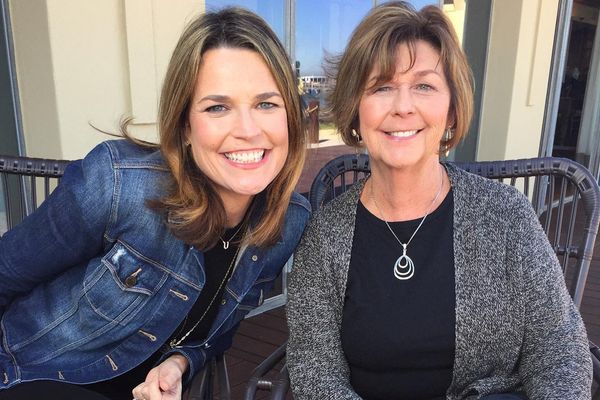
“I felt safer, frankly,” Sofia said.
Sofia’s mother Kausar said she had also come to vote for Pakistan and change, referring to Mr Khan’s PTI. She was also not concerned about the military’s presence.
“If we are forced to use the army, it is the governments who have failed. If they were performing well, the army wouldn’t have to do anything,” she said.
Islamabad’s F-6 is also home to a small Christian minority who live in slum-like conditions.
Yasir Yusuf, a 33-year-old chef, had decided to vote for PTI, despite concerns about Khan’s perceived closeness to extremist Islamist parties.
“We are concerned, but when you are a minority you become meaner; we just think for ourselves,” he said.
“We are too little and this country is too big. I really want to vote for my country, not only for this small minority.”
According to Yusuf, Khan had expressed willingness to support his community.
“Especially for the slums in Islamabad; the previous government tried to get rid of them.”
Not everyone in the Christian community was convinced by PTI, however.
“He is not interested in our rights if I tell you the truth,” said Nadeem Masih, 30.
According to him, most people in the neighbourhood vote for the jailed Prime Minister Nawaz Sharif’s party Pakistan Muslim League-Nawaz (PML-N).
“They got us electricity meters and promised they would get us gas,” he said.

Earler this month, a suicide bomber killed 149 people at an election rally in the town of Mastung, also in Baluchistan province. The attack was claimed by Isis militants.
About 371,000 soldiers have been stationed at polling stations across the country to prevent attacks, nearly five times the number deployed at the last election in 2013.
The blast happened near a polling station, said a Reuters witness in Quetta, capital of Pakistan's province of Baluchistan, but it was unclear if voting had been disrupted.
Television images showed a charred police vehicle, cordoned off by security officials.
18 dead in suicide bombing
A blast killed has at least 18 people in the western city of Quetta in an attack targeting a police van, according to local media reports.
Geo TV put the death toll at 18, while rival Samaa TV put it at 20, adding a "suicide attacker" was responsible.
Sharif, the younger brother of disgraced ex-prime minister Nawaz Sharif, took over the ruling Pakistan Muslim League last year after his brother was found guilty of corruption. The ex-prime minister has since been sentenced to 10 years in jail, which he is serving while appealing the conviction.
Sharif marked his ballot for both the National and Punjab provincial Parliaments and is contesting elections in four National Assembly seats and in two Punjab provincial legislature seats.
Please allow a moment for the live blog to load
Mr Khan's PTI party has positioned itself as an anti-corruption vehicle of change - but Mr Sharif's PML-N has accused him of being the military's candidate. With the race expected to be tight, independents and other smaller parties - like the PPP led by the son of former prime minister Benazir Bhutto - could yet play a key role in coalition.
Wednesday's vote will be the first time Pakistan has ever achieved a second democratic transition of power in a row. Throughout its history, the country has oscillated between military and civilian rule.
Yet while that should be being hailed as an unprecedented landmark of stability for the nation, there have long been warning signs in a campaign that has been one of the most dangerous and distasteful in modern history.
From social media to the streets, the vicious nature of the campaign polarised Pakistani society into supporters of Mr Khan’s Pakistan Tehreek Insaf (PTI) party, and the incumbent Pakistan Muslim League – Nawaz (PML-N) of Mr Sharif.
The chief election commissioner (CEC), retired Justice Sardar Muhammad Raza, on Tuesday assured voters that the Election Commission of Pakistan (ECP) was “trying its best to hold free, fair and unbiased elections”.
In a video message released by the election body, Mr Raza urged voters to fulfil their “duty towards the nation” by casting their votes calmly and responsibly on polling day.
Polling began at 8am local time, and concludes at 6pm. While one side or the other might claim victory as early as Wednesday night, official results could take up the three days to tally.