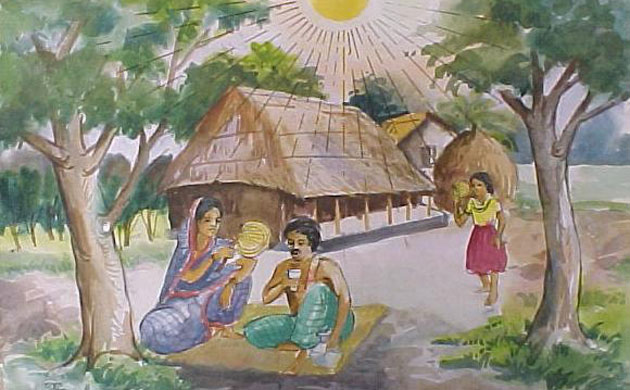
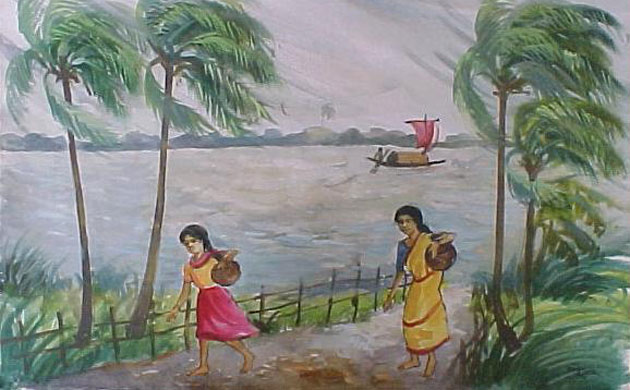
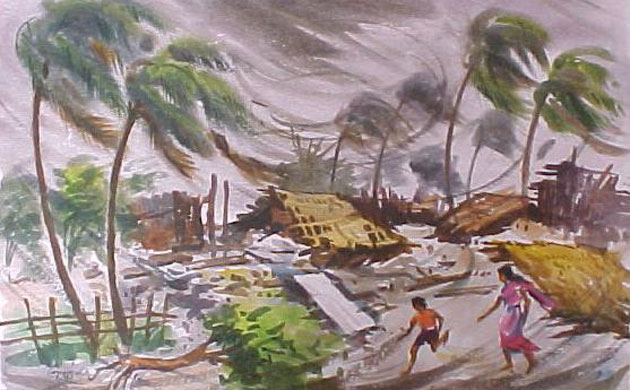
Heat: Temperatures in Bangladesh are rising, especially in the usually cool winter months. Many older people say they do not now need blankets in winter. People complain that poultry are now dying in the heatPhotograph: Pressud/CareWinds: Bangladeshi farmers say there are now only three distinct seasons instead of the usual six. Spring is merging with winter, and summer with autumn. Rainfall increasingly comes in the usually dry months. This, they say, is causing havoc with farmingPhotograph: Pressud/CareCyclones: Bangladesh is experiencing more intense cyclones. In November 2007, Cyclone Sidr devastated 30% of the crops and made three million people homeless. Government meteorologists say that storms are on average 10% more powerful than 10 years agoPhotograph: Pressud/Care
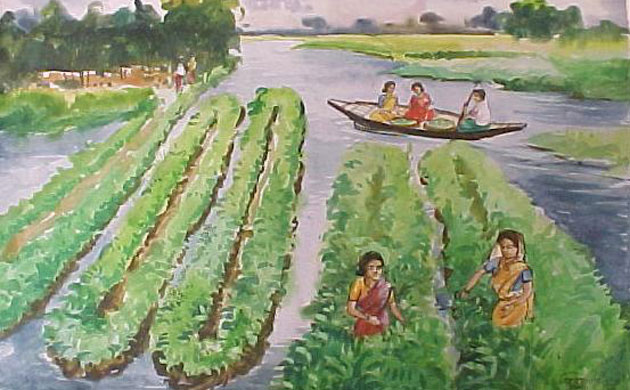
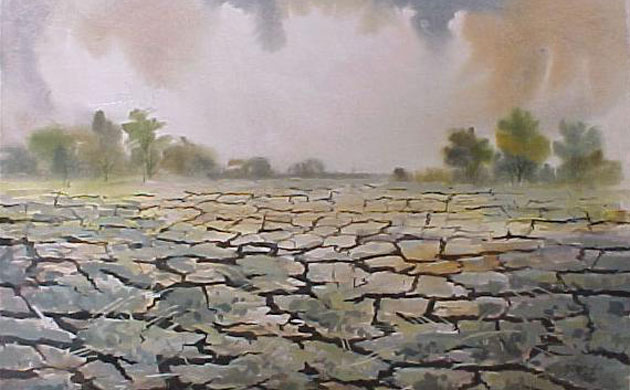
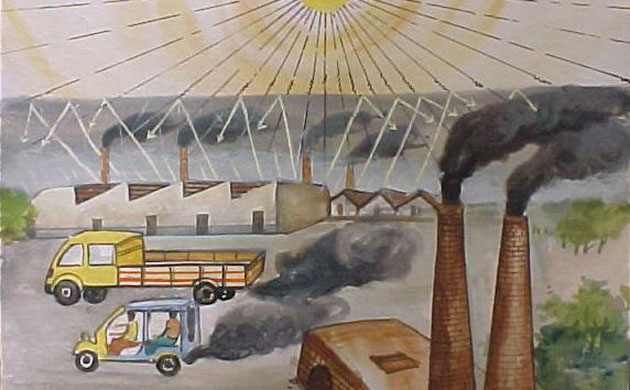
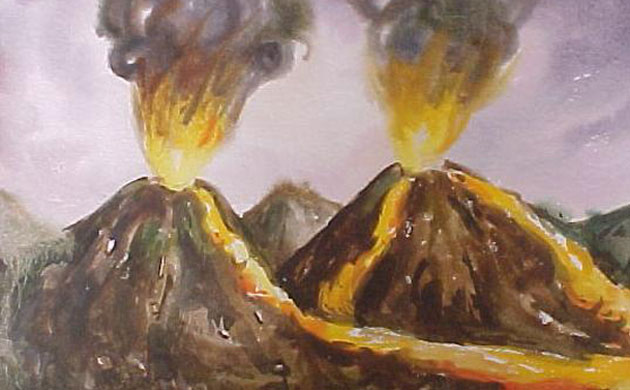
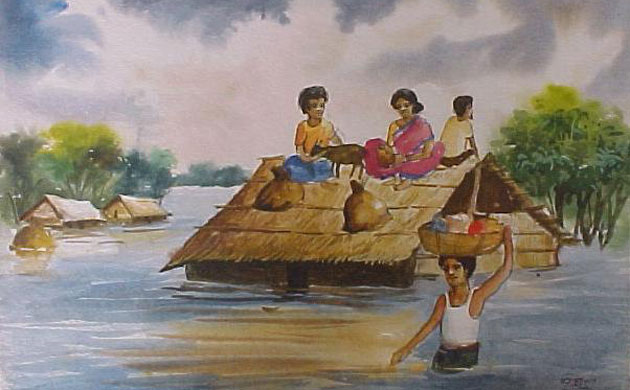
Floating gardens: Bangladesh urgently needs to adapt to climate change and communities are being taught hydroponic gardening. Beds of hyacinths, normally a weed clogging up rivers, can be made into floating vegetable gardensPhotograph: Pressud/CareDrought: Bangladesh is one of the wettest countries on Earth, but it is suffering increasingly from drought, largely caused by poor drainage. This is expected to get worse with climate change Photograph: Pressud/CareIndustrialisation: Bangladesh, with 130 million people, has some of the lowest emissions per capita in the world. It is eager to develop its industry with clean energy but urgently needs western technologiesPhotograph: Pressud/CareVolcanoes: Communities are taught that climate is determined by natural processes, like volcanoes, as well as now by human actionsPhotograph: Pressud/CareFloods: Bangladesh has annual floods, but these are expected to get catastrophically worse over the next 40 years as sea level rises. A forecast 30cm rise would inundate nearly one third of the country and force more than 25 million people to movePhotograph: Pressud/Care
Sign up to read this article
Read news from 100’s of titles, curated specifically for you.