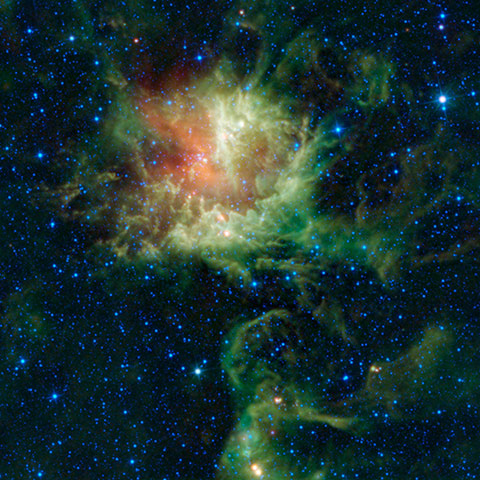
Pacman with teeth, a neutrino detector and a Martian sky crane
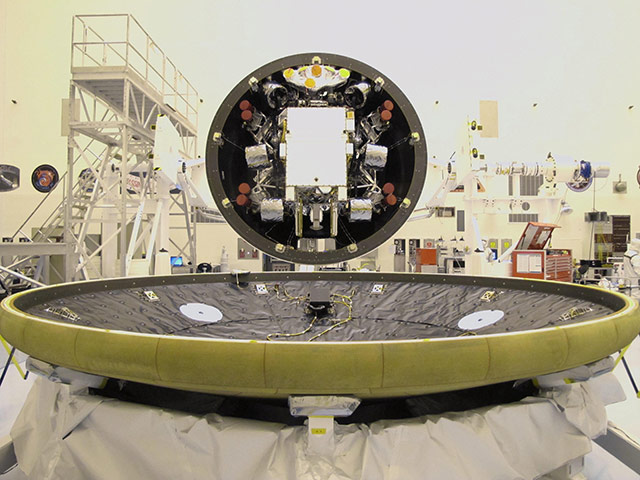
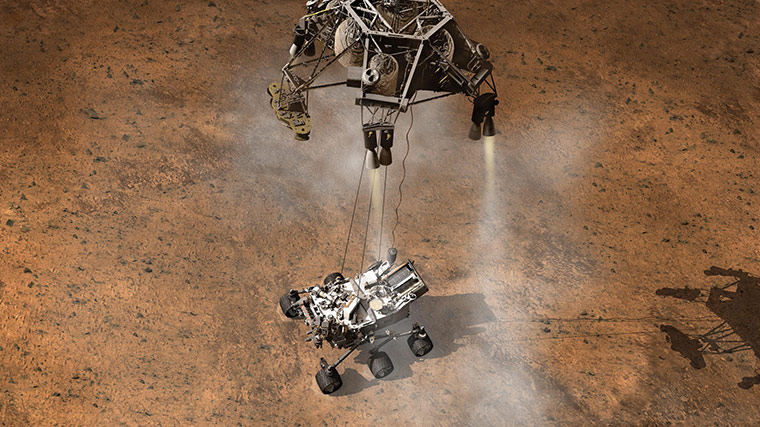
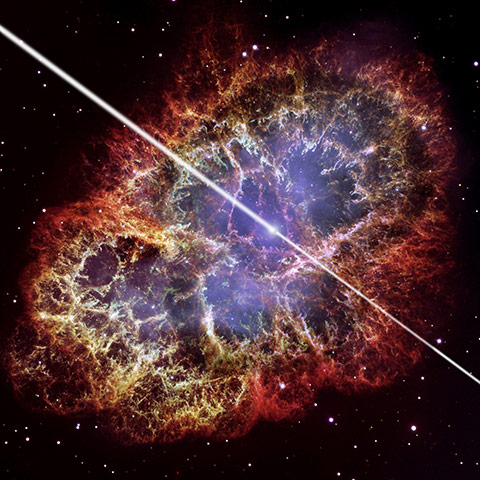
Nasa's Mars Science Laboratory rover, Curiosity, is rotated into position at the Kennedy Space Centre for launch on Saturday. The rover is scheduled to land on Mars in August next year Photograph: JPL-Caltech/NasaArtist's impression of Curiosity touching down on Mars. Instead of the airbags of past missions, Mars Science Laboratory will use a 'sky crane' to land the massive rover Photograph: JPL-Caltech /NasaA Hubble Space Telescope photo of the Crab nebula with, superimposed, an artist's conception of the high-energy beams blasting from the pulsar at its centre. Researchers using the Veritas telescope array have discovered pulses of high-energy gamma rays coming from the centre of the nebula. A pulsar is a spinning neutron star only a few kilometres across – the collapsed core of a massive starPhotograph: David A. Aguilar/ESA/NASA
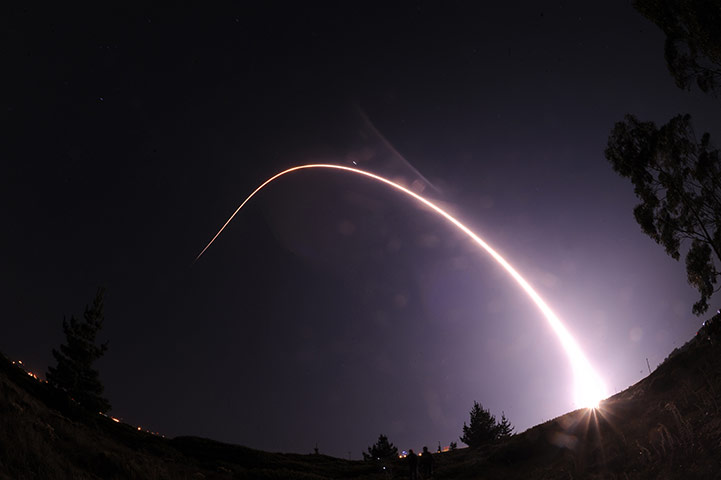
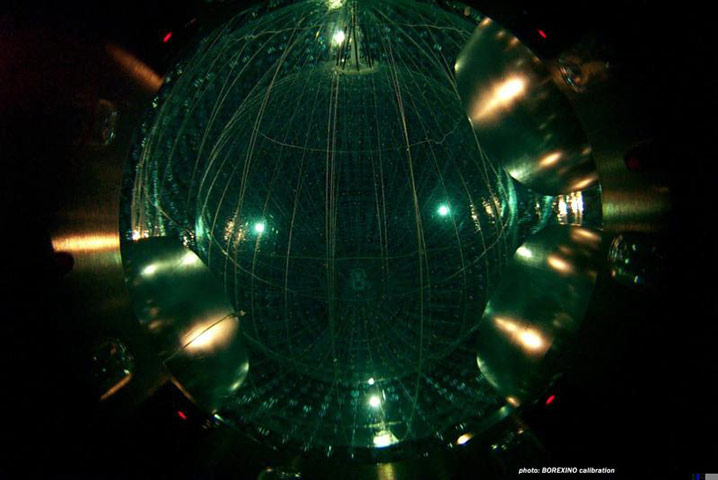
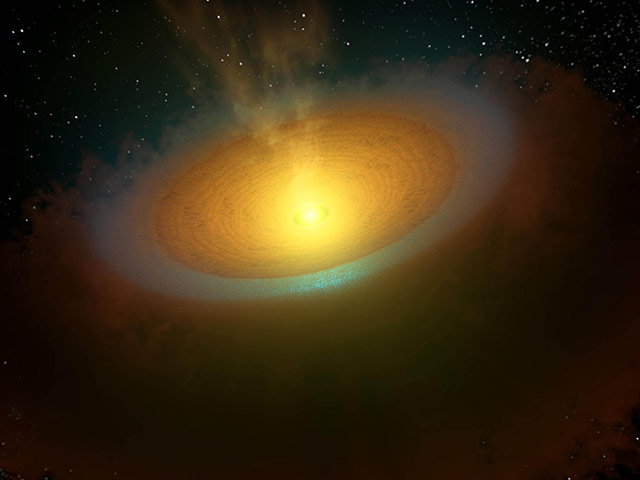
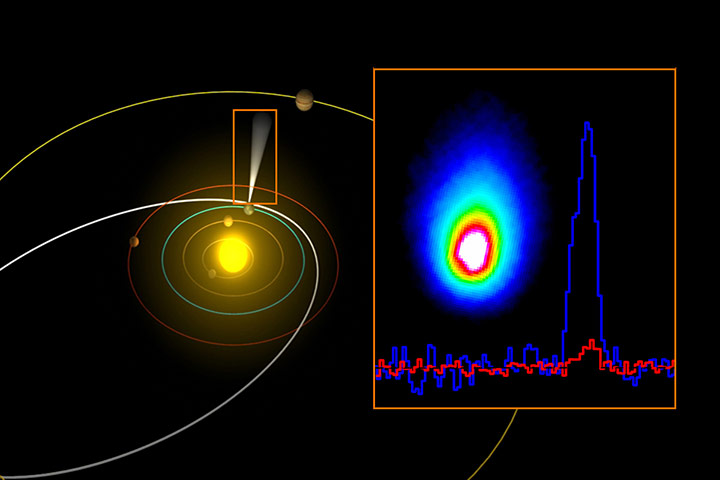
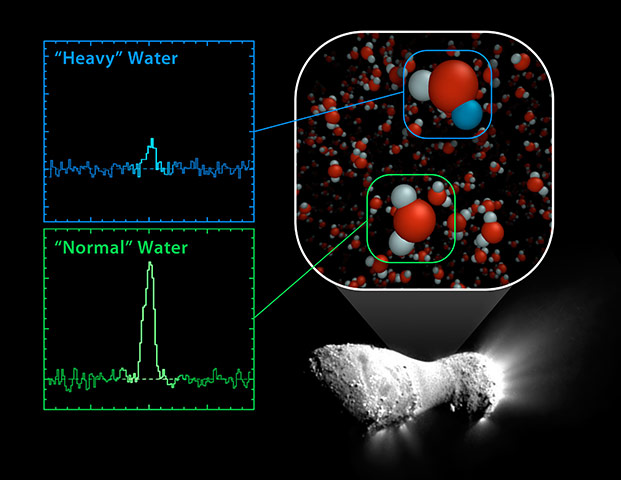
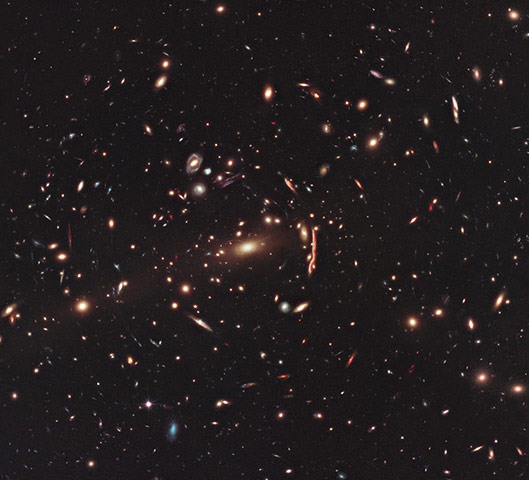
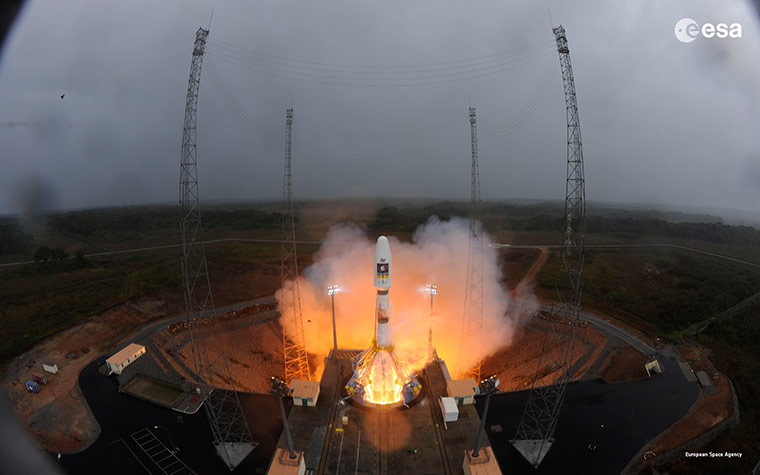
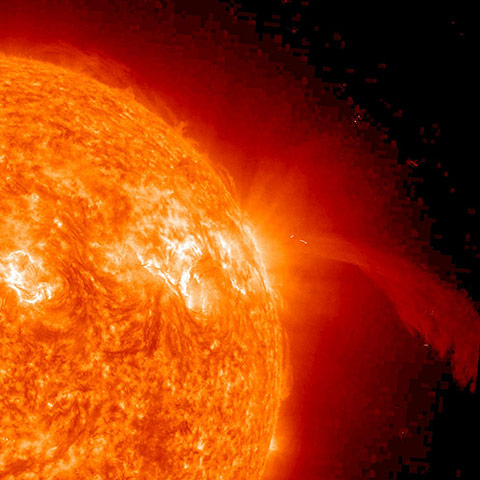
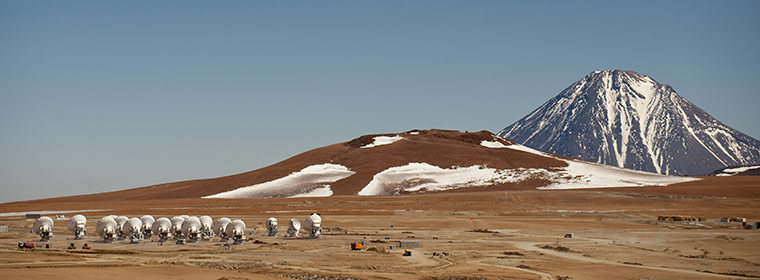
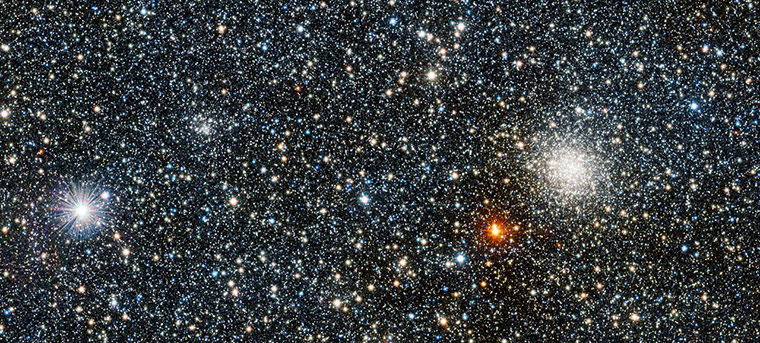
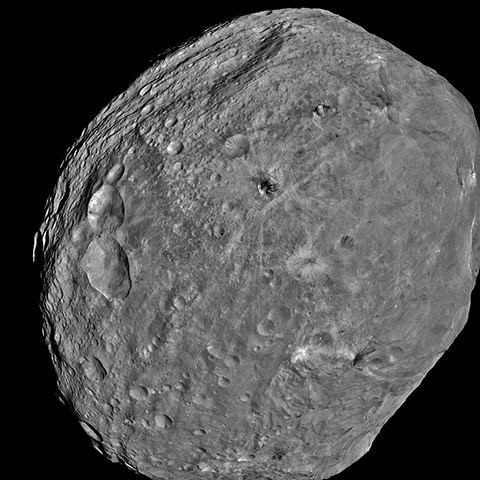
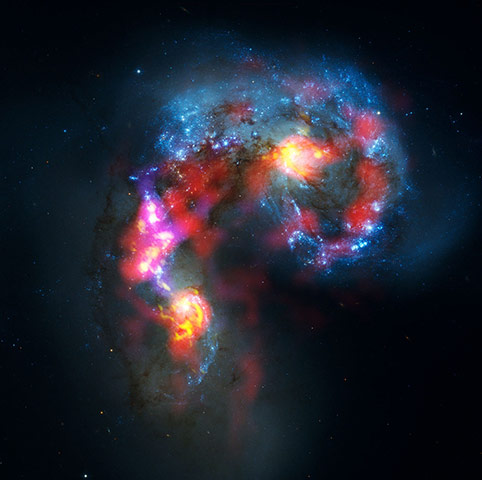
Nasa’s latest Earth-observing satellite soars into space aboard a Delta II rocket. The National Polar-orbiting Operational Environmental Satellite System Preparatory Project, or NPP, is carrying five instruments to help with short-term weather forecasts and to monitor long-term climate patternsPhotograph: Andrew Satran/NasaNeutrinos have certainly been in the headlines lately. This is a solar neutrino detector at the Laboratorio Nazionale del Gran Sasso underground physics laboratory. The instrument detects anti-neutrinos and other subatomic particles that interact in its liquid centre, a 300-tonne sphere of scintillator fluid surrounded by an 8.5-metre diameter transparent nylon balloon. This all 'floats' inside 700 tonnes of buffer fluid in a 13.7-metre diameter stainless steel tank immersed in ultra-purified water. The buffer fluid shields the scintillator from radiation originating in the outer layers of the detector and its surroundingsPhotograph: University of Massachusetts at AmherstAn artist's conception of an icy planet-forming disc around a young star called TW Hydrae, about 175 light years away in the Hydra constellation. Astronomers using the Herschel Space Observatory detected large amounts of cool water vapour emanating from the disc of dust and gas. The vapour is in the frigid outer regions of the star system, where comets will take shape. In our own solar system, comets are thought to have carried water to Earth, creating the oceans Photograph: JPL-Caltech/NasaObservations by the Herschel space telescope of Comet Hartley 2 have shown that it is made of water ice with a similar istopic composition to Earth's oceans, lending further weight to the theory that comets are the origin of the Earth's oceansPhotograph: NASA/Herschel/HSSO/ESAComet Hartley 2 appears to have the same ratio of "normal" to "heavy" water (in which hydrogen is replaced by its heavier isotope deuterium) as water here on EarthPhotograph: JPL-Caltech/NASAThis image from the Hubble space telescope is part of the telescope's dark matter census. It shows the galaxy cluster MACS J1206. Gravity from the cluster's enormous mass is strong enough to bend the path of light. Galaxies like these are useful for studying very distant objects, because they can amplify the light from faraway galaxies in the background like a lens. This in turn allows astronomers to infer the distribution of dark matter in the cluster itselfPhotograph: Hubble/ESA/NasaLiftoff of flight VS01 on 21 October – the first launch of Soyuz from Europe’s Spaceport in French Guiana – carrying the first two Galileo navigation satellitesPhotograph: EsaNasa image of an active region of the sun. This single region ejected about a dozen small spurts of plasma over the course of a day and the Stereo Ahead spacecraft caught the action in extreme UV light as the region reached the edge of the sun. The sun is producing more sunspots as its level of activity continues to risePhotograph: GSFC/Stereo/NasaNot grazing sheep but the antennas of the Atacama Large Millimetre/submillimetre Array (Alma) project 5,000 metres above sea level on the Chajnantor plateau, some 1,500km north of Santiago, Chile. Alma, an international partnership between Europe, North America and east Asia with the cooperation of Chile, is the largest astronomical project in the world. When finished, it will consist of 66 high-precision antennas that will work as a single telescope Photograph: Martin Bernetti/AFP/Getty ImagesTwo previously unseen globular clusters were found in new images from the European Southern Oberservatory’s VISTA survey telescope. On the right of this image is the globular star cluster UKS 1 and on the left is VVV CL001 – a previously unknown globular cluster, one of just 160 known clusters in the Milky Way. The new globular cluster appears as a faint grouping of stars about 25% of the width of the image from the left edge, and about 60% of the way from bottom to topPhotograph: D. Minniti/VVV Team/ESONasa's Dawn spacecraft captured this image of the giant asteroid Vesta from a distance of about 5,200km. Dawn entered orbit around Vesta on 15 July and will spend a year orbiting the body. Next stop: the dwarf planet CeresPhotograph: JPL/NASAIn visible light, the star-forming cloud catalogued as NGC 281 in the constellation of Cassiopeia appears to be a triangular mouth chomping through the cosmos, earning it the nickname the "Pacman" nebula after the Pac-Man video game of the 1980s. In infrared light (above) Pacman acquires a set of sharp-looking teeth. The image was taken by Nasa's Wide-field Infrared Survey Explorer (Wise)Photograph: JPL-Caltech/UCLA/NASAAlma opened its eyes. The most powerful telescope in the world came online and revealed its first image. Scientists from around the world will compete to use it to explore the deepest, darkest regions of the universePhotograph: ESO
Sign up to read this article
Read news from 100’s of titles, curated specifically for you.